Thinking about a Uluru Segway tour? Learn what the experience covers, typical pricing, best times to go, and how it compares to walking the base.
What Is a Uluru Segway Tour?
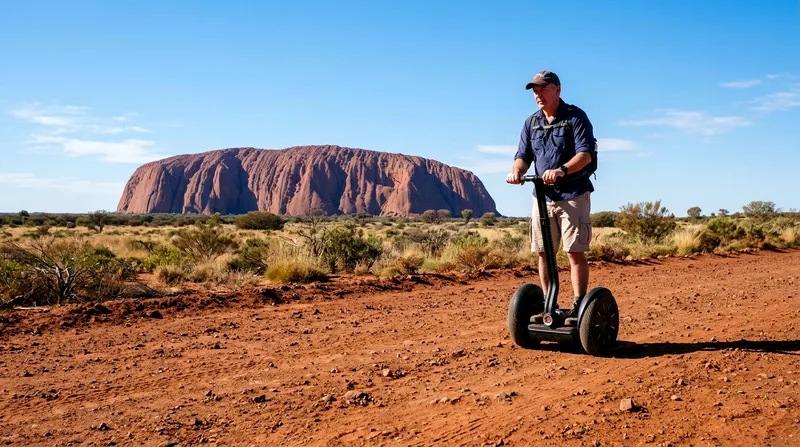
A Uluru Segway tour is a guided ride on a self-balancing electric scooter along a section of the base walk that circles the rock. Instead of walking the full 10.6-kilometre loop on foot, you cover a shorter stretch — typically somewhere between 8 and 10 kilometres over roughly two hours, depending on the operator and route chosen — while a guide rides alongside narrating the landscape, the geology, and some of the Anangu cultural context that's shared publicly.
It's not a free-roam experience. Segways travel single file along a flat, hard-packed dirt track, at a pace set by the guide, usually capped around 12-16 km/h. You stop periodically at lookout points and culturally significant sites where photography may be restricted — Uluru-Kata Tjuta National Park has specific no-photo zones around sacred sites, and any legitimate operator will brief you on these before departure.
This is Outback Australia at its most accessible: you get proximity to one of the most recognisable landforms in the Northern Territory's Red Centre without the sustained physical effort of a full base walk in sometimes 35°C+ heat.
The experience and route covered
Most segway routes hug the base trail rather than attempting the entire loop — gullies, waterholes, and rock art sites are common stops. You'll typically pass near Mutitjulu Waterhole or similar access points, though exact inclusions vary by operator and are often adjusted seasonally for track conditions. Tours usually run early morning or late afternoon to align with sunrise or sunset light, which also happens to be when temperatures are bearable. Expect a mix of riding and short dismounted stops — you're not on the machine the entire time.
Why Segways at Uluru
The appeal is logistical as much as novelty. Uluru's base is large — the full circuit is longer than many visitors expect — and the heat, flat light at midday, and limited shade make walking the whole thing in one go unappealing for a lot of people. A Segway lets you cover more distance than a short walk would, in less time and with less physical strain, while still being outdoors and close to the rock rather than viewing it from a car window or coach.
Who Should Book a Segway Tour
I'd recommend this to travelers who want a taste of Uluru's scale without committing to a 3-hour walk, or who have a tight itinerary — many visitors only spend one or two days in the area before moving on to Kings Canyon or Alice Springs. Families with kids aged around 12 and up often do well here; it's novel enough to keep teenagers engaged, which a straight walking tour sometimes isn't. Couples and solo travelers looking for something a bit different from the standard sunset-viewing-area crowd also tend to enjoy it.
It's less suited to anyone chasing a genuinely reflective, culturally immersive visit. If your main reason for coming to Uluru-Kata Tjuta National Park is to understand its significance to the Anangu people, a Segway tour will only scratch the surface — the pace and the mechanics of riding don't leave much room for quiet reflection or extended storytelling at each site.
Ideal fitness and mobility levels
Operators generally require riders to be at least 12 years old, weigh within a stated range (commonly up to around 115-120 kg), and be able to stand unassisted for the duration of the tour. There's no real fitness requirement — if you can stand and shift your weight slightly, you can ride one — which makes it a reasonable option for older travelers or those with mild mobility limitations who'd struggle with a long walk in heat. That said, it's not wheelchair-accessible, and anyone with significant balance issues, inner-ear problems, or pregnancy should skip it; most operators explicitly exclude pregnant travelers for liability reasons.
What you won't see on Segway
Because routes are fixed and timed, you won't get the option to linger at a waterhole for twenty minutes or detour to a quieter section of track the way you could on a self-guided walk. Some rock art sites and the most sacred areas near Mutitjulu are off-limits to Segways entirely, meaning a few of the base walk's most interesting cultural stops are only accessible on foot. If deep cultural interpretation matters to you, this is the trade-off to weigh honestly before booking.
How to Book and What to Expect
Segway tours at Uluru run through a small number of licensed operators permitted to work inside Uluru-Kata Tjuta National Park — this isn't something you can do independently, since Segways require a permit and trained guide to operate on park trails. Bookings are typically made in advance through the operator's own site, through Ayers Rock Resort's tour desk, or via third-party booking platforms that list Red Centre activities. During peak season (roughly May to September, when temperatures are cooler), tours can sell out a few days ahead, so booking at least 48-72 hours out is a reasonable rule of thumb.
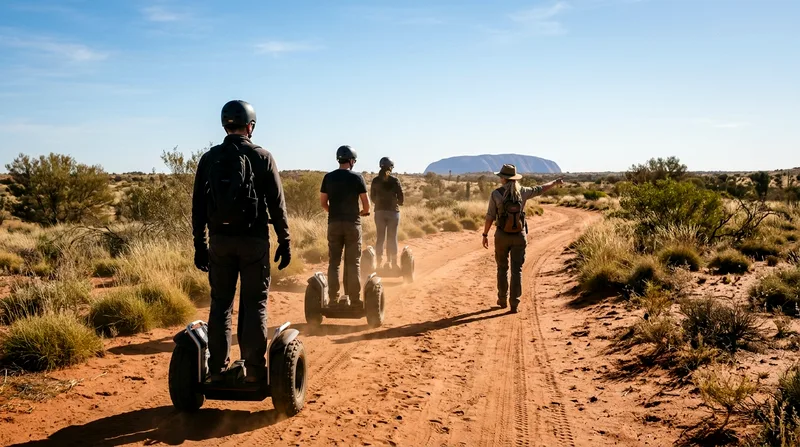
Pricing for a standard sunrise or sunset Segway tour generally falls in the AUD $150-180 per person range for a tour of around 2 hours, though this varies by operator and season — always check current prices when booking, since fuel surcharges and seasonal adjustments are common. Shorter or combination tours (Segway plus sunset viewing, for instance) may cost less or more depending on inclusions.
Booking options and tour operators
Rather than naming specific companies, it's worth knowing that most Segway operators at Uluru are based out of Ayers Rock Resort (Yulara), the only accommodation hub near the park. Check whether park entry is included — the standard Uluru-Kata Tjuta National Park pass costs separately and is valid for three consecutive days, so if your Segway tour doesn't bundle it, you'll need to buy it yourself either online or at the gate. Compare current prices and inclusions before you book, since what's bundled (transport to/from Yulara, park fees, photos) differs operator to operator.
Training, safety, and duration
Every legitimate tour starts with a mandatory training session — usually 15-20 minutes — on a flat practice area before you head out, covering balance, braking, and turning. Helmets are compulsory. Guides ride at the front and rear of the group, and group sizes are typically kept small, often under 10 riders, partly for safety and partly because the trail width doesn't accommodate large groups well. Total time commitment including training, riding, and stops runs close to 2.5-3 hours door to door from Yulara.
Segway vs. Walking: Value Comparison
This is the real decision point. A self-guided walk around the full Uluru base loop is free (beyond your park pass) and takes most people 3-3.5 hours at an easy pace. A Segway tour costs roughly AUD $150-180, takes about half that time, and covers a comparable or slightly shorter distance. If you're purely optimizing for cost, walking wins outright — there's no contest.
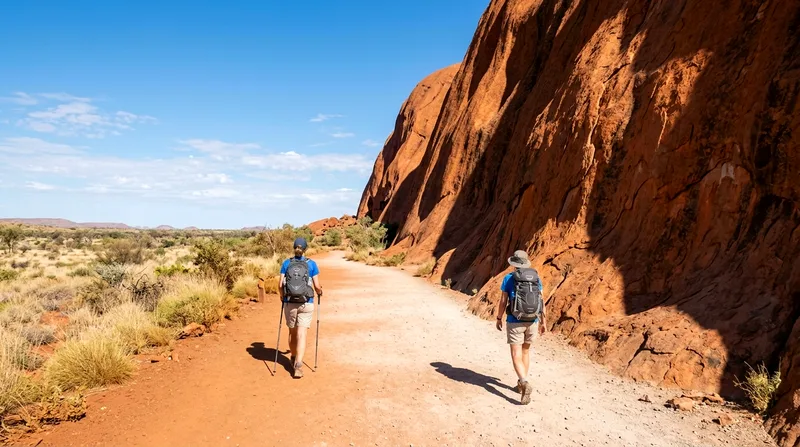
But value isn't only about dollars per kilometre. If you've got one afternoon at Uluru before driving to Kings Canyon or flying out of Alice Springs, the time saved by riding rather than walking can be the difference between seeing the base properly and rushing it in the heat. I'd call the Segway a legitimate option for time-poor travelers, not a substitute for walking if you have the hours to spare.
A Uluru Segway tour trades cost and depth for speed and accessibility compared with walking or driving the base.
Uluru Segway tour vs. other ways to experience the base
| Option | Typical duration | Approx. cost (AUD) | Distance covered | Best for |
|---|---|---|---|---|
| Segway tour | approx. 2-2.5 hrs | $150-180 | approx. 8-10 km | Time-limited visitors, novelty seekers |
| Self-guided base walk | 3-3.5 hrs | Park pass only (~$38) | 10.6 km full loop | Budget travelers, slow pace |
| Guided walking tour | 2-2.5 hrs | $80-120 | 6-10 km (varies) | Cultural depth, photography |
| Bicycle hire | 1.5-2 hrs | $45-65 | up to 15.3 km (incl. extra trails) | Independent, fitness-focused |
| Sunset viewing only (no base walk) | 1-1.5 hrs | Park pass only | None (viewpoint) | Minimal time, photography |
Figures are typical ranges based on standard park and tour patterns; always check current prices and operator inclusions before booking.
Cost and time efficiency
On a strict per-hour basis, Segway tours are expensive — you're paying resort-area premium pricing for the novelty and the guide. A guided walking tour, by comparison, often costs less (sometimes AUD $80-120 for a similar duration) and gets you closer to sacred sites that Segways can't access. If budget is tight, walk; if time is tight, ride.
Experience quality and limitations
Walking lets you stop, photograph, and absorb Uluru's changing colour and texture at your own pace — something a timed group tour on wheels can't replicate. Segways are noisier (an electric hum, but still a mechanical presence) and the novelty factor can distract from the setting itself. I'd avoid a Segway tour if your priority is photography in changing light, since the group has to keep moving on schedule.
Best Time to Visit and Nearby Experiences
The Red Centre's climate dictates almost everything about timing. Winter months (June to August) bring cooler days around 20-23°C and genuinely cold nights, sometimes dropping near freezing — ideal for Segway tours since heat exhaustion isn't a factor. Summer (December to February) regularly pushes past 38°C by mid-morning, and most operators shift tour times earlier or cancel midday departures altogether for safety.
Sunrise tours in shoulder seasons (April-May, September-October) hit a good balance: warm but not brutal, with decent light for photos. Whatever season you travel in, book your Segway slot for early morning or late afternoon — midday tours, where they run at all, are far less comfortable.
Seasonal considerations
Dust and wind can also affect tour operation — strong winds occasionally ground Segway tours for safety reasons, something that doesn't typically stop a walking tour. If you're traveling during the wetter months (loosely December-March, though rainfall is unpredictable), build in a backup day, since both Segway and some walking tours can be cancelled after storms.
Complementary activities and add-ons
Don't treat the Segway tour as your only Uluru activity. Pair it with a sunset viewing session at one of the designated car park areas, a visit to the Uluru-Kata Tjuta Cultural Centre (free entry, worth an hour), and — if your itinerary allows an extra day — a trip out to Kata Tjuta's Valley of the Winds walk, which offers a steeper, more varied landscape than Uluru's flat base track. Travelers continuing on often add Kings Canyon's rim walk or a stop in Alice Springs and the MacDonnell Ranges; some extend further to Coober Pedy or up to Darwin and Kakadu National Park for a longer Red Centre-to-Top-End route.
Frequently asked questions
How long is a typical Uluru Segway tour?
Most Segway tours run around 2 to 2.5 hours total, including a mandatory 15-20 minute training session before you set off. Actual riding time covers roughly 8-10 kilometres of the base trail at a controlled pace, with stops at lookout points along the way. Factor in transfer time from Ayers Rock Resort, and the full outing can take closer to 3 hours door to door.
Do you need experience to ride a Segway at Uluru?
No prior experience is needed. Every tour starts with hands-on training on flat ground, covering balance, steering, and braking before you head onto the trail. Most riders feel comfortable within 10-15 minutes. You do need to be able to stand unassisted and meet minimum age (usually 12) and maximum weight requirements set by the operator.
What is the cost of a Segway tour at Uluru?
Expect to pay roughly AUD $150-180 per person for a standard 2-hour sunrise or sunset tour, though prices vary by operator, season, and what's included — some bundle park entry or transfers, others don't. Always confirm current pricing and inclusions when booking, since this can shift seasonally.
Can you see the summit climb area on a Segway tour?
Climbing Uluru has been permanently banned since October 2019 out of respect for Anangu cultural wishes, so no tour — Segway or walking — includes summit access. Segway routes also avoid certain sacred sites near the base, such as areas close to Mutitjulu Waterhole, where photography and off-trail access are restricted for cultural reasons.
What's the best season for a Segway tour?
Winter (June-August) offers the most comfortable conditions, with daytime temperatures around 20-23°C and minimal heat stress. Shoulder months (April-May, September-October) are also solid, combining decent temperatures with good early-morning light. Summer tours (December-February) are harder going, often restricted to the coolest part of the day due to extreme heat regularly exceeding 38°C.