Planning an Uluru motorcycle tour? Compare Harley-Davidson sidecar rides, routes, pricing tiers and booking tips for this Red Centre adventure.
What Is an Uluru Motorcycle Tour?
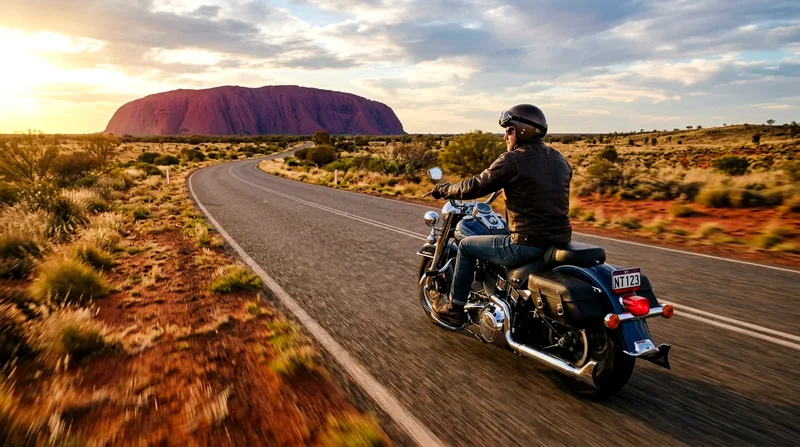
An Uluru motorcycle tour is a guided ride — usually on a Harley-Davidson, sometimes with a sidecar option — that takes visitors along the sealed roads around Uluru-Kata Tjuta National Park, typically ending at a viewing area for sunrise or sunset. You're not riding on the rock itself, obviously, and you won't be taking a bike off-road into the dunes. These are road tours on the Lasseter Highway and the park's internal loop roads, built around the experience of arriving at one of the world's most recognisable landmarks on two wheels instead of in a coach.
Most operators run these as pillion or sidecar experiences rather than hire-your-own-bike rentals — you sit behind or beside an experienced local rider rather than holding a licence test on red dirt roads you've never seen. That matters for logistics: you don't need your own motorcycle licence to book one, which opens it up to a much wider range of travelers than a typical biking holiday would.
The appeal is fairly specific. It's not the fastest way to see Uluru, nor the cheapest, nor the most informative about Anangu culture — a 4WD cultural tour or a ranger-guided walk will teach you more about the Mala and Kuniya stories tied to the rock's base. What a motorcycle tour gives you is sensory: engine noise, desert wind, the smell of hot bitumen, and an uninterrupted view of the rock changing colour as you approach. For some travelers that trade-off is exactly the point.
Harley-Davidson sidecar and bike tours
Harley-Davidson dominates this niche at Uluru, largely because the brand's touring models suit long, straight desert roads better than sportier bikes do. Sidecar tours are worth considering if you're traveling as a couple or with a friend who isn't comfortable on a pillion seat — the sidecar sits low, has its own seatbelt, and doesn't require you to lean with the bike through corners, which makes it a reasonable option for older travelers or anyone slightly anxious about balance. Pillion seats, by contrast, suit solo travelers paired with a stranger rider, or couples happy to ride as two separate motorcycles in convoy. Expect full leathers or branded jackets, a helmet, and sometimes boots to be provided — ask when booking whether gear is included or whether you need to bring your own.
Route options and ride duration
Typical rides run somewhere between 30 minutes and two hours, with the most popular format being a one-hour loop timed to finish at a sunset viewing platform. Longer options — closer to half a day — sometimes extend out toward Kata Tjuta, roughly 40 km from Uluru by road, giving riders views of both formations without doubling back. Don't expect a full-day motorcycle tour of the whole Red Centre; the road network inside the national park is limited, and operators loop the same stretches of sealed road repeatedly. If you want more distance and varied terrain, that's a job for a self-drive rental car heading toward Kings Canyon or the Mereenie Loop, not a Harley tour.
Why Choose a Motorcycle Experience at Uluru
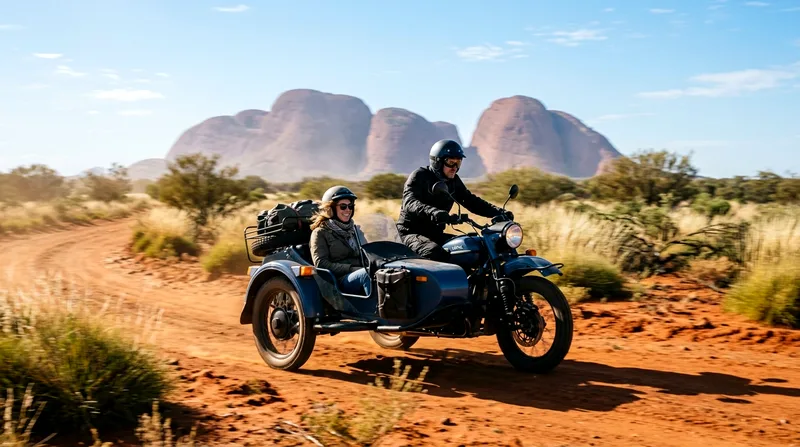
I'd recommend a motorcycle tour to travelers who've already done the standard Uluru visit — walked part of the base, watched one sunset from the designated viewing area — and want a second, different experience on a return trip or a second evening. As a first and only way to see Uluru, it's too short and too focused on the ride itself to replace a cultural walk or the Field of Light installation nearby.
Where it genuinely earns its price is as a couple-friendly or solo-friendly novelty. There's no group of twenty strangers on a coach, no fixed commentary schedule, and the ride itself becomes part of the memory rather than just transport between stops. For a honeymoon, anniversary, or milestone birthday, a sidecar sunset tour has a different feel to it than another sunset-viewing-area tour bus — and that's worth something, even if it costs more per person.
Ideal for couples and solo travellers
Couples get the most obvious benefit from the sidecar format, since it keeps two people together without either having to ride a separate bike. Solo travelers, meanwhile, often find a pillion seat behind a local rider more sociable than a silent window seat on a shuttle bus — riders are usually happy to talk about the landscape, the geology, or life in the Red Centre during stops. Families with children under about 8 or 10 are generally excluded, since most operators set minimum age and height requirements for pillion seats; always check this before booking if you're traveling with kids.
Unique perspective of the rock and landscape
Riding rather than driving changes how Uluru registers. You feel the temperature drop as the sun goes down, smell the spinifex and dust, and get a 360-degree view without a windscreen or roofline cropping the horizon. Photographers should note that pillion seats make it hard to shoot while moving — most of the useful photo opportunities come at the stops, not during the ride itself, so don't expect cinematic footage from the back of the bike.
How to Book Your Motorcycle Tour
Book an Uluru motorcycle tour the same way you'd book any specialist activity in the national park: through a licensed tour operator based in Yulara, the small resort town just outside Uluru-Kata Tjuta National Park. Most departures leave from the Ayers Rock Resort precinct, since that's where nearly all visitor accommodation sits. Lead time matters more than people expect — these tours run with a limited number of bikes and sidecars, so popular sunset slots during the cooler months (April to September) can sell out two or three days ahead, sometimes longer during school holiday periods.
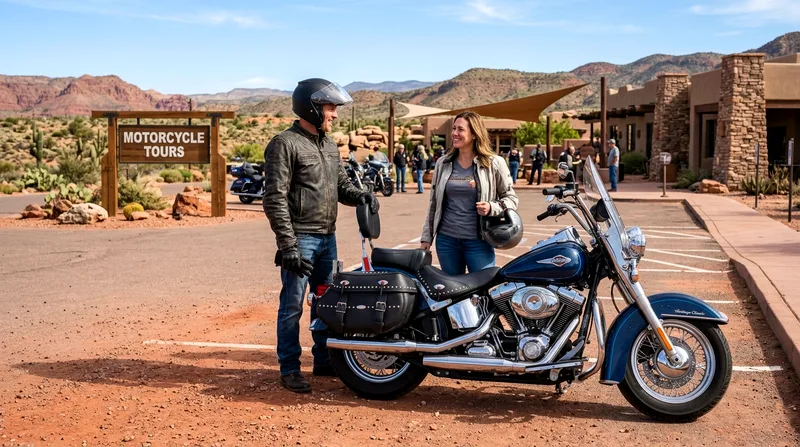
Independent vs. guided tour operators
There's no real "independent" version of this experience — you can't legally ride into the national park on a self-hired motorcycle without your own licence and your own insured bike, and rental motorcycles aren't a standard offering in Yulara the way rental cars are. So in practice, every Uluru motorcycle tour is a guided, operator-run product. The decision isn't independent-vs-guided; it's choosing between a sidecar format and a pillion format, and between a shorter loop tour versus a longer one that extends toward Kata Tjuta. Compare current prices and availability for both formats before you commit, since sidecar seats are often more limited than pillion spots.
What to expect on booking day
Arrive at the meeting point around 15–20 minutes early for a safety briefing and gear fitting. Operators generally supply helmets and may offer jackets or ponchos for dust and wind protection; closed-toe shoes are typically mandatory, so don't turn up in sandals. There's usually a weight limit for sidecar and pillion passengers, often somewhere around 120–130 kg, and a maximum combined passenger count per bike — ask about this directly if it could apply to you. Tours proceed in most weather short of extreme heat warnings or dust storms, which do occur in the Red Centre and can cause delays or cancellations with little notice.
Pricing and Tour Options
Pricing for an Uluru Harley tour or sidecar experience sits well above standard bus tours, reflecting the smaller group sizes and the cost of running and maintaining touring motorcycles in a remote desert location. As a rough guide, short loop rides (around 30–60 minutes) sit in a lower-mid price tier per person, while sunset-timed rides and longer routes toward Kata Tjuta cost more. Always check current prices when booking, since fuel costs and seasonal demand both push rates up and down through the year.
Shorter sunset loops suit most first-time riders, while extended Kata Tjuta routes and private bookings cost more for extra distance rather than dramatically different scenery.
Uluru motorcycle tour options compared by duration, format and typical use
| Tour Type | Typical Duration | Format | Best For | Relative Cost |
|---|---|---|---|---|
| Standard sunset loop | 30-60 min | Pillion or sidecar | First-timers, couples | Lower-mid |
| Sunrise loop | 45-60 min | Pillion or sidecar | Early risers, photographers | Lower-mid |
| Extended Kata Tjuta route | 2-4 hours | Pillion or sidecar | Travelers wanting more distance | Mid-high |
| Premium sunset with refreshments | 60-90 min | Sidecar preferred | Special occasions, couples | High |
| Private/group charter | Varies | Pillion or sidecar | Small groups, weddings | Highest |
Durations and price tiers are typical ranges; always check current prices and inclusions directly with the operator before booking.
Standard tour packages
The standard package is a one-hour sunset or sunrise loop around Uluru, pillion or sidecar, with photo stops at designated viewing points. This is the entry-level option and the one most couples and solo travelers book — it covers the core experience without the extra cost of the longer Kata Tjuta extension. Expect it to be priced per seat (pillion or sidecar), not per group, which matters if you're budgeting for two people riding separately.
Premium and custom experiences
Premium options extend the ride time, add Kata Tjuta into the loop, or include extras like a sparkling wine stop at a sunset viewing area — similar in spirit to the champagne-and-canapés sunset tours offered by 4WD operators in the area. Some operators also offer private or semi-private bookings for small groups or wedding parties, at a correspondingly higher rate. If budget is tight, skip the premium add-ons; the base sunset loop delivers most of the experience's value, and the extra cost of the extended route buys you more kilometres on largely similar scenery rather than a fundamentally different view.
Best Time to Ride at Uluru
Timing an Uluru motorcycle tour is really about managing heat and light, not about picking a "best month" in the abstract. The Red Centre's climate is extreme by European or coastal Australian standards, and riding gear — leathers, helmets, closed boots — makes heat exposure worse, not better.
Seasonal weather considerations
May through September is the cooler season in the Northern Territory's interior, with daytime temperatures often in the low-to-mid 20s°C and cold nights that can drop close to freezing — layer up for early morning sunrise rides. December through February brings extreme heat, regularly above 38°C, which makes midday riding uncomfortable and sometimes unsafe; tours during these months are usually scheduled for early morning or evening to avoid the worst of it. If you're sensitive to heat, avoid booking a midday slot between November and March altogether — ask the operator to confirm start times before you pay.
Crowd levels and visibility
June to August is peak tourist season at Uluru, coinciding with the cooler, more rideable weather — which means better conditions but more competition for sunset viewing area parking and better light. Shoulder months like April, May, September, and October often give a good compromise: decent temperatures, thinner crowds, and clearer air, since dust haze is more common in the dry, windy months later in the year.
Nearby Attractions and Add-Ons
A motorcycle tour rarely fills a full day, so it pairs naturally with other bookable experiences in and around Uluru-Kata Tjuta National Park. Most visitors base themselves in Yulara for three to four nights and treat the motorcycle ride as one experience among several — alongside base walks, cultural centre visits, and at least one proper sunset or sunrise viewing session on foot or by coach.
Kata Tjuta and Valley of the Winds
Kata Tjuta, also called The Olgas, sits about 40 km west of Uluru and offers the Valley of the Winds walk — a 7.4 km circuit through the domes that takes three to four hours and is considerably more physically demanding than anything at Uluru's base. If your motorcycle tour includes a Kata Tjuta loop, you'll see the formations from the road but won't have time to walk the valley; plan a separate half-day for that on foot, ideally in the cooler morning hours since much of the track is exposed and gets closed in extreme heat.
Sunset and sunrise viewing spots
The designated sunset viewing area near Uluru and the sunrise viewing area with views of both Uluru and Kata Tjuta are the two main public platforms, both well set up with parking and raised viewing points. A motorcycle tour timed to these windows gets you there without the car park scramble that affects self-drive visitors, which is a genuine practical advantage during peak season. Beyond the rock itself, Alice Springs — about 450 km away — and Kings Canyon in Watarrka National Park, roughly a three-and-a-half-hour drive, are the natural next stops for travelers extending their Red Centre trip beyond Uluru and Kata Tjuta.
Frequently asked questions
What is included in an Uluru motorcycle tour?
Most tours include the ride itself, a helmet, and often a jacket or protective layer for wind and dust. Sunset and sunrise tours usually include a stop at a designated viewing platform. Premium packages sometimes add refreshments like sparkling wine. Fuel, insurance, and the rider/guide are built into the price — you won't pay extras unless you book add-ons like photos or an extended route.
How much does a Harley-Davidson tour at Uluru cost?
Prices vary by duration and format, with short sunset or sunrise loops sitting in a lower-mid price bracket per person and extended routes toward Kata Tjuta or premium packages with refreshments costing more. Sidecar seats can carry a different rate to pillion seats. Always check current prices when booking, since seasonal demand and fuel costs shift rates through the year.
Do I need a motorcycle licence to ride as a passenger?
No. Since these are guided tours with a professional rider, passengers don't need any motorcycle licence or riding experience, whether they're on a pillion seat or in a sidecar. You do need to meet the operator's minimum age, and sometimes weight, requirements — check these when booking if you're traveling with a teenager or if weight limits might be a concern.
What is the best time of year for a motorcycle tour?
May through September offers the most comfortable riding temperatures, with cooler days and cold nights — useful for sunrise rides but pack layers. December through February brings extreme heat above 38°C, so tours then run early morning or evening only. Shoulder months like April and October balance good weather with smaller crowds at viewing areas.
Can I combine a motorcycle tour with other Uluru activities?
Yes, and most travelers do, since a motorcycle tour typically runs one to two hours and doesn't fill a full day. Common pairings include a base walk around Uluru, a visit to the Cultural Centre, the Field of Light installation, or a half-day trip to Kata Tjuta's Valley of the Winds. Base yourself in Yulara for three to four nights to fit these in comfortably.