Uluru Guided Walk vs Self-Guided: Which Is Worth It?
Compare guided Aboriginal walks and self-guided options at Uluru. Learn about cost, cultural depth, time, and experience to choose what's right for you.
8 min read · 9 Oct 2026
Tours & activities
Compare Uluru Aboriginal culture tour types — dot painting, bush tucker walks, Dreamtime storytelling — and find which fits your trip best.
Uluru's most meaningful experiences come from Aboriginal-led cultural tours that teach Anangu traditions, art, and connection to Country. That's not a marketing line — it's a practical observation. You can drive to Uluru, walk the base, take a photo at sunset, and leave knowing almost nothing about the place beyond its size. Or you can book a tour run by or with Anangu people, the traditional owners of Uluru-Kata Tjuta National Park, and come away understanding why the rock matters as a living cultural site rather than a scenic backdrop.
The challenge for most travelers is sorting through options without local knowledge. Some tours are genuinely Aboriginal-led; others are run by non-Indigenous operators who've added a "cultural" label without any Anangu involvement beyond a brief stop at a sign. This guide breaks down the real categories — dot painting workshops, bush tucker walks, Dreamtime storytelling, sunrise and sunset cultural walks — and tells you honestly who each suits, what's usually included, and what to check before you hand over money.
Aboriginal culture tours at Uluru generally fall into four categories, and they're not interchangeable — each teaches something different and suits a different kind of traveler. None of them require advanced fitness, which makes this a good anangu tours uluru niche for families and senior travellers alike, but the content and pace vary a lot.
Dot painting workshops suit hands-on learners and families, while Dreamtime storytelling and bush tucker walks reward travelers who want depth over pace.
Uluru Aboriginal culture tour types compared by duration, pace, and best fit
| Tour Type | Typical Duration | Physical Demand | Best For |
|---|---|---|---|
| Dot painting workshop | 1.5–3 hours | Low (seated) | Families, art lovers, solo travelers |
| Bush tucker walk | 1.5–2 hours | Low–moderate walking | Couples, curious adults, older kids |
| Dreamtime storytelling | 45 min–1.5 hours | Low | Senior travellers, reflective travelers |
| Sunrise/sunset cultural walk | 2–3 hours incl. transport | Moderate walking | Photographers, first-time visitors |
Durations and group formats vary by operator; confirm specifics and current availability before booking.
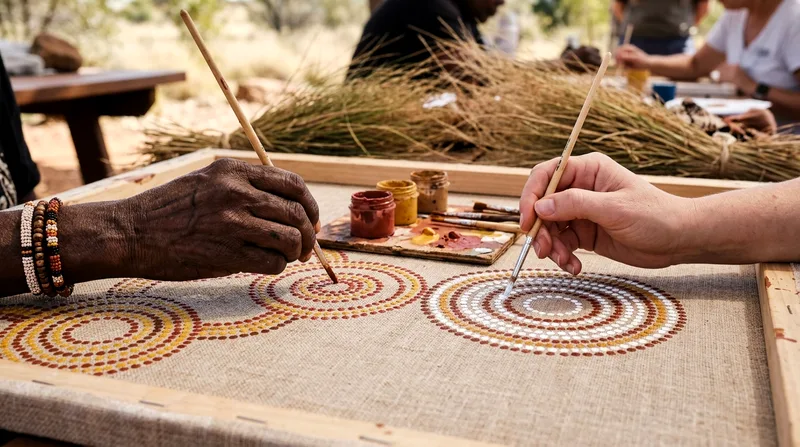
These sessions are usually run at or near the Aboriginal Art Centre or through community art enterprises, lasting roughly 1.5 to 3 hours. An Anangu artist or cultural facilitator explains the symbolism behind dot painting — not as decoration, but as a system for recording Tjukurpa (law and knowledge passed through generations). Participants typically paint their own small canvas or boomerang to take home, guided through traditional motifs like waterholes, tracks, and meeting places.
I'd rate this one of the better bookings for families with children aged eight and up — it's hands-on, seated, and doesn't demand much stamina. The trade-off is that you're learning a visual language in a couple of hours, which only scratches the surface. Treat it as an introduction, not mastery. Avoid any workshop that doesn't clearly state an Anangu or Aboriginal-owned connection — there are commercial "boomerang painting" stalls aimed purely at tourists with no cultural grounding at all.
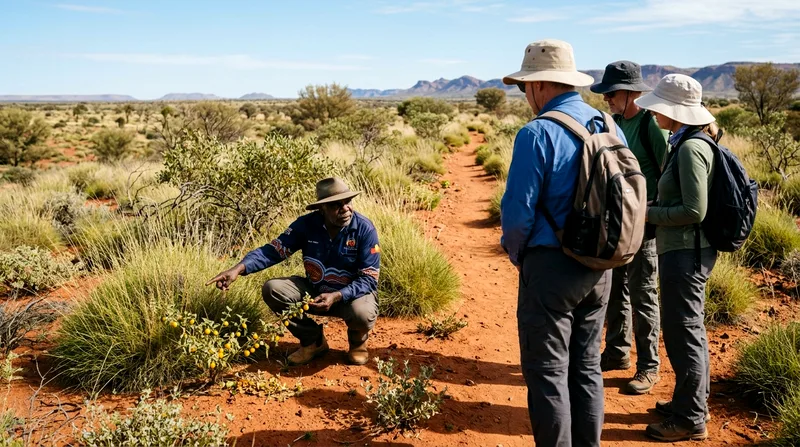
Bush tucker walks run for about 1.5 to 2 hours and cover ground on foot, usually on flatter trails within Uluru-Kata Tjuta National Park. A guide points out specific plants — quandong, witchetty grubs, bush tomato, native tobacco — and explains both nutritional and medicinal uses alongside the practicalities of desert survival.
These walks work well for curious adults and older kids who can handle 1.5 to 2 kilometers of slow walking in heat. They're less suited to very young children who lose interest in plant identification quickly, or to anyone expecting a workout — pace is deliberately slow, with long pauses for explanation. Compare this to a Kings Canyon rim walk, which is about scenery and exertion; a bush tucker walk at Uluru is about knowledge transfer, and the two shouldn't be judged by the same standard.
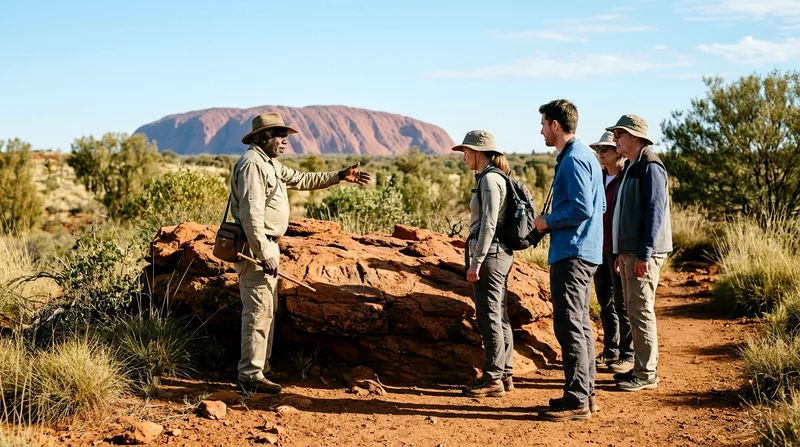
These sessions, often held in the evening or combined with a base walk, focus on Tjukurpa stories connected to specific sites around Uluru and sometimes Kata Tjuta. Expect 45 minutes to 1.5 hours of oral storytelling, sometimes paired with traditional instruments or demonstrations of tool-making.
This is the category most prone to dilution — some operators present generic "Dreamtime" content without Anangu authorship, which misrepresents a specific and localized body of knowledge. Look for tours explicitly developed with or delivered by Anangu custodians. Done properly, this is the most reflective and least physically demanding option, which makes it a strong pick for senior travellers and anyone wanting substance over activity.
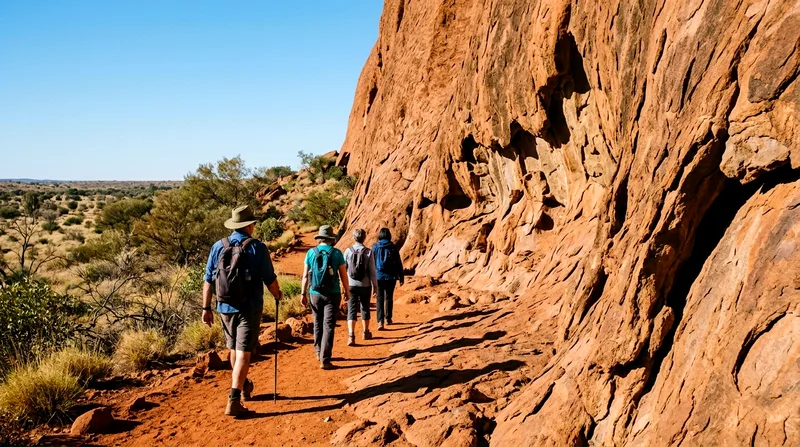
These combine the obvious photographic appeal of Uluru changing color with guided interpretation of specific rock art, waterholes, and sacred sites along the base walk (the full base circuit is about 10.6 kilometers, though most guided segments cover 2 to 4 kilometers). Tours typically run 2 to 3 hours including transport and a viewing stop.
The upside is efficiency — you get the sunrise or sunset spectacle and cultural context in one outing. The downside: these are often the most crowded tour slots, since everyone wants the golden-hour photo, and some operators rush the cultural component to hit the light. If depth matters more to you than the photo, ask specifically how much time is allocated to guide commentary versus free photography time before booking.
Not every cultural tour fits every traveler, and being honest about that saves people money and disappointment.
If you want something to physically take home and a slower, seated pace, dot painting workshops are the clear choice. They also suit solo travelers who want a low-pressure way to meet other visitors, since sessions are usually arranged around a shared table. European travelers used to museum-style art interpretation sometimes find this more satisfying than a walking tour, because the explanation is continuous rather than delivered in short bursts between trail stops.
Bush tucker walks and Dreamtime storytelling suit travelers more interested in meaning than souvenirs — people who'd rather understand why Uluru is significant than photograph it from every angle. Couples and senior travellers often rate these highest precisely because the pace is unhurried. If you've already done a nature-focused walk at Kata Tjuta's Valley of the Winds or in the MacDonnell Ranges near Alice Springs, a Dreamtime storytelling session adds a layer those hikes don't: a narrative explanation of why the landscape looks and behaves the way it does.
Beyond the type of cultural content, the format of the tour — group size, duration, private versus shared — changes the experience considerably, often more than the subject matter itself.
Group tours, typically 8 to 20 people, are more affordable and more commonly available, especially around sunrise and sunset slots. Private tours cost more but allow direct, extended conversation with the guide — valuable for a storytelling or bush tucker session where questions matter. Families with young children or anyone with mobility concerns should lean toward private or small-group options where pace can be adjusted; a 20-person group won't wait for a slow walker or a curious six-year-old.
Half-day tours (roughly 3 to 4 hours) usually combine one activity — say, a bush walk plus a short art demonstration. Full-day tours, less common but available through some Aboriginal-owned operators, can combine multiple elements: a Dreamtime walk in the morning, bush tucker tasting at midday, and a painting session or sunset walk to finish. Full-day options suit travelers staying three nights or more near Uluru who aren't also trying to fit in Kings Canyon or the drive to Kata Tjuta on the same day. If your itinerary is tight — say, a one-night stopover between Alice Springs and Coober Pedy — a half-day tour is the realistic choice.
The single most important filter is Aboriginal ownership or direct Anangu involvement — not just a cultural theme bolted onto a standard coach tour. Ask directly, when checking live listings, whether the guide or company is Anangu-led or Aboriginal-owned, and whether proceeds support the local community. This matters for an experience branded as an uluru indigenous experience; without that connection, you're paying for someone else's interpretation of a culture they don't belong to.
Check whether transport from Yulara (the resort town servicing Uluru) is included, since many tours depart from accommodation and others require you to meet at a national park location. Confirm whether park entry fees are included — Uluru-Kata Tjuta National Park charges a separate entry pass, valid for three consecutive days, and some tours fold this into the price while others don't. Art workshops should specify whether materials and the finished piece are included or cost extra; bush tucker walks should clarify whether tasting is hands-on or observation-only.
Smaller groups generally mean more direct interaction with the guide — worth prioritizing for storytelling tours where dialogue matters more than photo opportunities. Look for guide bios mentioning Anangu heritage, long-term community ties, or formal association with the Aboriginal Art Centre. Review current listings and recent traveler feedback before booking, since guide availability and group structure can shift between seasons — compare current tours and prices before you book rather than relying on older reviews.
Outdoor cultural tours — bush tucker walks, sunrise and sunset walks — are weather-dependent, and Central Australia's climate is extreme in both directions. Summer (December to February) regularly pushes past 38°C (100°F) by mid-morning, which makes anything other than sunrise tours genuinely uncomfortable and sometimes unsafe for older travelers or young children. Winter (June to August) brings cool mornings, sometimes near freezing before dawn, and comfortable daytime temperatures — this is the peak season for a reason, and tours book out further in advance.
April through September is the most reliable window for comfortable walking tours, and it's also when demand is highest, so book two to three weeks ahead for popular sunrise slots during the shoulder months, more for the July peak. Dot painting workshops, being indoors or under cover, are far less weather-sensitive and make a reasonable backup plan if an outdoor walk gets cancelled due to extreme heat warnings, which the park does issue on the worst summer days. Cancellation policies vary by operator — some offer full refunds for weather cancellations, others only a credit — so read the fine print, particularly if you're traveling from Europe and can't easily rebook during a short stopover.
It's a guided experience — a walk, workshop, or storytelling session — that teaches Anangu culture, law (Tjukurpa), and connection to Country around Uluru and Kata Tjuta. The best versions are Anangu-led or run by Aboriginal-owned enterprises rather than general tour operators adding a cultural label.
Some are, some aren't. Genuinely Anangu-led tours exist, often through the Aboriginal Art Centre or community enterprises, but plenty of generic sightseeing tours mention "Aboriginal culture" without any Anangu involvement. Always check the guide's background and the operator's community ties before booking.
Typically a canvas or object to paint, materials, instruction on symbolism and technique from an Anangu artist or cultural facilitator, and the finished piece to take home. Sessions run roughly 1.5 to 3 hours; confirm whether materials are included in the price or charged separately.
Most run between 45 minutes (short storytelling sessions) and 4 hours (combined half-day experiences). Full-day immersive tours combining multiple activities exist but are less common. Match the duration to your itinerary — don't book a 4-hour tour if you're also driving to Kings Canyon the same afternoon.
Lightweight, sun-protective clothing, a wide-brimmed hat, closed walking shoes, and sunscreen year-round. Layer up for winter sunrise tours, when temperatures can sit near freezing before dawn. Bring at least one liter of water per person even for short walks — the desert air dehydrates faster than it feels like it should.
Compare guided Aboriginal walks and self-guided options at Uluru. Learn about cost, cultural depth, time, and experience to choose what's right for you.
8 min read · 9 Oct 2026
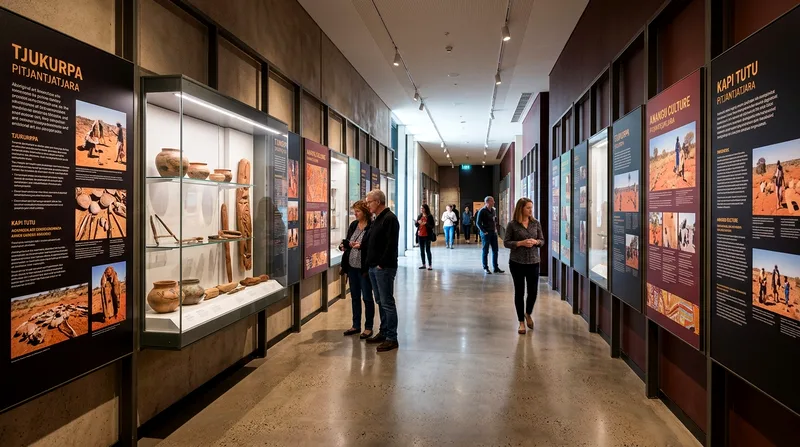
Explore the free Uluru Cultural Centre to learn Anangu traditions before visiting Uluru. Discover exhibits, guided tours, and why it's a smart first stop.
8 min read · 9 Oct 2026
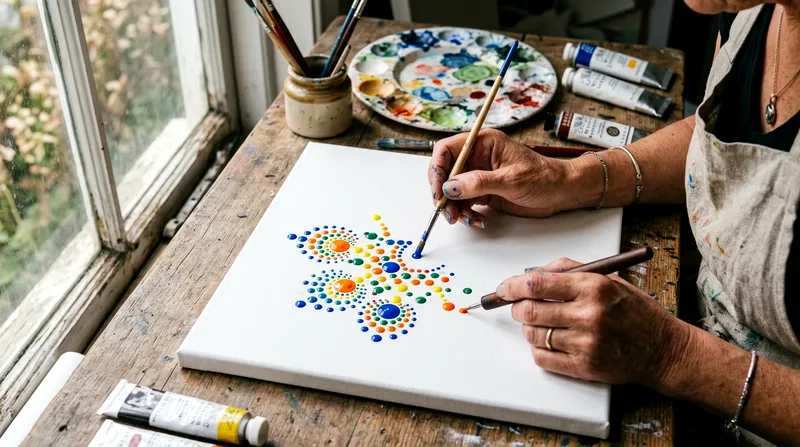
Planning a Uluru dot painting workshop? Find where to book, class length, pricing guides, what to bring, and what artwork you'll take home.
9 min read · 9 Oct 2026
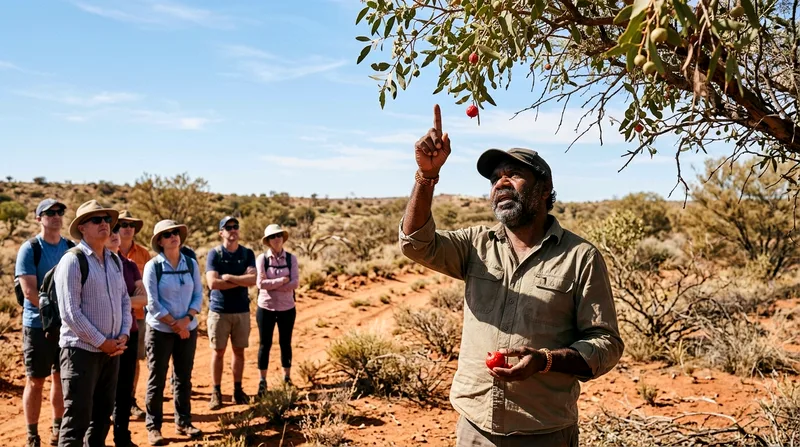
Plan an Uluru bush food tour with native ingredient tastings, Aboriginal-led demonstrations, prices, and family tips before you book.
8 min read · 9 Oct 2026