Compare guided Aboriginal walks and self-guided options at Uluru. Learn about cost, cultural depth, time, and experience to choose what's right for you.
Options at a Glance
Uluru gives you two fundamentally different ways to get around the rock, and the choice shapes the whole visit — not just how you spend a morning. One path puts an Anangu guide or a park ranger-trained interpreter in front of you, explaining Tjukurpa (traditional law and stories) at specific sites. The other hands you a park map, a set of interpretive signs, and leaves the pace and depth entirely up to you.
Neither option is inherently better — they answer different questions. If you're asking "what happened here and why does it matter to the Anangu people," you need a guide. If you're asking "how do I see the most rock in the least time for the least money," self-guided wins. Most visitors to Uluru-Kata Tjuta National Park end up doing a bit of both: a guided walk early in the trip, then a self-guided lap of the full Base Walk later, often at sunrise or sunset when the light changes the rock's color dramatically.
What a guided Aboriginal walk includes
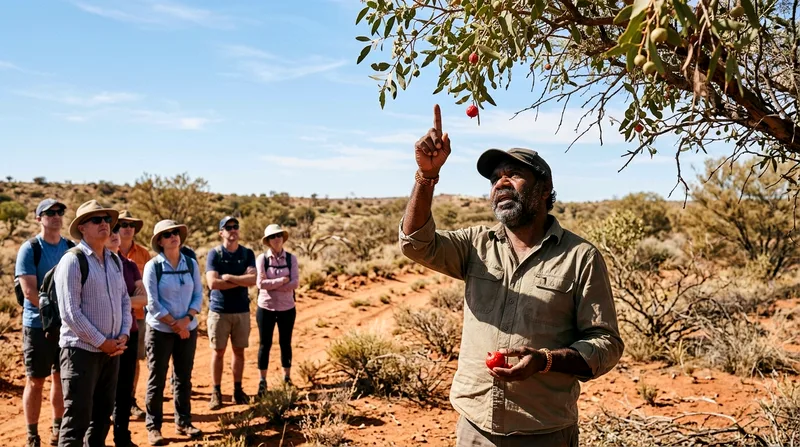
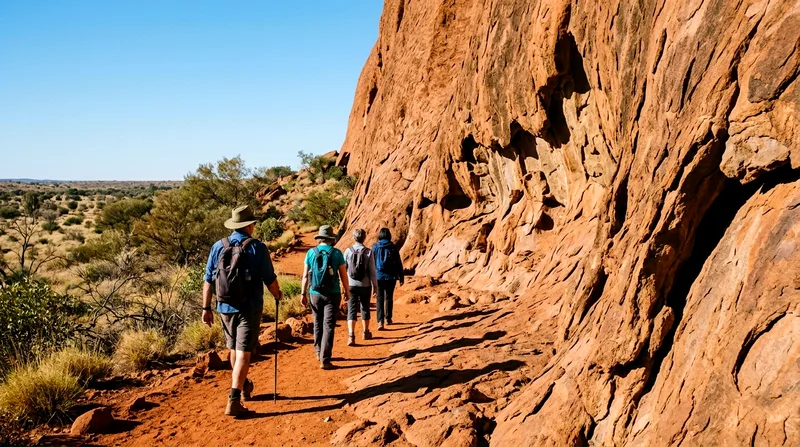
The Mala Walk is the most commonly booked guided experience — it's free, ranger-led, runs daily (typically around 90 minutes), and covers roughly 2 km from the base to Kantju Gorge. It's run by park rangers rather than Anangu guides themselves on most days, though Anangu cultural input shapes the content and some sessions include Anangu speakers. Along the way you'll hear about the Mala (rufous hare-wallaby) creation story, see rock art, and learn why certain sections are off-limits to photography for cultural reasons. Beyond this, some commercial operators run small-group guided walks — often combined with the Kuniya Walk to Mutitjulu Waterhole — that go deeper into Tjukurpa storytelling and typically cost in the mid-range to premium bracket per person, depending on group size and inclusions like breakfast or transport.
What self-guided walking offers
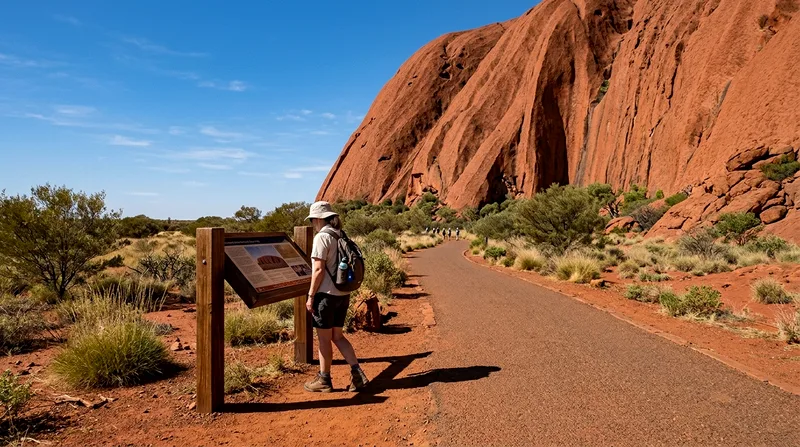
Self-guided walking at Uluru costs nothing beyond the park entry fee (around AUD 38 per adult, valid for three consecutive days, last checked before booking). You can walk the full 10.6 km Base Walk loop at your own pace — most people take 3 to 3.5 hours — stopping at interpretive signage installed by Parks Australia at key sites including Mala Walk, Kuniya Walk, and the Mutitjulu Waterhole. The signs are genuinely well-written and include some Anangu perspectives, but they're static text, not conversation. You can't ask a follow-up question, and you'll walk straight past cultural nuance that a guide would flag immediately. It's the better option if you want flexibility, solitude, or you're visiting outside guided walk hours (the Mala Walk typically starts mid-morning, which doesn't suit sunrise photographers).
Guided Walk vs Self-Guided: Head-to-Head
Put side by side, the two approaches diverge most sharply on what you actually take away from the day. Everything else — cost, time, crowds — is logistics. Cultural understanding is the part people underrate before they arrive and overrate in hindsight if they skipped it.
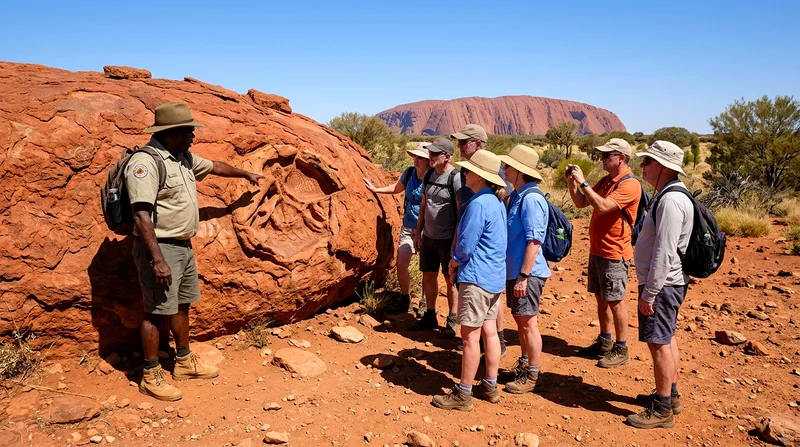
Guided walks cost more and run on a fixed schedule, but deliver cultural context that self-guided walking simply can't match.
Uluru guided walk vs self guided: cost, time, and cultural depth compared
| Option | Typical Cost | Duration | Cultural Depth | Flexibility |
|---|---|---|---|---|
| Mala Walk (ranger-led, free) | Park entry fee only | approx. 90 min | Moderate | Fixed start time |
| Commercial Anangu-guided walk | Mid-range to premium | 2-4 hours | High | Fixed schedule |
| Self-guided Base Walk (full loop) | Park entry fee only | approx. 3-3.5 hours | Low-moderate (signage only) | Full flexibility |
| Self-guided Kuniya Walk only | Park entry fee only | approx. 45 min | Moderate (strong signage) | Full flexibility |
| Self-guided Mala Walk section only | Park entry fee only | approx. 1 hour | Low-moderate | Full flexibility |
Costs and schedules are typical figures — check current park fees and guided walk times before you travel.
Cultural depth and storytelling
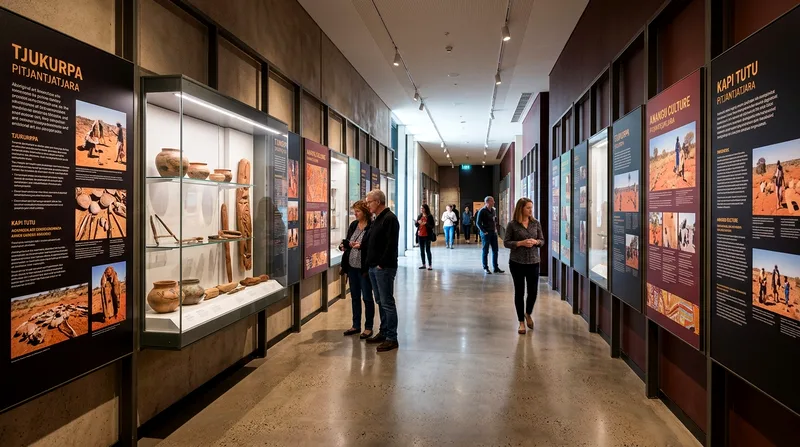
This is where the comparison isn't close. An Anangu-informed guide can explain why a particular crevice in the rock relates to the Kuniya (woma python) and Liru (venomous snake) ancestral battle, why certain sites are gender-restricted for ceremonial reasons, and why photography is banned at specific sacred points — not just that it is. Interpretive signs tell you the story exists; a guide tells you what it still means to Anangu custodians today. If "is a Uluru guided tour worth it" is the question driving your decision, the honest answer is: only if cultural meaning matters to you more than saving three or four hours and some money. If you just want a scenic walk, skip it and keep the cash for Kings Canyon or a Kata Tjuta tour instead.
Cost and time commitment
Self-guided costs you nothing beyond the park pass. The ranger-led Mala Walk is also free but demands you show up at a fixed time, which can clash with sunrise photography plans. Commercial Anangu-guided experiences sit in the mid-range to premium bracket and usually bundle in transport from Yulara resorts, sometimes breakfast or a cultural center visit. For a family of four, that premium adds up fast compared with a free self-guided loop — budget travelers and backpackers passing through on a wider Red Centre trip that also includes Alice Springs and Kings Canyon often skip the paid guided option entirely and rely on signage plus the free ranger talk.
Physical effort and accessibility
The full Base Walk is flat and well-maintained but long at 10.6 km — manageable for most fit adults in under 3.5 hours, tougher in summer heat above 38°C. Guided walks like the Mala Walk cover far less ground (around 2 km) and run at a slower, interpreted pace, which suits older travelers or anyone with mobility concerns who still wants meaningful content without the full loop. Self-guided walkers can shorten their route to just the Kuniya or Mala sections if the full base circuit feels like too much — something a fixed-schedule guided walk doesn't allow.
Crowds and solitude
Guided walks happen in groups, sometimes 15 to 30 people clustered around one ranger — not the quiet, contemplative experience some travelers picture. Self-guided walking, especially outside the Mala Walk's scheduled time or away from the main car park, offers real solitude, particularly on the quieter southern and eastern stretches of the Base Walk. If you've also done Kata Tjuta's Valley of the Winds walk and found the crowds thin out fast once you're past the first lookout, expect a similar pattern at Uluru — the parking areas are busy, the far side of the loop rarely is.
Views and photography opportunities
Self-guided walking wins outright for photography — you set your own pace, linger at the color changes around sunrise and sunset, and aren't rushed past a view because the group needs to move on. Several sacred sites along both the Mala and Kuniya walks ban photography altogether, and guides are strict about enforcing this, which can frustrate photographers unaware of the restriction beforehand. Self-guided walkers get the same restrictions but more time at the permitted viewpoints to work the light.
Who Should Choose Each Option
Neither option is universally correct, and plenty of visitors do both across a two- or three-day Uluru stay — which is honestly the smartest approach if your itinerary allows it.
Best for guided walks
Choose a guided walk if this is your only visit to the Red Centre and you want the Anangu cultural context to stick. It suits families with school-age kids who respond better to a guide answering questions than reading a sign, senior travelers who want a paced, informative walk without navigating alone, and European or international visitors unfamiliar with Aboriginal culture who'd otherwise miss most of the significance. It's also the better call if you're combining Uluru with a broader Red Centre loop through Alice Springs and the MacDonnell Ranges and want the cultural framing early, so later stops make more sense.
Best for self-guided walks
Choose self-guided if you're on a tight budget, traveling solo and prefer setting your own pace, or you've already done a guided walk elsewhere (Kakadu's ranger talks, for instance) and want a quieter, more reflective lap this time. It also suits photographers chasing sunrise or sunset light, since fixed-schedule guided walks rarely align with the best color windows. Couples wanting a slower, private experience — stopping as long as they like at Kuniya Walk's waterhole — are usually happier self-guided too.
The Verdict
If you take nothing else from this comparison: do the free ranger-led Mala Walk if your timing allows it, then finish the Base Walk loop yourself. That combination costs nothing extra beyond park entry, gives you real Anangu-informed context, and still leaves room for a slow, independent lap at your own pace. It's the best value option available at Uluru, full stop.
Pay for a premium Anangu-guided experience only if cultural depth is genuinely the point of your trip — comparable, in spirit, to paying for a proper guided tour at Kakadu National Park rather than driving yourself through without context. Skip the paid guided option if you're purely there for photos, you're tight on time between Uluru and Kings Canyon, or you've already got a solid grounding in Tjukurpa from a cultural center visit in Alice Springs. What doesn't make sense is paying premium guided prices and then rushing through — if you're spending the money, give the walk the unhurried two to four hours it deserves.
Frequently asked questions
Is a guided walk at Uluru worth the cost?
Yes, if cultural understanding is a priority — a guided walk explains the Tjukurpa stories and reasons behind photography restrictions that self-guided signage only hints at. If you're mainly after exercise and photos, the free self-guided Base Walk delivers similar scenery without the fee.
Can you walk around Uluru without a guide?
Yes. The full 10.6 km Base Walk is open to independent walkers daily, weather permitting, and is covered by your park entry fee. Interpretive signs at key sites like Kuniya Walk and Mala Walk provide context, though they're far less detailed than a live guide.
How long does an Aboriginal guided walk take?
The free ranger-led Mala Walk runs about 90 minutes over roughly 2 km. Commercial Anangu-guided experiences that combine Mala and Kuniya walks or add breakfast typically run 2 to 4 hours, depending on the operator and inclusions.
What do you learn on a guided Uluru walk?
You'll hear Tjukurpa creation stories tied to specific rock features — the Mala (hare-wallaby) and Kuniya/Liru (python and snake) stories are the most commonly told — plus explanations of why certain sites are sacred, gender-restricted, or off-limits to cameras.
Are self-guided walks at Uluru free?
Yes, beyond the standard Uluru-Kata Tjuta National Park entry fee (around AUD 38 per adult for a three-day pass, so confirm the current price before you go). No separate charge applies to walk the Base Walk, Kuniya Walk, or Mala Walk sections independently.