Explore the free Uluru Cultural Centre to learn Anangu traditions before visiting Uluru. Discover exhibits, guided tours, and why it's a smart first stop.
What Is the Uluru Cultural Centre?
The Uluru-Kata Tjuta Cultural Centre sits inside Uluru-Kata Tjuta National Park, about a kilometre before you reach the base of Uluru itself if you're driving in from Yulara (the resort town where most visitors stay). It's not a museum in the European sense — there's no entry turnstile, no audio guide rental desk, no gift shop selling plastic boomerangs next to genuine artefacts. It's a low, curved building designed to echo the shape of two ancestral snake beings from Anangu Tjukurpa (law and knowledge), and it functions as the park's interpretive heart.
Anangu are the Aboriginal traditional owners of Uluru and Kata Tjuta, and the centre exists largely because they asked for it. When Uluru-Kata Tjuta National Park was handed back to Anangu ownership in 1985 — a rare and significant act in Australian Indigenous heritage — one condition was that visitors would have somewhere to learn the cultural context of the land before wandering across it. That's the entire point of this building: it's a buffer between tourism and sacred ground, built with Anangu input rather than imposed on them.
Location and overview
You'll find the centre just off the main park road, roughly 5 km from the Uluru base walk car parks and about 20 minutes' drive from Yulara. It's easy to miss if you're rushing straight to the rock — there's no flashing signage, just a modest turn-off. Budget 10 minutes to drive there from the park entry gate, plus parking. There's a second, smaller cultural facility near Kata Tjuta, but the main centre near Uluru is the one with the full gallery, shop, and café.
Why Anangu culture matters
If you walk straight past this building, you'll see Uluru as a striking red rock and nothing more. Anangu culture gives it a second layer: specific sites around the base are tied to Tjukurpa stories, some of which are not meant to be photographed or climbed, which is part of why the actual rock climb was permanently closed in 2019. Understanding this before you walk the base track changes how you move through the park — you'll notice signage asking visitors not to photograph certain rock art sites, and you'll actually know why.
Free Exhibits and Self-Guided Experience
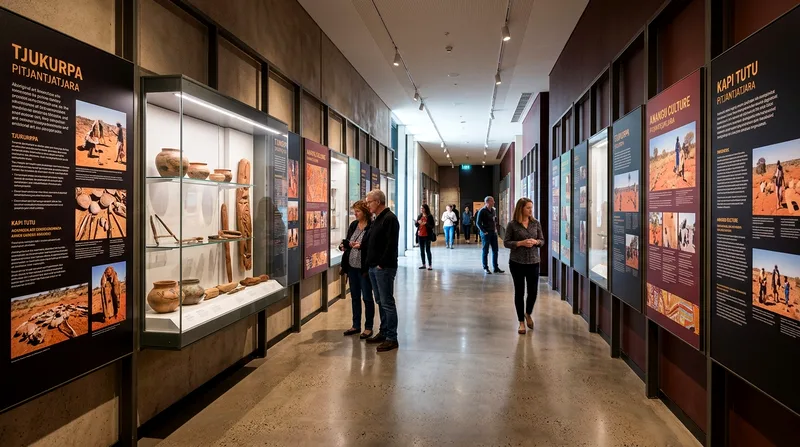
Entry to the Cultural Centre is free — there's no ticket, no booking required, and no entry fee separate from the park pass you've already bought to get into Uluru-Kata Tjuta National Park (that pass itself typically runs around AUD 38 for a three-day adult entry, checked at the gate). Inside, two main galleries — Nintiringkula and Tjukurpa — walk you through Anangu history, land management practices, and the relationship between people and country. Text panels are in both English and Pitjantjatjara, which is a small but telling detail about whose space this is.
Most visitors spend 30 to 45 minutes here, which is enough to read the main panels and browse the art without feeling rushed. If you're genuinely curious and read everything, an hour is realistic. I'd treat anything under 20 minutes as a box-ticking exercise rather than an actual visit — the displays are dense with information rather than flashy, so skimming defeats the purpose.
Gallery collections and displays
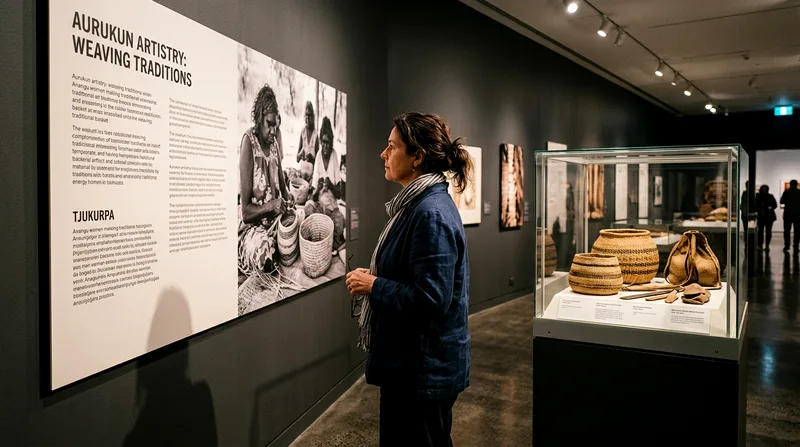
The galleries hold dot paintings, woven artefacts, traditional tools (including spears and digging sticks used for bush food), and photographs documenting Anangu life before and after the 1985 handback. Some pieces are for sale through the on-site art centre, where proceeds go directly to Anangu artists rather than third-party retailers — this is a more reliable way to buy authentic Aboriginal art than many souvenir shops in Alice Springs or Yulara, where provenance is murkier.
What you'll learn about Dreamtime
Expect an introduction to Tjukurpa — often translated loosely as "Dreamtime" or "the Law" — through specific stories tied to physical features of Uluru and Kata Tjuta. The centre explains that some stories are restricted (men's or women's business) and simply won't be shared with visitors, which is an important and honest boundary rather than a gap in the displays. You'll leave with enough context to recognize why certain marks and formations on the rock aren't just geology.
Guided Tours and Paid Experiences
The free galleries are only half the offering. Anangu-run and licensed operators run guided cultural tours and workshops either from or near the centre, and these cost extra — typically in the AUD 60-120 range per person depending on length and inclusions, though you should check current prices and availability when booking since operators and seasons affect this. These tours are where the Cultural Centre earns its reputation as more than a pit stop.
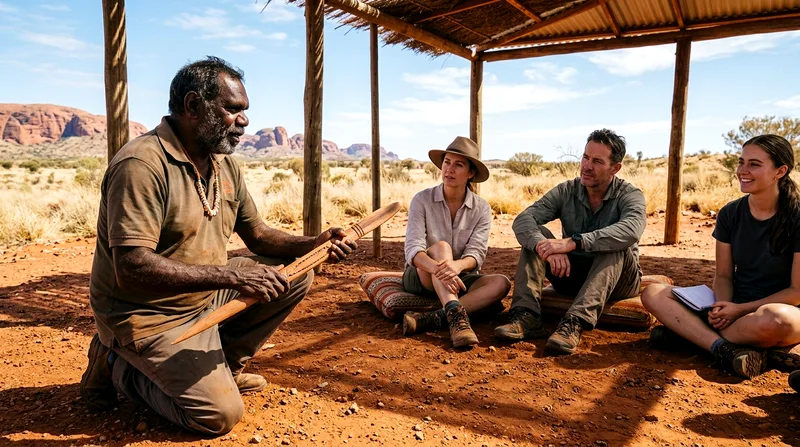
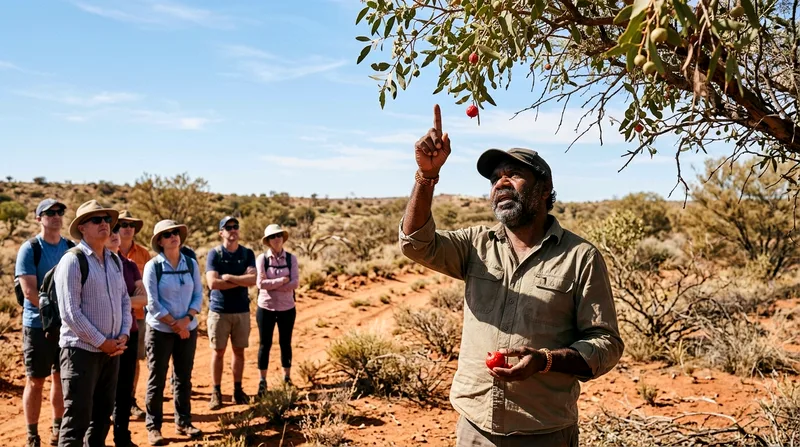
I'd recommend at least one paid cultural tour if your budget allows it, because the free exhibits are static and a guided walk adds a human layer — an Anangu guide or cultural interpreter sharing stories at the actual sites they describe hits differently than reading a panel indoors.
Ranger-led and cultural tours
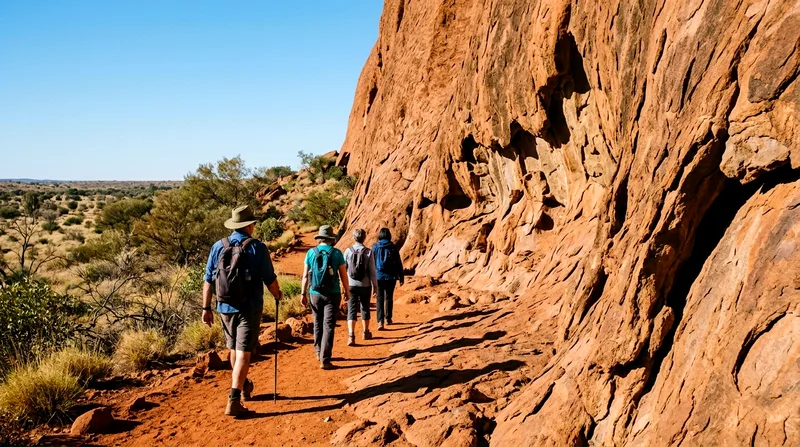
Park rangers and Anangu guides lead walks that combine the base of Uluru with explanations of bush food (Mai), water sources, and rock art panels you'd otherwise walk straight past. These generally run 1.5 to 2 hours and depart near the Mala carpark or the Cultural Centre itself. Compare this to a self-guided base walk around Uluru (the full loop is about 10.6 km and takes 3-3.5 hours) — the guided version covers far less distance but delivers far more context, which is the trade-off worth weighing.
Photography and workshop options
Some operators run dot-painting workshops or sunrise/sunset photography sessions that start near the Cultural Centre before moving to viewing areas. These tend to run 2-3 hours and are priced separately from base walks. Workshops are a reasonable option for families with children aged roughly 8 and up, since sitting through a full cultural talk can be a stretch for younger kids, but painting alongside an artist holds their attention better.
How to Visit: Independent vs. Guided
This is the real decision point. Independent visitors can drive themselves, park for free, walk the galleries at their own pace, and skip anything that doesn't interest them. It costs nothing beyond the park entry pass and suits solo travelers and couples who prefer control over their schedule. The downside: without background reading beforehand, some of the denser Tjukurpa panels can feel abstract, and there's no one to answer follow-up questions.
Guided tour packages — whether a half-day combining the Cultural Centre with the Uluru base walk, or multi-day Red Centre itineraries bundling Uluru, Kata Tjuta, and Kings Canyon — handle logistics for you and usually include a knowledgeable guide who fills in gaps the signage doesn't cover. They cost more and run on fixed timing, which doesn't suit travelers who want to linger or leave early.
A self-guided Cultural Centre visit is free and flexible, while guided cultural tours cost more but add stories and access you won't get from the panels alone.
Uluru Cultural Centre visit options compared: cost, time and what you get
| Visit Option | Typical Cost | Time Needed | Best For |
|---|---|---|---|
| Self-guided Cultural Centre | Free (park pass required) | 30-60 min | Solo travelers, independent planners |
| Ranger/Anangu-led base walk | Approx. AUD 60-120pp | 1.5-2 hrs | First-time visitors wanting context |
| Dot-painting or photo workshop | Approx. AUD 60-100pp | 2-3 hrs | Families, art-interested travelers |
| Half-day combined tour (Centre + base walk) | Approx. AUD 100-180pp | 4-5 hrs | Couples, time-limited visitors |
| Multi-day Red Centre package (Uluru, Kata Tjuta, Kings Canyon) | Varies widely by operator | 2-4 days | World travellers without a rental car |
Prices are typical ranges only — check current prices and inclusions when booking, as they vary by operator and season.
Self-guided visitor approach
If you're self-driving from Yulara or Alice Springs (the latter is about a 4.5-hour drive, or a short regional flight), build the Cultural Centre into your first morning at the park, before the base walk or sunset viewing. Bring water and a hat — the car park has minimal shade, and temperatures in the Red Centre regularly exceed 35°C from November through March.
Organized tour packages
Multi-day package tours out of Alice Springs or Yulara often bundle the Cultural Centre visit with Kata Tjuta's Valley of the Winds walk and sometimes Kings Canyon in Watarrka National Park, three to four hours further north. This suits travelers with limited time who'd rather not self-drive the Red Centre's long, flat highways. Compare current prices and itineraries before booking, since inclusions vary a lot between operators.
Best Time to Visit and Logistics
Fit the Cultural Centre in during the cooler parts of the day — mornings between roughly 8am and 10am work well, especially if you're combining it with an early base walk before heat sets in. Avoid the midday stretch in summer entirely; it's not about the centre's comfort (it's air-conditioned) but about what you do afterward, since stepping out into 40°C heat for a walk straight after isn't pleasant.
Seasonal considerations
Winter months (June to August) bring cooler, more comfortable days in the Red Centre, with mornings sometimes dropping near freezing — pack a jacket if you're doing an early visit. Summer (December to February) is brutally hot, and some outdoor guided tours get cancelled or shortened on extreme heat days. Shoulder seasons (April-May, September-October) are the best compromise for comfort and fewer crowds than peak winter school holidays.
Opening hours and facilities
The centre generally opens daily from early morning to late afternoon, roughly matching sunrise-to-sunset park hours, though you should check current opening hours before you go since they shift slightly with daylight. On site you'll find toilets, a café serving coffee and light meals, an art gallery with Anangu-made works for sale, and shaded seating — useful if you need a break from the heat before or after the base walk.
Frequently asked questions
Is the Uluru Cultural Centre free to enter?
Yes. There's no separate ticket or fee for the Cultural Centre itself — you only need the standard Uluru-Kata Tjuta National Park entry pass, which covers three consecutive days and costs roughly AUD 38 for an adult. The galleries, café, and art gallery are open to anyone who's entered the park.
How long does it take to visit the Cultural Centre?
Plan on 30 to 45 minutes for a reasonably thorough look at the main galleries. If you want to read every panel and browse the art centre properly, closer to an hour is realistic. Visiting in under 20 minutes means you're skimming rather than absorbing much.
What guided tours are available at the Cultural Centre?
Options generally include ranger or Anangu-led walks combining cultural stories with parts of the Uluru base walk, dot-painting workshops, and sunrise or sunset photography sessions that start near the centre. Availability and exact pricing change by season and operator, so check current tours and prices before you travel.
Should I visit the Cultural Centre before or after Uluru?
Before. The whole point is context — understanding Tjukurpa stories and why certain base-walk sites are sensitive changes how you experience the rock itself. Visiting afterward turns it into an afterthought rather than a frame for what you just saw.
What facilities are available at the visitor centre?
There are toilets, a café with coffee and light meals, shaded seating, and an art gallery selling Anangu-made works where proceeds go to the artists. It's a sensible place to cool off or refill water bottles before or after the base walk, especially in warmer months.