Compare Uluru helicopter tours by duration, route, and price. Book scenic flights over Ayers Rock with operator guides and booking tips.
What Is a Uluru Helicopter Tour
A Uluru helicopter tour is a short scenic flight — typically 15 to 36 minutes — departing from Ayers Rock Airport (Connellan Airport) that takes you over Uluru, and often Kata Tjuta, for an aerial view you simply can't get on foot. These aren't transport flights; they're sightseeing loops that return to the same helipad. Most operate from a small terminal a short drive from Yulara, the resort town that serves as the base for all Uluru-Kata Tjuta National Park visits.
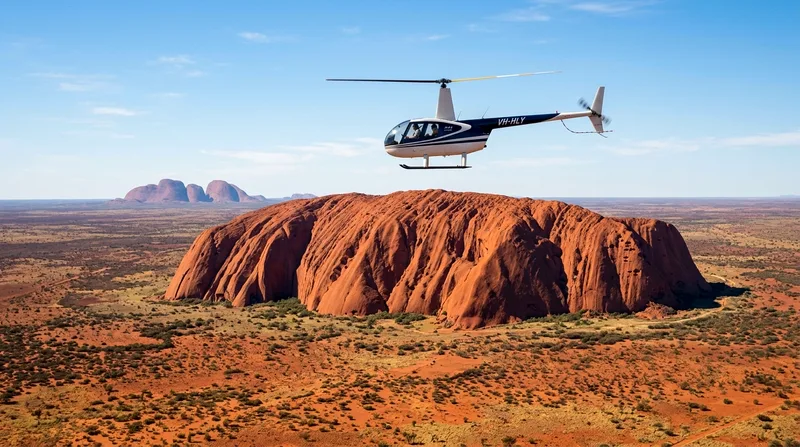
The appeal is straightforward: from the ground, Uluru looks like one enormous rock, but you can't perceive its actual outline, the cave systems etched into its sides, or how it sits in relation to Kata Tjuta's 36 domes a short distance away. From roughly 500 to 1,000 feet up, that changes completely. You see the rust-red surface streaked with darker patina, the waterholes and gorges cut into its base, and the sheer isolation of the formation in the surrounding spinifex plain.
I'd be honest with you: it's not cheap, and 15 minutes goes by fast. If you've already done the Uluru Base Walk (a flat 10.6 km loop) and seen Kata Tjuta's Valley of the Winds, you've covered the ground-level experience well. The helicopter adds a different dimension rather than replacing anything — think of it as a complement, not a substitute for time spent walking around the rock itself.
Why Choose an Aerial Experience
The honest case for flying: Uluru is 3.6 km long and 1.9 km wide, and at ground level you only ever see one face of it at a time. From the air you get the whole shape in one glance, plus a clear sense of scale against the surrounding Uluru-Kata Tjuta National Park and the Northern Territory's red center landscape. For travelers with mobility limits — older visitors, or anyone who can't manage the full Base Walk in heat — a helicopter flight delivers the "I've seen it properly" payoff without any walking at all. It's also simply more memorable as an occasion: plenty of couples add a scenic flight to a trip for that reason alone, not because it's efficient sightseeing.
What You'll See From Above
On a standard Uluru-only loop, expect views of the rock's full perimeter, the dry creek beds and rock pools at its base (visible even without recent rain), and the vegetation line where desert oak gives way to spinifex. Longer flights extend out to Kata Tjuta, roughly 25 km west, where you'll see the gaps between the domes that form the Valley of the Winds walking trail from above. On a very clear day you can sometimes pick out the distant escarpments toward Kings Canyon and Watarrka National Park, though that's weather-dependent and not guaranteed on every flight.
Helicopter Operators and Tour Options
A handful of operators run scenic helicopter flights out of Ayers Rock Airport, and most have been doing so for years with small fleets of 4- to 6-seat helicopters (commonly Robinson R44s or similar light aircraft). None of them are large commercial outfits — this is a niche, weather-dependent business, so fleets are small and seats fill up, especially around sunrise.
You'll generally choose between a few flight types rather than a long list of operators. Don't expect dramatic differences in the views between providers — you're all flying the same airspace over the same rock — so the real differences come down to aircraft type, flight length, and whether Kata Tjuta is included.
Major Operators at Uluru
Operators based at Ayers Rock Airport typically offer the same core products: a short Uluru-only flight, a longer combined Uluru and Kata Tjuta flight, and sometimes a private charter option for small groups wanting more flexibility on timing. Rather than name specific companies here — fleets and operating licenses change — the practical approach is to compare current operators and their options directly on a booking platform when you're ready to book, since availability and exact aircraft vary by season. What matters more than the operator's name is confirming: aircraft seating configuration (window seats matter for photos), maximum weight limits per passenger, and whether doors-off or high-visibility bubble windows are offered.
Flight Types and Inclusions
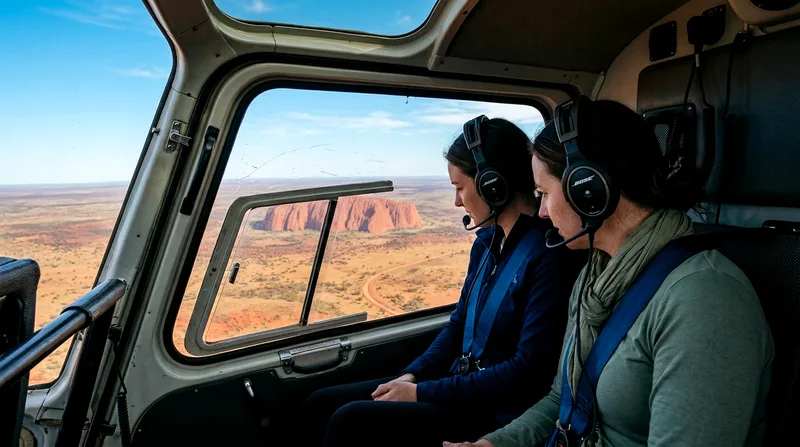
Inclusions are fairly standardized across the industry: a pre-flight safety briefing, headsets with pilot commentary pointing out landmarks, and return transfer from your Yulara accommodation in some packages (check this — not all include it). What's rarely included: photos. Some operators offer a GoPro mount or will shoot footage for an extra fee, so if aerial photography is your main goal, bring your own camera or phone with a strap, and ask about window-seat guarantees when booking, since middle seats in a 6-seat helicopter get a worse view.
Duration, Routes and Pricing
Flight length is the main lever that determines price, and it's worth thinking about in terms of cost-per-minute rather than total price alone, because the jump from a short flight to a long one is usually proportional to time in the air, not a discount for going longer.
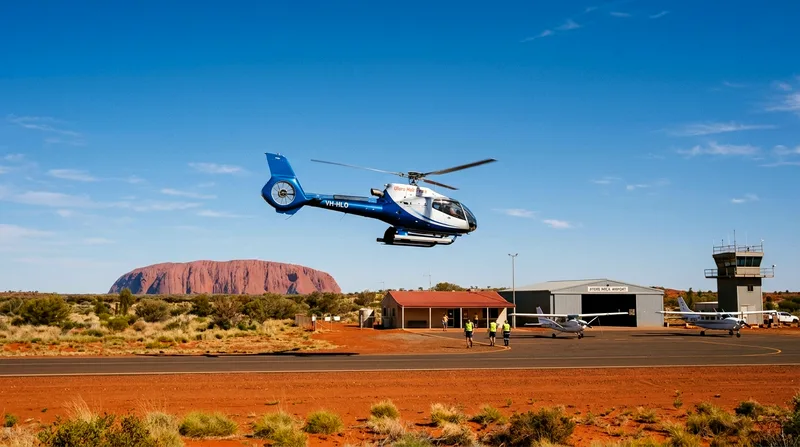
Flight length and whether Kata Tjuta is included are the two factors that most affect price.
Uluru helicopter tour options compared by duration, route and typical price
| Flight Option | Duration (min) | Route Covered | Typical Price (AUD, per person) |
|---|---|---|---|
| Short Uluru loop | approx. 15 | Uluru only | $150–$200 |
| Standard Uluru flight | approx. 20–25 | Uluru, extended loop | $200–$280 |
| Combined Uluru + Kata Tjuta | approx. 30–36 | Uluru and Kata Tjuta | $300–$450 |
| Private charter | Flexible | Custom route | Priced per helicopter, higher cost |
Typical figures based on commonly published ranges; prices vary by operator, season and fuel surcharges, so check current rates before booking.
Short Flights vs Extended Tours
The shortest flights, around 15 minutes, circle Uluru only and give you one full loop of the rock — enough to understand its shape but not much lingering time over any one feature. Mid-length flights, around 20 to 25 minutes, often extend slightly further out or do a second pass. The longer options, 30 minutes or more, typically add Kata Tjuta into the route, giving you both formations in a single flight. If you're deciding between a 15-minute Uluru-only flight and a 30-minute combined flight, I'd lean toward the longer one if budget allows — Kata Tjuta from the air is arguably more visually interesting than Uluru alone, since the cluster of domes and the gaps between them read much better from altitude than from the ground.
Price Ranges and Value Comparison
As a general guide, short Uluru-only flights (around 15 minutes) commonly run in the AUD $150–$200 per person range, while combined Uluru and Kata Tjuta flights (25–36 minutes) tend to fall between AUD $300–$450 per person. Private charters cost considerably more and are priced per helicopter rather than per seat. These figures move with fuel costs and operator pricing changes, so treat them as a planning guide — compare current prices and exact durations before you book, since the booking widget on this page shows live options. For context on value: a 36-minute Uluru-Kata Tjuta flight costs roughly what a half-day 4WD tour to Kings Canyon costs, but delivers a completely different kind of experience — fast and visual rather than immersive and on-foot. If your budget only stretches to one splurge activity in the region, weigh a helicopter flight against a Kings Canyon Rim Walk day trip or an Alice Springs scenic flight over the MacDonnell Ranges; they serve different purposes and aren't really substitutes for each other.
How to Book Your Flight
Booking a helicopter tour is less flexible than booking most ground-based Uluru experiences, mainly because seats are limited and weather can cancel a flight with little notice. I'd book at least a few days ahead if your trip includes a fixed departure date, and earlier still if you specifically want a sunrise or sunset slot, which sell out faster than the rest of the day.
Direct Booking and Third-Party Platforms
You can book directly with operators at Ayers Rock Airport, through your Yulara accommodation's tour desk, or via third-party booking platforms that aggregate several operators in one place. The third-party route is often easier for comparing flight lengths and prices side by side without calling around, and it usually doesn't cost more than booking direct. Whichever route you choose, confirm pickup arrangements in writing — some flights require you to make your own way to the airport, which is about a 15-minute drive from Yulara, not something every visitor accounts for when planning the morning.
Cancellation and Weather Policies
Weather cancellations are common enough that you should ask about the policy before paying. Most operators offer a full refund or free rescheduling if they cancel for weather — wind and dust are the usual culprits in the red center — but cancellations initiated by the passenger (changing your mind, or a late flight connection) are often non-refundable within 24–48 hours of departure. Build a buffer day into your itinerary if the helicopter flight matters to you; don't schedule it for your last morning before flying out of Uluru Airport, because a weather delay could mean missing it entirely.
Best Time to Fly
Timing affects both the view and the comfort of the flight more than most people expect before they arrive.
Seasonal Weather Considerations
The Northern Territory's dry season, roughly May to September, offers the most reliable flying conditions — clear skies, low humidity, and fewer afternoon storms. The wet season (December to March) brings heat that generates thermal turbulence by midday, plus a higher chance of cloud cover or dust haze that reduces visibility and can prompt cancellations. If your trip falls in the wet season, book a morning flight and keep your itinerary flexible around it rather than locking in a tight same-day schedule.
Visibility and Comfort Factors
Early morning flights, close to sunrise, tend to have the calmest air — wind picks up through the day, and light helicopters feel it more than fixed-wing aircraft. Sunrise and sunset flights also catch the rock's color at its most dramatic, when the red surface deepens against low-angle light, though these slots cost the same as midday flights and sell out first. Midday flights in summer can be bumpy and the rock looks flatter under harsh overhead sun — I'd avoid booking that slot if you have any choice in the matter, and if you get queasy on small aircraft, ask the operator about typical conditions that day before committing.
Frequently asked questions
How long does a typical Uluru helicopter tour last?
Most flights run 15 to 36 minutes. The shortest option circles Uluru only; anything over 25 minutes usually extends to include Kata Tjuta. Factor in an extra 30–45 minutes on the ground for check-in, safety briefing and boarding, so the full experience takes closer to an hour even for a 15-minute flight.
What is the average cost of a helicopter tour over Uluru?
Short Uluru-only flights typically cost AUD $150–$200 per person, while longer flights covering both Uluru and Kata Tjuta run AUD $300–$450 per person. Private charters cost more and are priced per aircraft rather than per seat. Always check current prices when booking, since fuel surcharges and seasonal demand shift rates.
Can you book a helicopter tour on the same day?
Sometimes, if there's spare capacity and weather cooperates, but it's a risk. Sunrise and sunset slots often sell out one to three days ahead, especially during the dry season (May–September) when demand peaks. If a specific time slot matters to you, book at least 2–3 days before your preferred date.
What happens if weather cancels my flight?
Reputable operators offer a full refund or free rescheduling when they cancel a flight for safety reasons — strong wind and dust are the most common causes around Uluru. Passenger-initiated cancellations close to departure are usually non-refundable, so check the specific policy before paying and avoid scheduling your flight on your last available morning.
Are helicopter tours suitable for all fitness levels?
Yes — this is one of the few Uluru experiences with effectively no physical requirement, which makes it a good option for senior travelers or anyone who can't manage the Base Walk's 10.6 km distance in the heat. There are usually weight limits per passenger for aircraft balance, and operators may ask for your weight when booking, so check that detail in advance.