Gentle-paced Uluru itinerary for older travellers. Accessible walks, coach tours, seated sunsets & comfort-focused experiences over 3 days.
Who This Itinerary Is For
This Uluru itinerary for seniors is built for travellers who want to see the rock properly without turning the trip into an endurance test. It suits anyone in their 60s, 70s or beyond who can manage short, flat walks of 20-40 minutes and who would rather book a coach seat than drive themselves across the Red Centre's long, featureless highways.
It's also a sensible template for travellers with hip or knee issues, those recovering from surgery, or anyone travelling with a walking stick, rollator or wheelchair. The full base walk around Uluru runs 10.6 km and takes able-bodied walkers around 3.5 hours — that's not realistic for most people on this itinerary, and there's no need to force it. Shorter paved sections cover the highlights.
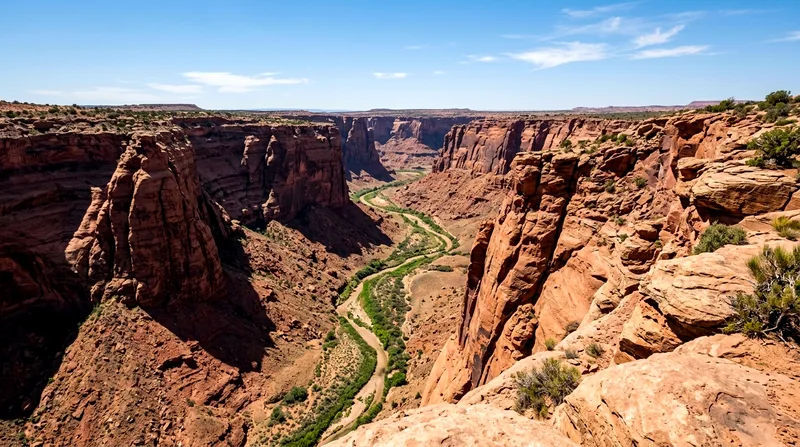
Where this plan won't suit you: if you're after a physical challenge, or you want to climb, scramble or do the Kings Canyon Rim Walk's steep sandstone steps, look elsewhere — Watarrka National Park's rim walk gains roughly 100 metres in the first 20 minutes and isn't comfortable for sore joints. Likewise, skip any self-drive itinerary that has you behind the wheel for the 450 km round trip from Alice Springs in one day; it's tiring even for confident drivers, and heat exhaustion risk climbs when you're managing a vehicle solo.
Day 1: Arrival and Sunset
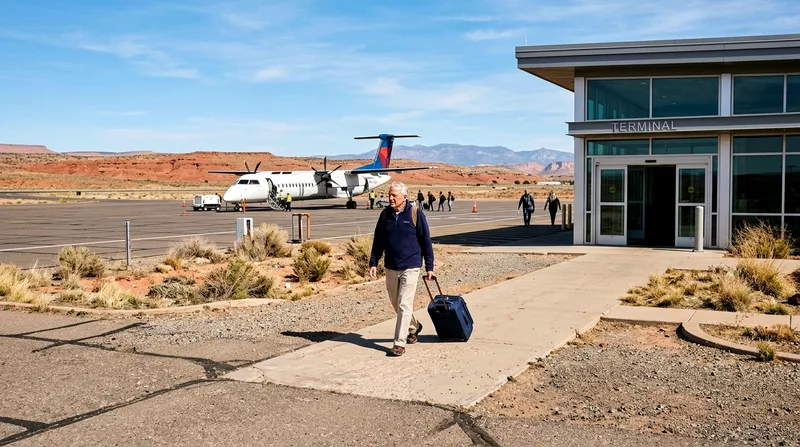
Fly into Ayers Rock Airport (Connellan) rather than driving from Alice Springs — the flight is under an hour versus a 5-6 hour drive, and it removes the single most tiring part of the trip. Most flights connect through Sydney, Melbourne or Cairns.
Morning and afternoon
Arrive late morning if possible, check into accommodation in Yulara, and rest. Don't schedule anything demanding on arrival day — the time zone shift and dry heat catch people out, even on a short domestic flight. Use the afternoon to acclimatise: sit by the pool, walk the short, shaded paths around the resort village, and hydrate properly. Yulara sits at a modest elevation with no altitude concerns, but the dry air dehydrates faster than travellers expect, especially those used to European humidity.
Evening
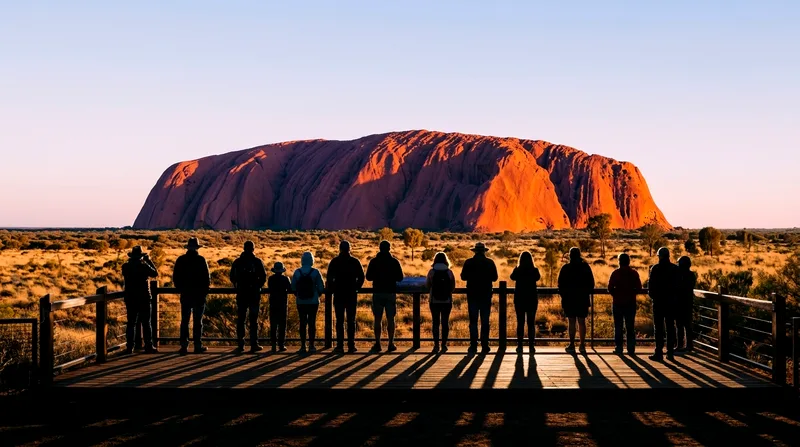
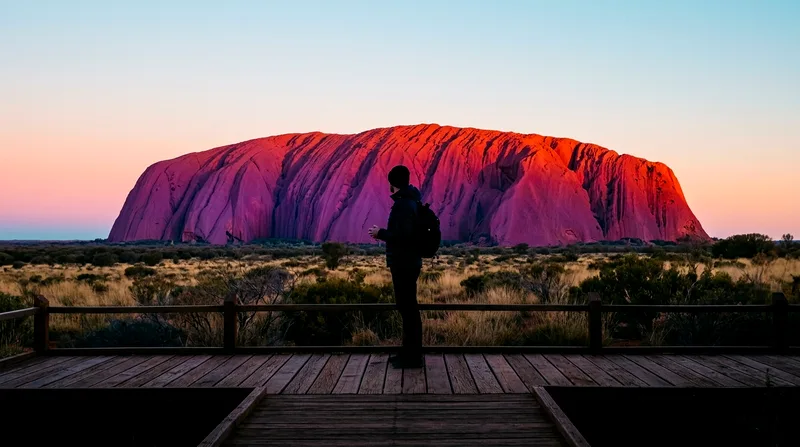
Book a seated sunset viewing experience for this first evening — many coach operators run a dedicated Uluru sunset viewing trip with assigned seating, a glass of sparkling wine, and canapés served at a raised viewing area with minimal walking from the coach. This beats driving yourself to the designated sunset car parks, which involves walking across soft sand to find a clear sightline. Book this ahead; sunset slots fill because there are only a handful of viewing areas and vehicle numbers are managed by the national park. Check current prices and departure times when booking, as they shift with sunset times across the year.
Day 2: Base Exploration
Day two is the core of this Uluru itinerary for seniors and focuses on the monolith itself, at a pace that doesn't punish anyone.
The Mala and Kuniya walks offer the easiest, most senior-friendly way to experience Uluru up close, while the full base walk and Kata Tjuta's Valley of the Winds suit only fitter travellers.
Accessible Uluru walks and activities compared for senior travellers
| Walk/Activity | Distance | Surface | Difficulty | Best For |
|---|---|---|---|---|
| Mala Walk | 2 km return | Paved, some shade | Easy | Seniors, wheelchairs/rollators |
| Kuniya Walk (Mutitjulu Waterhole) | 1 km return | Paved, flat | Easy | Short visits, hot days |
| Full Uluru Base Walk | 10.6 km loop | Mixed, limited shade | Moderate-hard | Fit, mobile travellers |
| Walpa Gorge (Kata Tjuta) | 2.6 km return | Unpaved, uneven | Moderate | Travellers with walking poles |
| Valley of the Winds (Kata Tjuta) | 7.4 km loop | Rock steps, steep sections | Hard | Fit hikers only |
Distances and surfaces are typical for the marked trails; conditions can change with weather or park maintenance, so confirm at the Cultural Centre on arrival.
Morning and afternoon
Start early — by 8am in the warmer months (October to April) — to avoid peak heat, which regularly tops 38°C in summer. A coach tour into Uluru-Kata Tjuta National Park is the easiest option: you're dropped close to the paved sections of the base walk, with the coach looping back to collect you rather than requiring a return walk. The Mala Walk (around 2 km return, flat, shaded in parts) and the Kuniya Walk to Mutitjulu Waterhole (a 1 km return walk, also flat) are the two most manageable sections, both with bench seating and shade shelters along the way. Skip the full base circuit unless you're genuinely fit for a half-day walk — there's limited shade on the southern side and few bail-out points once you're committed. The Cultural Centre near the base has air conditioning, seating and clean restrooms, and is worth 45 minutes on its own.
Evening
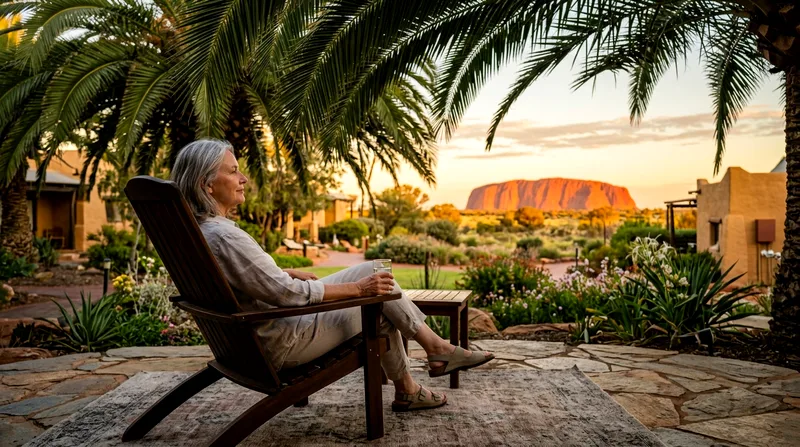
Return to Yulara for a late lunch and a proper rest in the hottest part of the afternoon — most sensible itineraries, senior-focused or not, build in downtime between 1pm and 4pm because the heat makes outdoor activity unpleasant and genuinely risky for older travellers. In the evening, consider a lower-key alternative to another coach sunset trip: a resort-based rooftop or terrace viewing spot at Ayers Rock Resort gives a similar view of Uluru turning red with zero walking and zero transport logistics.
Day 3: Cultural Immersion
The third day shifts focus from physical sightseeing to cultural understanding, which for many older travellers is the part that actually lingers.
Morning and afternoon
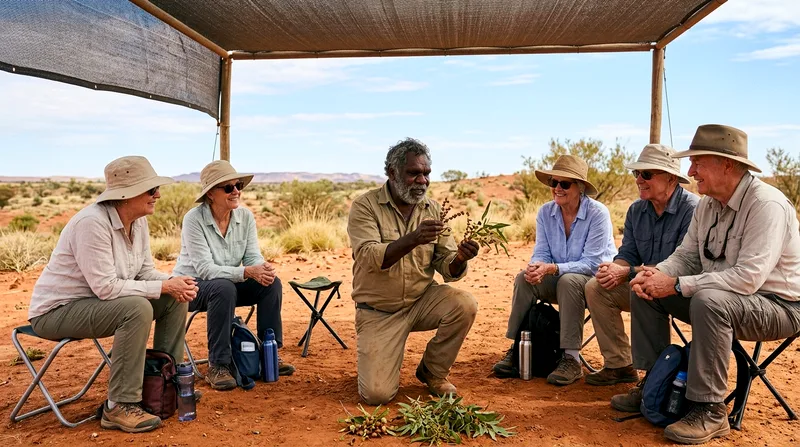
Book a guided tour led by Aboriginal guides through the Anangu-run cultural programs based at or near the Cultural Centre. These typically run 1.5-2 hours, involve short walks between seated demonstration areas, and cover bush food, tool-making or dot painting — all done sitting down under shade structures. This is a far gentler alternative to the Valley of the Winds walk at Kata Tjuta, which involves uneven rock steps and a 2.6-hour loop that's genuinely strenuous even for mid-fitness hikers. If Kata Tjuta is on your list at all, stick to the Walpa Gorge walk instead — a 2.6 km return path that's shorter and shadier, though still unpaved and uneven in sections, so a walking pole helps.
Evening
Spend the final evening at a seated dinner experience under the desert sky — several operators run outdoor dining events with fixed seating, heaters for cooler months, and minimal walking from the coach drop-off point. These run longer, often 3-4 hours, so pace yourself during the day if you've booked one. If sitting outdoors for that long doesn't appeal, Yulara's town square has restaurants with Uluru-facing terraces that offer nearly the same sunset view with far less commitment.
Getting Around Uluru
Uluru-Kata Tjuta National Park is roughly 20 km from Yulara, and there's no public transport loop connecting them hourly — you need either a hire car, a shuttle transfer, or a coach tour. For most seniors, coach tours for older travellers are the better call: they remove the stress of unfamiliar desert roads, roaming wildlife at dusk, and the sun glare that makes outback driving tiring.
Within the park, mobility aids are permitted on all paved paths, and the Mala and Kuniya walks are wheelchair- and rollator-friendly with a firm, sealed surface. The Cultural Centre has accessible restrooms and a drop-off zone close to the entrance. Hire cars are available in Yulara, but given the short distances involved, a multi-day coach pass or individual tour bookings usually work out simpler than managing a rental for three days.
Where to Base Yourself
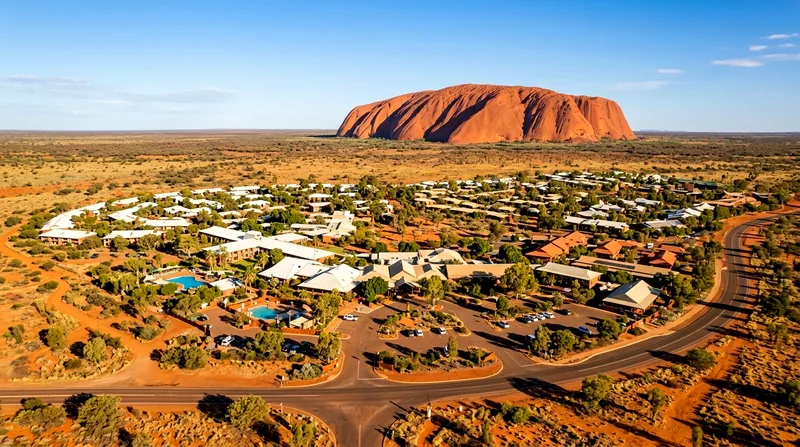
Yulara is the only realistic base — it's the purpose-built resort town that sits just outside the national park boundary and houses every accommodation option near Uluru, from camping through to four-and-a-half-star hotels, all under the Ayers Rock Resort umbrella. There's no real alternative; the nearest other town, Alice Springs, is 450 km away and not a sensible base for a short visit.
Within Yulara, pick accommodation based on how far you're willing to walk to the town square and shuttle pickup points — some properties are a 5-minute flat walk, others closer to 15 minutes. A free shuttle loops through the resort regularly during the day, which is worth using instead of walking in the heat. Avoid camping options unless you're genuinely comfortable with shared bathroom blocks and no climate control — fine for budget travellers, less so for older guests who value an easy night's sleep and air conditioning.
Optional Bookable Experiences
Beyond the core three days, a few bookable extras suit travellers who want more without pushing physical limits.
Guided coach tours
Half-day and full-day coach tours covering Uluru and Kata Tjuta together are widely available and typically include commentary, rest stops, and air-conditioned transport between viewing points. These suit seniors better than self-drive combos, since the 100 km round trip between the two sites on unfamiliar roads adds fatigue without adding much to the experience. Compare current prices and itineraries when booking — most run 5-8 hours and include lunch.
Seated cultural experiences
Look for astronomy evenings with reclined seating, or storytelling sessions held around fire pits with fixed chairs — both are common additions in Yulara and require no walking beyond the initial transfer. These work well as a lower-energy alternative to a full day of touring, particularly if you've had a demanding morning at the park. Book a night with minimal cloud cover if the stated appeal is stargazing — ask the operator about typical visibility conditions for the season.
Frequently asked questions
Can seniors walk around Uluru?
Not the full 10.6 km base loop comfortably, in most cases — but yes, seniors can easily manage the shorter paved sections like the Mala Walk (2 km return) and Kuniya Walk (1 km return) to Mutitjulu Waterhole. Both are flat, partly shaded, and have bench seating along the route, making them realistic for most mobility levels.
What is the best time of year for older travellers to visit?
May to September (the Southern Hemisphere winter) brings daytime temperatures around 20-25°C and cool, comfortable mornings — far easier on the body than the 38°C-plus heat common from December to February. Winter nights do drop near freezing, so pack layers for sunset and sunrise viewing.
Are there wheelchair-accessible experiences at Uluru?
Yes. The Mala and Kuniya walks have sealed, flat surfaces suitable for wheelchairs and rollators, the Cultural Centre has accessible restrooms and ramps, and several sunset viewing areas have paved platforms rather than sand. Confirm accessibility details directly with coach tour operators before booking, since vehicle ramps and seating vary.
How do I get around without walking long distances?
Book coach tours for the park itself, and use the free shuttle loop within Yulara rather than walking between accommodation and the town square in the heat. Hire cars are available but add unnecessary driving fatigue for a short stay, given distances within the park and resort area are short but spread out.
What should seniors know about the heat and altitude?
Altitude isn't a concern — Yulara sits at a modest elevation with no notable effects. Heat is the real factor: carry at least one litre of water per outing, wear a wide-brimmed hat, and schedule outdoor activity before 10am or after 4pm in the warmer months, resting indoors during the hottest stretch of the day.