Plan your 2-day Uluru itinerary with sunrise, base walk, Kata Tjuta hike, and sunset dinner. Balanced schedule without rushing.
Who This Itinerary Is For
This 2 day Uluru itinerary is built for travelers who want to see both Uluru and Kata Tjuta properly, rather than racing between viewpoints with a phone camera out the window. It suits couples and solo travelers who like a mix of early mornings and downtime, families with kids old enough to manage a few hours of walking, and senior travelers who want the highlights without back-to-back long hikes.
If you're flying into Ayers Rock Airport (Connellan) for a single overnight stop, this plan assumes two full days on the ground — arriving the evening before Day 1, or very early on Day 1 itself. Anyone trying to squeeze Uluru, Kata Tjuta, and Kings Canyon into two days will end up disappointed; that itinerary needs three days minimum, with a transfer or drive to Watarrka National Park eating a half-day on its own.
I wouldn't recommend this plan for anyone unwilling to do two sunrise starts — the light at both Uluru and Kata Tjuta is dramatically better in the first hour after dawn, and skipping it means missing the actual point of the trip. Heat is the other factor: between November and March, afternoon temperatures regularly hit 38-40°C (100-104°F), so the schedule below front-loads activity into cooler hours and treats midday as rest time, not sightseeing time.
Day 1: Uluru Sunrise & Base Walk
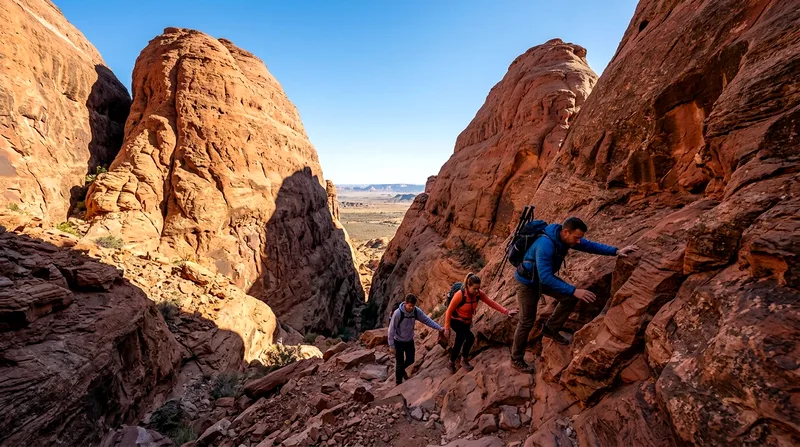
Day one is entirely dedicated to Uluru itself, and that's deliberate — trying to pair Uluru with Kata Tjuta on the same day means arriving at both exhausted and rushed. Base yourself in Yulara, the only accommodation town in Uluru-Kata Tjuta National Park, and plan your first alarm for roughly 90 minutes before official sunrise.
Morning: Sunrise viewing
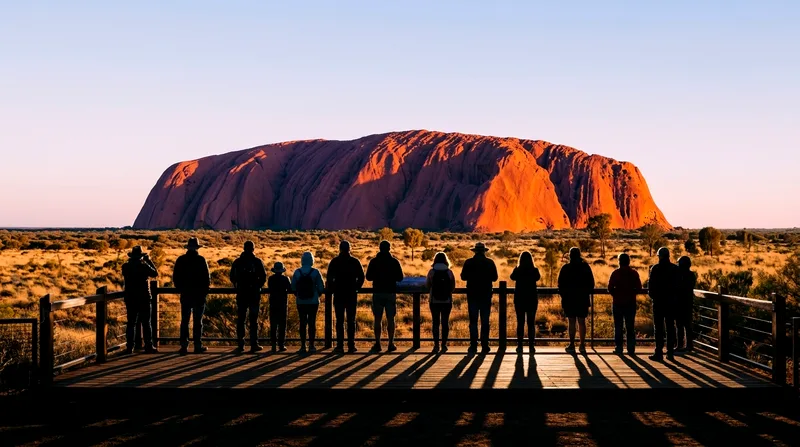
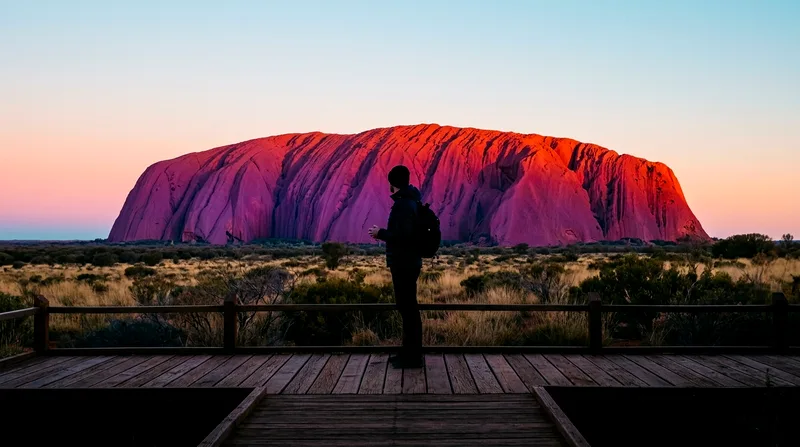
Sunrise at Uluru typically falls between 6:00am and 7:30am depending on the season, and the designated sunrise viewing area is about a 15-minute drive from Yulara. Arrive at least 30 minutes early — car parks fill up and the best color show happens before the sun actually clears the horizon, as the rock shifts from deep purple-grey to burnt orange. Bring a thermos of coffee; mornings in the Red Centre can drop to 5-10°C even when the day will later hit 35°C.
After sunrise, head to the Uluru Cultural Centre, a 20-minute stop that's genuinely worth it — it's free, run with input from the Anangu traditional owners, and gives context you won't get from a plaque at a lookout. Skip it and you'll be looking at a big red rock without understanding why climbing it was permanently closed in 2019 or what it means culturally.
Afternoon & evening: Base walk and rest
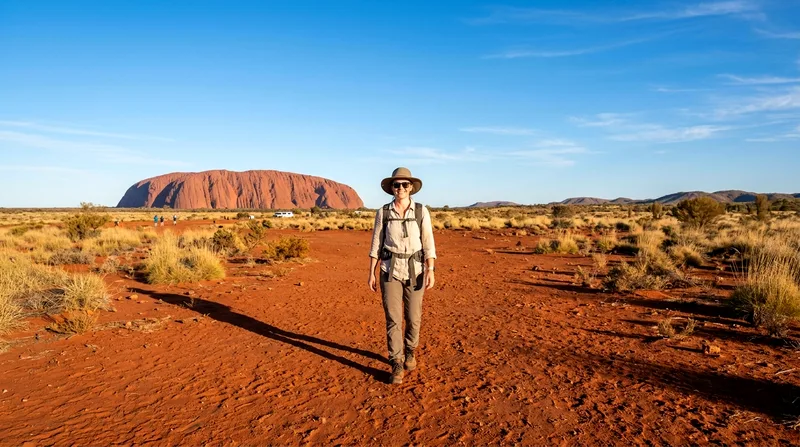
The full Uluru Base Walk is 10.6 km (about 3-3.5 hours at an easy pace) and circles the entire rock on flat, well-marked track. Start by 8:30am to beat the worst heat, carry at least 1.5 liters of water per person, and expect sections of full sun with no shade — there's a reason park signage recommends against starting the walk after 11am in summer. If the full loop feels like too much, the Mala Walk (2 km return, about an hour) covers one of the most scenic sections, including the Kantju Gorge waterhole.
Spend the early afternoon back in Yulara resting — the heat genuinely makes outdoor activity unpleasant between noon and 3pm, and most visitors underestimate how draining it is. Reserve one evening for a sunset viewing from the dedicated Uluru sunset viewing area, different from the sunrise car park, with the rock changing color again as the light drops. This is the one experience worth booking ahead: a sunset viewing experience with drinks and canapés, which gets you a reserved spot and avoids the scramble for parking that happens in the last 45 minutes before dusk.

Day 2: Kata Tjuta & Sunset Dinner
Day two shifts focus to Kata Tjuta (The Olgas), a 40-minute drive from Yulara and, in my opinion, the more visually striking of the two formations — the domed rock walls and narrow gorges feel more dramatic than Uluru's single monolith, even if Uluru gets all the marketing attention. Don't skip it to save time; it's a different kind of landscape entirely and the comparison is part of what makes a 2-day Uluru itinerary worthwhile.
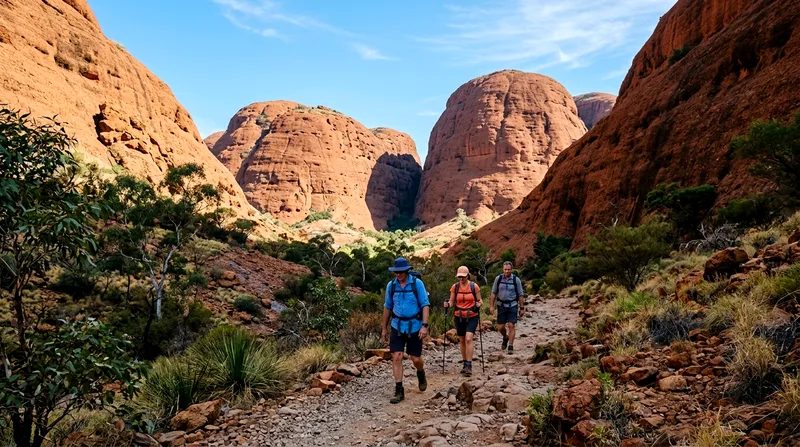
Day 1 focuses on Uluru's sunrise and base walk, while Day 2 shifts to the more physically demanding Kata Tjuta hike and a sunset dinner.
2 day Uluru itinerary: Day 1 vs Day 2 at a glance
| Day | Main Site | Key Activity | Duration | Difficulty |
|---|---|---|---|---|
| Day 1 | Uluru | Sunrise viewing + Base Walk | Approx. 5-6 hours total | Easy, flat terrain |
| Day 1 | Uluru Cultural Centre | Cultural context stop | 20-30 minutes | Easy |
| Day 2 | Kata Tjuta | Valley of the Winds walk | 3-4 hours | Moderate, uneven rock |
| Day 2 | Yulara | Sunset dinner experience | 2-3 hours | Easy |
Timings are typical for the dry season; always check park alerts for track closures due to heat before you set out.
Morning & afternoon: Valley of the Winds
Leave Yulara by 7am to reach Kata Tjuta for cooler walking conditions. The Valley of the Winds walk is 7.4 km return (allow 3-4 hours) and is noticeably harder than the Uluru Base Walk — it climbs over rocky, uneven terrain with two lookout points, Karu and Karingana, and the park closes the track beyond Karu if forecast temperatures exceed 36°C, usually by 11am. If you're traveling with young kids, seniors with mobility concerns, or simply want less exertion, the walk to Karu Lookout alone is 2.2 km return and takes about an hour, with much of the same scenery.
Pack more water than you think you need — 2 liters minimum per person — and sturdy shoes; the surface is loose rock in places and flat sandals are a genuine hazard here, unlike the smoother Uluru base track.
Evening: Sunset dinner experience
After an afternoon rest back in Yulara (the pool at most accommodation options is not a throwaway amenity out here — use it), spend your final evening at a sunset dining experience overlooking the desert, with Uluru and Kata Tjuta both visible from elevated dining areas near the resort precinct. These dinners are the one other booking worth locking in before you arrive, since they run on fixed nightly departures and do sell out, particularly over Australian school holidays and the cooler April-to-September peak season. Expect a multi-course meal, often under starlight with some operators including a short astronomy talk — check current prices and availability when booking, as these vary by season and inclusions.
Getting Around Uluru
Most of this itinerary works without a rental car if you book shuttle transfers or join tours for the base walk, Valley of the Winds, and sunset viewings — several operators run return coach transfers from Yulara accommodation to both sites, timed around sunrise and sunset. That said, I'd lean toward renting a car if your budget allows it: Uluru is 20 km from Yulara and Kata Tjuta is about 50 km, and having your own vehicle means you're not locked into a tour group's schedule for sunrise, which is the single most time-sensitive part of this whole trip.
There's no public bus network connecting Yulara to the national park — it's shuttle, tour, or rental car, full stop. A park entry pass costs around AUD 38 per adult and is valid for three consecutive days, which comfortably covers this two-day plan with a buffer. Fuel and car hire in Yulara itself are expensive compared to Alice Springs, about 450 km away, so if you're driving in from Alice Springs or doing a longer Red Centre loop through the MacDonnell Ranges, fill up before you arrive.
Where to Base Yourself
Yulara is the only real option inside the national park boundary, and it works because everything — hotels, the shuttle hub, the supermarket, the visitor centre — sits within easy walking distance of each other. Accommodation ranges from a camping ground and budget cabins to mid-range hotels and one well-known luxury property; prices spike noticeably during the cooler April-to-October peak season, so book your two nights well ahead if you're traveling then.
Some travelers ask about basing themselves in Alice Springs instead and day-tripping to Uluru — don't. It's a 5-hour drive each way, which makes a round trip over 10 hours and defeats the entire purpose of an early sunrise start. Alice Springs is worth visiting in its own right, with the MacDonnell Ranges nearby, but treat it as a separate leg of a Red Centre trip, not a base for this itinerary. Coober Pedy, the underground opal-mining town, is sometimes floated as a stopover between Uluru and Adelaide, but it's roughly 700 km from Yulara — a road-trip waypoint, not a base for these two days.
Optional Bookable Experiences
Beyond the core itinerary, a handful of add-ons are worth considering if you have flexibility or energy left over, though I'd caution against stacking too many into just two days — this is meant to be a measured trip, not an endurance test.
Guided tours and activities
A guided Uluru base walk with an Anangu or trained local guide adds real depth versus walking it solo with a brochure — you'll get explanations of specific rock art sites and waterholes that aren't obvious otherwise, typically for a few hours in the morning. Helicopter or small-plane scenic flights over both Uluru and Kata Tjuta run from Yulara's small airstrip and give a genuinely different perspective on the rock formations' scale, which is hard to grasp from the ground. Camel tours at sunrise or sunset are popular with families and are a gentler alternative to walking if legs are tired from Day 1. Compare current tour prices and operator options before you book, since availability shifts seasonally.
Dining and cultural experiences
Beyond the sunset dinner already built into Day 2, look at daytime cultural workshops run near the Cultural Centre — dot painting or boomerang-throwing sessions led by Anangu guides, usually an hour or so, and a good option for families with children who've had enough walking for one day. A stargazing session after dinner is also worth the extra hour; the Red Centre's lack of light pollution makes for noticeably better night skies than you'd see near Darwin or Alice Springs.
Frequently asked questions
Can you see both Uluru and Kata Tjuta in 2 days?
Yes — this is the realistic minimum for seeing both properly. Day 1 covers Uluru's sunrise and the 10.6 km Base Walk; Day 2 covers Kata Tjuta's Valley of the Winds and a sunset dinner. Trying to do both sites in a single day means skipping one almost entirely, since each requires an early start and several hours on foot.
What is the best time of day to visit Uluru?
Sunrise and sunset, without question — the rock's color shifts dramatically in the hour around dawn and dusk, going from grey-purple to deep red-orange. Midday sightseeing is the worst option: harsh flat light washes out the color, and temperatures from November to March can hit 38-40°C, making walking genuinely uncomfortable.
How long is the Kata Tjuta Valley of the Winds walk?
The full loop is 7.4 km return and takes 3-4 hours, with rocky, uneven terrain and two lookouts, Karu and Karingana. The park closes the track past Karu Lookout if forecast temperatures exceed 36°C, usually enforced by mid-morning in summer, so start by 7-8am if you want the full walk.
Do you need a car to explore Uluru?
Not strictly — shuttle transfers and guided tours cover sunrise, sunset, and both major walks from Yulara accommodation. But a rental car gives you control over timing, which matters most for sunrise, and avoids being tied to a tour group's fixed schedule. Uluru is 20 km from Yulara; Kata Tjuta is about 50 km.
What should you bring to Uluru?
At least 1.5-2 liters of water per person per walk, sun protection (hat, SPF50, sunglasses), sturdy closed shoes for Kata Tjuta's rocky track, and a light jacket for early mornings when temperatures can drop to 5-10°C even in summer. A fly net is genuinely useful too — bush flies are persistent year-round and cheap head nets are sold locally in Yulara.