A practical Uluru itinerary for families with kids — pram-friendly walks, shaded activities, and age-appropriate cultural tours over three days.
Who This Itinerary Is For
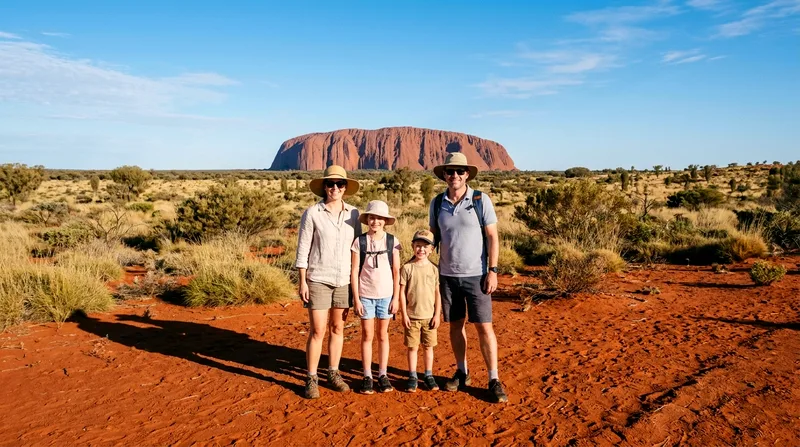
This Uluru itinerary for families is built around children roughly aged 3 to 12, and it assumes you're flexible on timing but not on budget or energy. If you're traveling with a baby under 12 months, the extreme daytime heat (above 38°C / 100°F from November to March) makes this a harder trip to recommend — not impossible, but you'll spend more time retreating to air conditioning than walking.
The plan covers three full days based in Yulara, the small purpose-built town that services Uluru-Kata Tjuta National Park. It's not a rushed two-day dash, and it's not a leisurely week either — three days is the sweet spot where you see Uluru, Kata Tjuta, and get one proper cultural experience in, without kids melting down from overstimulation or heat fatigue.
I'd steer families away from cramming Kings Canyon or Alice Springs into the same trip unless you have five days minimum — the drive from Alice Springs to Uluru is about 450km (roughly 5 hours), and Kings Canyon adds another 300km round trip from Yulara. Trying to combine all three in three days means long car time with tired kids and almost no rest. If you've got extra days, add Kings Canyon as a fourth day rather than squeezing it into this plan.
Shoulder season — April to September — is genuinely the best time for this itinerary. Daytime temperatures sit between 20-30°C, mornings are cool enough for a 7am walk start, and flies (a real nuisance at Uluru year-round) are somewhat less aggressive outside summer.
Day 1: Arrival and Orientation
Most families fly into Ayers Rock Airport (Connellan Airport), a short regional hop from Alice Springs, Sydney, Melbourne, or Cairns. Flights land in Yulara itself, so there's no long transfer — a genuine advantage over basing yourself anywhere else in the Red Centre.
Morning and afternoon
Treat arrival day as low-key. Check into your accommodation in Yulara, let kids nap or decompress from travel, and use the afternoon for the free Town Square activities Ayers Rock Resort runs — there are often didgeridoo demonstrations, garden walks, or a bush food talk, all shaded and under an hour. These are genuinely good for restless kids and cost nothing extra if you're already staying at the resort.
Walk or take the free shuttle to the Cultural Centre inside the national park (it's included in your park entry fee, valid for three days). The Cultural Centre has air-conditioned indoor space, interpretive displays at kid height, and clean bathrooms — useful for resetting before you've even started proper sightseeing. Budget 45-60 minutes here; it's not a place toddlers will tolerate much longer than that.
Evening
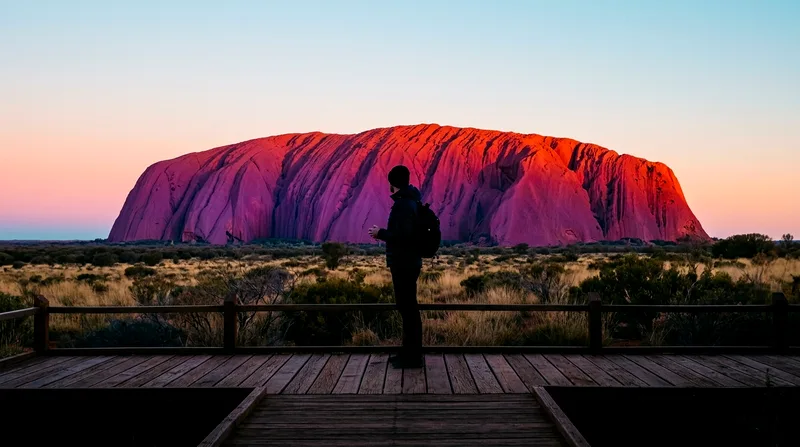
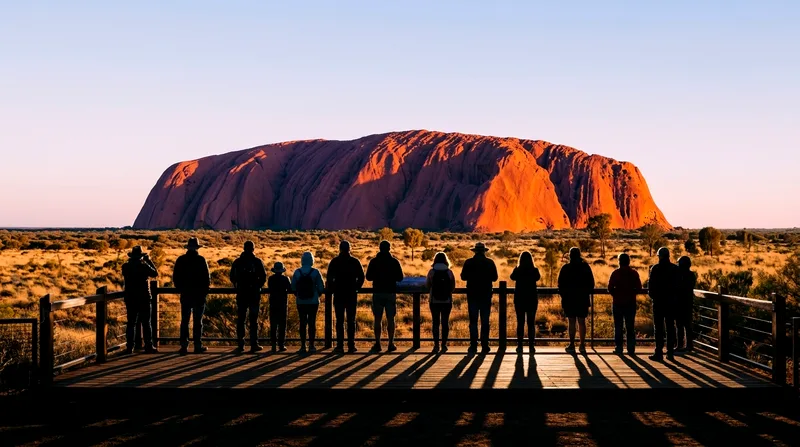
Head to the Uluru sunset viewing area for your first look at the rock changing colour as the sun drops — allow 45 minutes there including parking and walking to the platform. Bring a picnic rug and snacks; the car park has accessible viewing spots that don't require walking far, which matters if you've got a stroller or a child who's already tired. Avoid the main lookout crowds by arriving 30 minutes before sunset rather than right at the "best" moment — you'll get a better spot and avoid jostling with tour buses.
Day 2: Uluru Base Walk and Cultural Immersion
This is the core day of any Uluru itinerary for families, and it's worth planning around the heat rather than the clock.
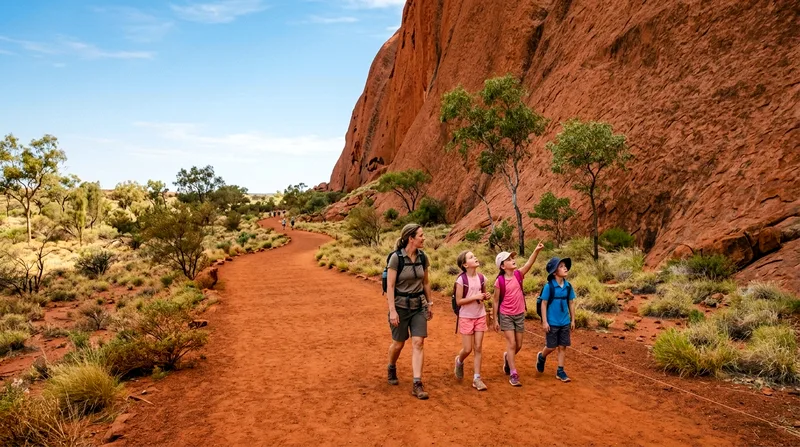
For families, the Mala Walk and Walpa Gorge offer the flattest, most shaded options, while the full Base Walk and Valley of the Winds suit older, fitter kids only.
Uluru and Kata Tjuta family walks compared: distance, difficulty, and shade
| Walk | Distance (return) | Time (approx.) | Difficulty | Shade | Pram-friendly |
|---|---|---|---|---|---|
| Mala Walk (Uluru) | 2km | 1 hour | Easy | Good | Yes |
| Kuniya Walk (Uluru) | 1km | 30-40 min | Easy | Good | Yes |
| Full Uluru Base Walk | 10.6km | 3-3.5 hours | Moderate | Partial | Limited |
| Walpa Gorge (Kata Tjuta) | 2.6km | 1 hour | Easy-Moderate | Good | No (loose rock) |
| Karu Lookout (Kata Tjuta) | 2.2km | 1 hour | Moderate | Partial | No |
| Valley of the Winds (full) | 7.4km | 3-4 hours | Hard | Limited | No |
Times assume family pace with breaks; distances are well-established park figures, but conditions and track closures (common on hot days) can change access, so check at the Cultural Centre on arrival.
Morning and afternoon
Start early — gates to the base walk area are accessible from sunrise, and you want to be walking by 7am at the latest, especially October through March. The full Uluru Base Walk is 10.6km and takes adults 3-3.5 hours; that's too long for most young children. Instead, do the Mala Walk, a flat, well-shaded 2km return section (about 1 hour) that includes rock art sites and is explicitly designed with interpretive signage for shorter attention spans. It's one of the few genuinely pram-friendly sections of the base walk — flat, compacted dirt, no steps.
If your kids are older (8+) and coping well, extend to the Kuniya Walk on the opposite side, a 1km return path leading to Mutitjulu Waterhole — another shaded, flat option with a payoff (a permanent waterhole and more rock art) that holds kids' interest better than open desert views.
This is the day to book a ranger-led or Aboriginal-guided walking tour rather than going it alone. A guide trained in Anangu culture — the Traditional Owners of this land — explains the rock art and stories in a way that's built for engagement, not lecture. These tours typically run 1.5-2 hours, cost in the AU$80-150 per adult range (children often discounted or free under a certain age — check when booking), and small-group sizes mean guides naturally adjust pacing for kids. Book this 1-2 weeks ahead in peak season; it sells out faster than you'd expect for a desert walking tour.
Retreat to Yulara by 11am before the heat peaks. Swim at the resort pool in the afternoon — every accommodation tier in Yulara has pool access, and it's the single best heat-management tool for this trip.
Evening
Keep it simple: dinner at the resort's Town Square, which has several casual, kid-tolerant options (a bakery, a supermarket for self-catering, casual grills). Skip booking a formal dinner experience tonight — kids will be tired from the morning walk, and you don't want a late, rigid sit-down after a 7am start.
Day 3: Kata Tjuta and Sunset
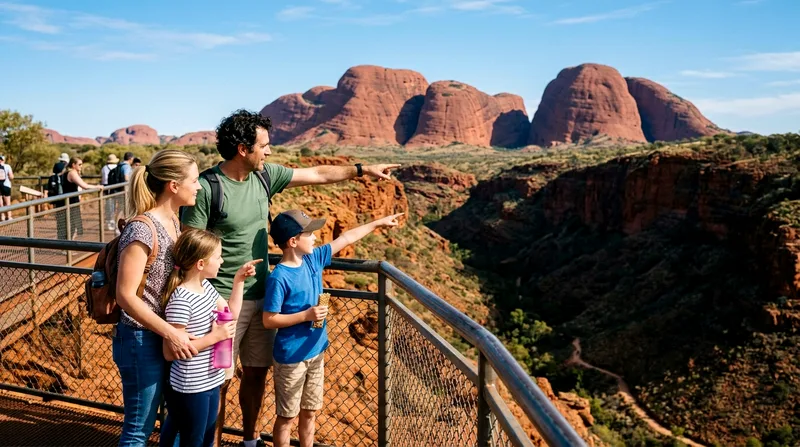
Kata Tjuta (The Olgas) sits about 50km west of Yulara, roughly 40-45 minutes by car, and it's genuinely underrated compared to Uluru — fewer crowds, more shade, and dramatic rock domes kids find visually stranger and more interesting than a single monolith.
Morning and afternoon
Drive out early, again aiming to start walking by 8am. Skip the full Valley of the Winds circuit (7.4km, 3-4 hours, includes steep rocky sections) with young kids — it's genuinely difficult underfoot and not pram-compatible at all. Instead, do the walk to the first lookout (Karu Lookout), a 2.2km return section that's moderate but manageable for most kids over 5, taking about 1 hour. There's shade at the lookout itself, a good spot for a water break.
For kids under 5 or anyone pram-bound, the Walpa Gorge walk is the better call: 2.6km return, mostly flat with some loose rock near the end, roughly 1 hour, and walled by 150-metre rock faces that stay shaded most of the morning. It's a genuinely good alternative if Valley of the Winds looks too ambitious.
Bring more water than you think you need — there are no refill stations at Kata Tjuta itself, unlike the Uluru Cultural Centre. Pack at least 1.5 litres per person for a morning visit.
Evening
Head back to Yulara for a midday rest, then return to Uluru for your second and final sunset — this time from the Kata Tjuta Dune Viewing area if you want a different angle, or back at the main Uluru sunset car park if the kids prefer familiarity. This is the night to consider a sunset-with-dinner experience — several operators run a sunset viewing combined with a buffet or bush-food-inspired dinner under the stars, generally 3-4 hours door to door. It's a splurge (expect AU$150-250 per adult, less for kids), but it's the one evening on this itinerary worth spending more on, since it bookends the trip well. Compare current sunset dinner tours and prices before you book, since inclusions vary by operator.
Getting Around with Kids
Yulara itself is small and walkable — most accommodation is within 10-15 minutes on foot of Town Square, and a free shuttle loops the resort precinct every 20 minutes or so. You won't need a car for anything inside Yulara.
For the national park, you have two realistic options: rent a car in Yulara (there's a small Hertz/Thrifty-style desk at the airport and in town) or book a coach tour that includes park transfers. For families with young kids, I'd lean toward renting a car for at least one day — it lets you control timing around naps and heat, which matters more than any tour schedule. Car hire in Yulara runs higher than capital cities, often AU$80-120/day for a small SUV, reflecting the remote location.
The park entry fee (around AU$38 per adult, valid 3 days, children under 18 free) covers all the walks mentioned above. Buy it online in advance or at the park entry station — lines can build up around 7-8am when everyone's trying to beat the heat for sunrise walks.
One thing to avoid: don't rely solely on hop-on tour buses if you have kids under 6. The fixed pickup/drop-off windows don't accommodate a meltdown or an unscheduled nap, and you'll find yourself watching the clock instead of the rock.
Where to Base Yourself
Yulara is the only real base — it's purpose-built specifically because camping or staying inside the national park itself isn't permitted. Within Yulara, Ayers Rock Resort operates several tiers under one roof, essentially, so your choice is about budget rather than location.
Families on a budget do well at the Outback Pioneer Hotel & Lodge, which has family rooms and is close to a pool and the Town Square food court — expect around AU$250-350/night for a family room in shoulder season. Mid-range families often choose Desert Gardens Hotel, where some rooms have partial Uluru views, running AU$350-500/night. At the top end, Sails in the Desert has the largest pool and most polished family facilities, but you're paying a premium — often AU$500+/night — mostly for aesthetics rather than anything that meaningfully improves a toddler's day.
There's also a campground (Ayers Rock Campground) with powered sites from roughly AU$50-60/night, a genuinely good option if you've got a camper setup and older, more flexible kids — less good if you need reliable air conditioning for midday naps, since cabins are limited and book out early.
I wouldn't recommend basing in Alice Springs and day-tripping to Uluru — the 450km distance each way makes it a non-starter for families with young children.
Optional Bookable Experiences
Beyond the core three days, a few experiences are worth considering if your kids are older or you have an extra day. A camel tour around the Uluru area runs seasonally, generally 1-1.5 hours, and works well for kids 6+ who find walking tedious but enjoy animals — expect roughly AU$100-150 per adult. Segway tours around the base exist too, but age and height minimums (often 12+) rule out younger kids, so check requirements before booking rather than discovering the restriction on arrival.
If you have a fourth day, Kings Canyon in Watarrka National Park is the most natural add-on, though the Rim Walk (6km, 3-4 hours, with a steep initial climb) is genuinely tough for kids under 10 — the easier Kings Creek Walk (2.6km return, flat) is the family-friendly alternative there. It's a long day trip from Yulara (around 3 hours each way), so it's only worth it if you're staying an extra night near Kings Canyon itself rather than doing it as a return day trip.
I'd skip anything branded as an "adventure" activity — quad biking, longer 4WD dune tours — for kids under 10. They're built for adult thrill-seekers, not for children who are more engaged by a guide pointing out witchetty grubs and explaining bush medicine than by speed.
Frequently asked questions
What is the best age to visit Uluru with children?
Children aged 5 to 12 generally get the most out of a visit — they can manage the shorter walks (Mala Walk, Walpa Gorge), engage with Aboriginal storytelling, and handle the heat better than toddlers. Kids under 3 can still visit comfortably if you lean on prams, shade, and pool time rather than long walks, but expect to skip the Base Walk and Valley of the Winds entirely.
How long should families spend at Uluru?
Three full days is the realistic minimum to see Uluru, Kata Tjuta, and fit in one cultural tour without rushing kids through heat and long walks. Two days is doable but tight — you'll likely cut either the Kata Tjuta visit or a proper rest afternoon. Five days only makes sense if you're adding Kings Canyon as a separate overnight trip.
Are there pram-friendly paths at Uluru?
Yes — the Mala Walk (2km return) and Kuniya Walk (1km return) are both flat, compacted-dirt paths suitable for prams. The full 10.6km Base Walk has some uneven and sandy sections that make continuous pram use harder, though not impossible with an all-terrain model.
What should I pack for kids at Uluru?
Wide-brimmed hats, SPF50 sunscreen, fly nets (genuinely useful — flies are persistent year-round), at least 1.5 litres of water per child for any walk, and lightweight long sleeves for sun protection rather than relying on sunscreen alone. A fully stocked IGA supermarket in Yulara's Town Square covers anything you forget.
Can young children do the Uluru Base Walk?
The full 10.6km loop is too long for most children under 8 — plan 3-3.5 hours for adults alone. Instead, do the Mala Walk or Kuniya Walk sections, both under 2km return and specifically signposted with family-friendly interpretive stops, then skip the rest of the loop.