Plan your solo trip to Uluru with this 3-day itinerary. Discover social group tours, no single supplements, and tips for solo travellers.
Who This Itinerary Is For
This uluru solo traveller itinerary is built for people doing the Red Centre alone — backpackers stretching a budget, flashpackers who want comfort without a travel partner, and older solo travellers who'd rather join a small group than drive themselves through 40°C heat. It assumes three full days based in Yulara, no rental car, and a mix of one or two booked group tours plus independent walking time.
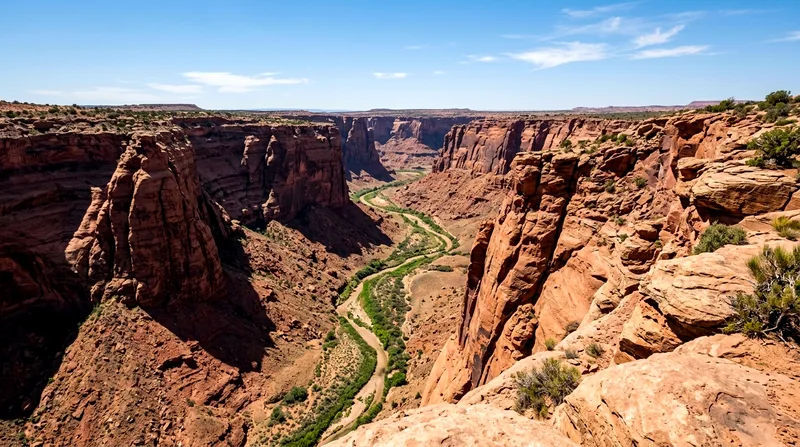
If you're coming from Alice Springs by bus or flight, or linking this to a longer Northern Territory loop through Kings Canyon and Kata Tjuta, this plan slots in cleanly before or after Watarrka National Park. It's less useful if you're road-tripping with your own vehicle — in that case you have more flexibility on timing and don't need to lean on shuttles as much.
Three days is the minimum to do Uluru justice without rushing. Two days works if you skip Kata Tjuta, but that's the park's second major landform and skipping it means missing Walpa Gorge, which has far more shade and a genuinely different feel than Uluru's base walk. Solo travellers with five or more days should consider adding Kings Canyon's Rim Walk, roughly a four-hour round trip and one of the better day hikes in the Red Centre.
One honest caution: don't assume you'll meet people constantly just because you're solo. Yulara's accommodation is spread out and the resort isn't a backpacker party town — it's quiet, family-oriented, and early-to-bed because tours leave before dawn. The social connection comes from the tours themselves, not the town.
Day 1: Arrival & Sunset
Most solo travellers arrive at Ayers Rock Airport (Connellan), a 10-minute drive from Yulara, with free shuttle transfers usually included for resort guests. Flights connect through Alice Springs, Sydney, or Melbourne, and there's no public transport beyond the resort shuttle, so confirm your accommodation's transfer schedule before you land.
Morning & afternoon
If you land in the morning, drop your bags and head straight to the Uluru-Kata Tjuta Cultural Centre, a 15-minute drive from Yulara (free shuttle or included on most tours). It's the best orientation point — exhibits on Anangu culture and the Tjukurpa law explain why certain sites are off-limits to photography, which matters once you're near the rock itself. Budget 45–60 minutes.
Afternoons are brutally hot outside the cooler months (May to September), so this is a good window for resting, swimming at your accommodation, or wandering Yulara's small shopping square. Don't plan strenuous walking between noon and 3pm in summer — heat exhaustion is a real risk, and there's minimal shade on most trails around Uluru itself.
Evening
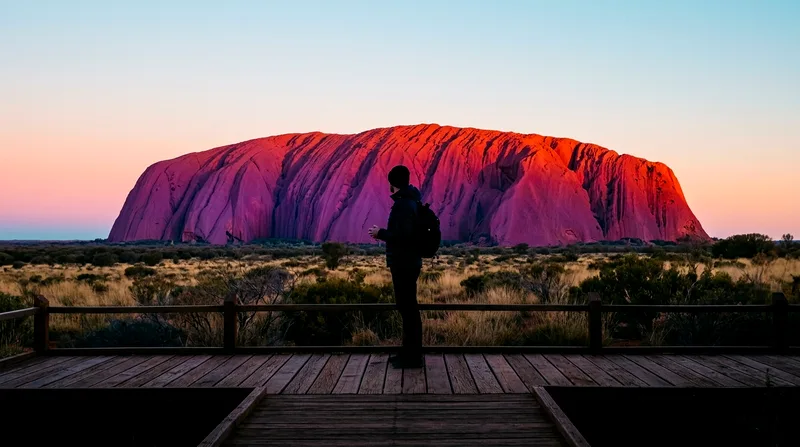
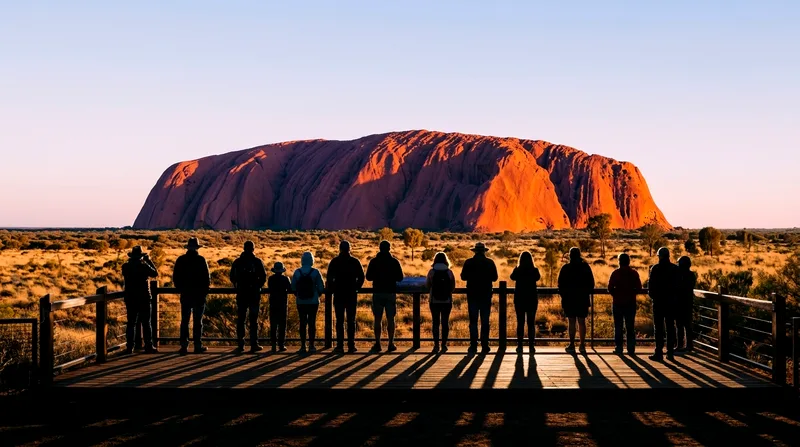
This is the day to book a sunset viewing experience — the single most worthwhile bookable activity on day one. Group sunset tours typically include transport to a designated viewing area, a glass of wine or soft drink, and a guide who explains the colour changes as the sun drops. Book this in advance; viewing areas can fill up, and going with a group means you're not standing alone in a car park at dusk.
Compared to Kata Tjuta's sunset viewing spot, Uluru's sunset is more popular and more crowded, but also more dramatic in colour shift. Some operators offer combined sunset-plus-dinner experiences with Aboriginal guides discussing bush food and stars afterward — a solid way to meet other travellers on your first night without committing to a full-day tour yet.
Day 2: Base Exploration
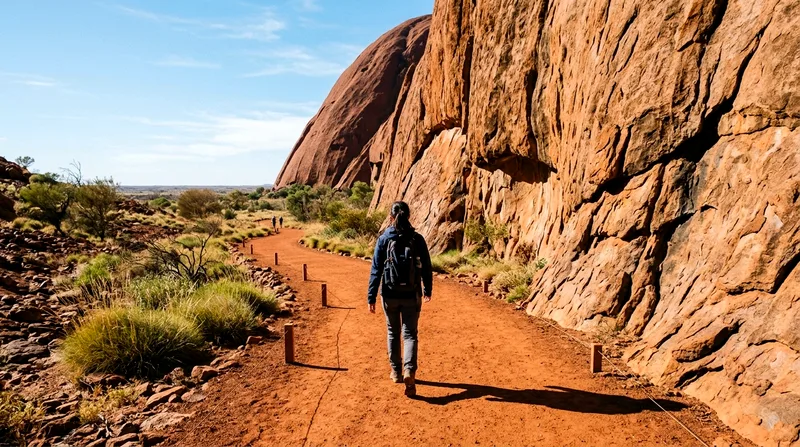
Day two is built around the Uluru Base Walk, the park's signature activity and genuinely doable solo.
Morning & afternoon
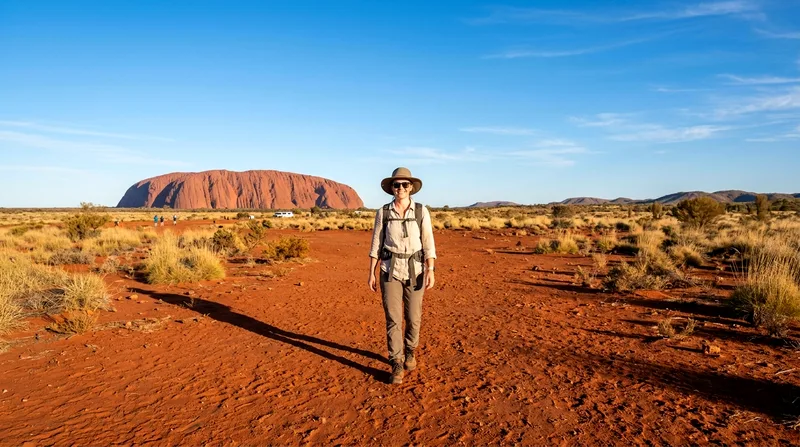
Start early — gates open before sunrise, and the Base Walk is 10.6 km, taking 3 to 3.5 hours at an easy pace. Doing it solo is straightforward: it's flat, well-marked, and busy enough with other walkers that you're never truly alone on the trail. Carry at least 1.5 litres of water per person; there are refill points but they're spaced out.
The walk passes Mutitjulu Waterhole, Kantju Gorge, and several sites where the path detours slightly for cultural reasons — don't skip the signage explaining why. If 10.6 km feels like too much, shorter segments (the Mala Walk, about 2 km round trip, or the Kuniya Walk to Mutitjulu Waterhole, under 1 km) cover the highlights in under an hour each. Tired legs are common by midday; this is the day to accept that and rest in the afternoon rather than push toward another activity.
Evening
Consider the Field of Light if it's still running at your travel dates — it's a paid add-on, usually booked as a sunset-and-star-viewing experience with optional dinner. It's touristy, and some travellers find it overpriced for what amounts to walking through lit bulbs, but the setting against the desert sky is genuinely different from anything else in the itinerary. If you'd rather save the money, a free option is simply returning to a public viewing platform for stargazing — the Red Centre's lack of light pollution makes for some of the clearest night skies in Australia.
Day 3: Deeper Discovery
Day three is for Kata Tjuta, 40 km from Uluru and usually reached only by tour or rental car — there's no shuttle, so this is the day you most need a booked group tour if you don't have your own wheels.
Morning & afternoon
Book a half-day Kata Tjuta tour covering the Valley of the Winds walk (7.4 km loop, 3–4 hours, moderate difficulty with some rock scrambling) or the shorter Walpa Gorge walk (2.6 km round trip, under an hour, flatter and shadier). Valley of the Winds closes early on very hot days — if forecast temperatures exceed 36°C, park rangers typically close the trail by 11am, so morning starts aren't optional here, they're required.
Kata Tjuta's 36 domes feel quieter and less crowded than Uluru, and solo hikers often find it the more rewarding of the two walks precisely because there are fewer people. If your legs are done after two big walking days, swap this for the shorter Walpa Gorge option and spend the afternoon back at Yulara.
Evening
For a final evening, a cultural tour with Aboriginal guides — covering bush food, tool-making, or storytelling — is worth the booking. These run as standalone experiences or combined with dinner, and they're consistently rated by solo travellers as the best way to understand Anangu culture beyond what the Cultural Centre panels convey. Alternatively, a second sunset viewing from Kata Tjuta's dune lookout offers a different angle and noticeably smaller crowds than Uluru's main viewing area.
Getting Around Uluru
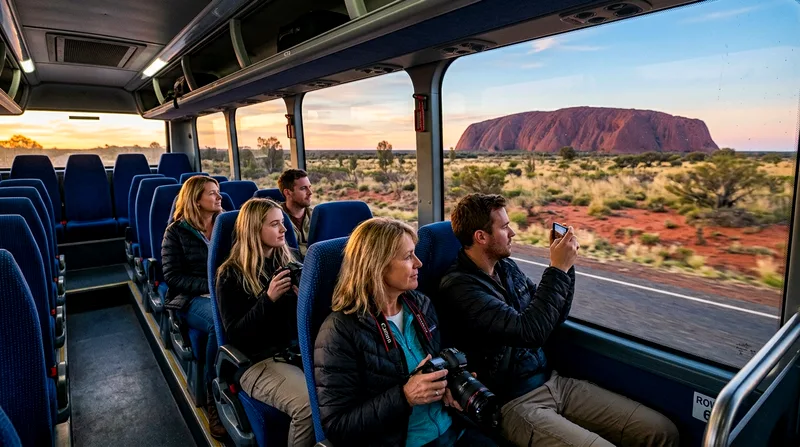
Without a car, your options are the free Yulara town shuttle (covers accommodation, shops, and the visitor centre), paid resort transfers to the national park, or joining tours that include transport. There's no public bus between Yulara and the rock itself — every trip into Uluru-Kata Tjuta National Park needs a vehicle, whether that's a tour bus or a hire car.
Renting a car gives you flexibility for sunrise timing and lets you skip tour group pacing, but solo car hire in the Red Centre isn't cheap once you add the park entry fee (valid for three consecutive days, covering both Uluru and Kata Tjuta) and fuel for the roughly 100 km round trip to Kata Tjuta. For most solo travellers, booking two or three tours that include transport works out simpler and often cheaper than solo car hire, plus you get a guide's commentary thrown in.
Where to Base Yourself
Yulara, officially Ayers Rock Resort, is the only accommodation base near Uluru — there's no alternative town inside the national park, and Alice Springs is a 4.5-hour drive away, too far for a day trip. Within Yulara, options range from a backpacker hostel with dorm beds and shared kitchens to mid-range hotel rooms and a campground with powered sites.
For solo travellers, the hostel-style accommodation is the obvious pick if budget matters and you want to meet people without booking every tour — communal kitchens and lounges do more for social contact than the hotel rooms do. Camping is the cheapest option but means carrying or renting gear, and summer nights rarely get cool enough to make a tent appealing. Don't expect Yulara to have the budget density of Coober Pedy's underground hostels further south — it's a purpose-built resort village, and prices reflect the remote location across the board.
Yulara is the only practical base, but how you get into the park and which sights you prioritize depends on time and budget.
Uluru solo traveller accommodation and day-trip options compared
| Option | Distance from Yulara | Typical Duration | Best For |
|---|---|---|---|
| Yulara hostel dorm | In town | N/A | Budget solo travellers, meeting people |
| Uluru Base Walk | 10 min drive | 3–3.5 hours | Independent walkers, fitness level moderate |
| Kata Tjuta Valley of the Winds | 40 km / 40 min drive | 3–4 hours | Quieter hike, morning starts only |
| Sunset viewing tour | 10–15 min drive | 2–3 hours | First-night social contact |
| Kings Canyon day trip | 300 km / 3.5 hr drive | Full day | Travellers with extra time, add-on hike |
Distances and durations are approximate and vary by tour operator and season, so confirm specifics when booking.
Best Group Tours for Solo Travellers
Group tours are where the "solo" part of this itinerary actually gets easier, not harder — Uluru's remoteness means nearly every visitor, solo or not, ends up on some kind of guided transport.
What to look for
Prioritize tours explicitly marketed as "no single supplement" — many small-group operators in the Red Centre waive this fee because they pair solo travellers to share twin rooms on multi-day trips, or simply charge per-seat on day tours with no accommodation involved. Check group size (8–20 people is typical for day tours; smaller means more guide attention but less chance of a lively group) and whether the tour includes park entry fees, water, and meals — these details change the real cost more than the headline price does.
Tour types & benefits
Sunrise and sunset viewing tours are the easiest entry point — short, social, and low-commitment. Base walk guided tours add context you'd miss walking alone, particularly around Tjukurpa law and sacred sites. Multi-day camping tours linking Uluru, Kata Tjuta, and Kings Canyon suit solo travellers who want structure for the whole Red Centre loop rather than piecing together Alice Springs transport themselves. Cultural tours led by Aboriginal guides are consistently the highest-value booking for solo travellers specifically, since the small-group format naturally encourages conversation in a way a crowded sunset car park doesn't. Compare current tours and prices before you book — availability and inclusions shift by season.
Frequently asked questions
Is it safe to travel to Uluru alone?
Yes — Uluru is one of Australia's more straightforward solo destinations. The national park is well-patrolled, trails are marked, and most activity happens via organized tours or a busy main walking track rather than isolated backcountry. The main risks are heat-related, not personal safety: carry water, avoid midday walks in summer, and tell your accommodation your plans if you're hiking solo outside tour hours.
Do group tours charge single supplements?
Day tours around Uluru and Kata Tjuta generally don't, since you're paying per seat rather than per room. Single supplements usually only appear on multi-day tours that include twin-share accommodation — many operators waive this by pairing solo travellers with another solo guest of the same gender, so ask directly when booking if this matters to your budget.
What's the best time to visit Uluru solo?
May to September offers cooler days (low 20s°C) ideal for the full Base Walk and Valley of the Winds without early heat closures. July and August are peak season with more tour options and other travellers to meet, but also higher prices and busier viewing platforms. December to February is very hot (above 38°C common) and best avoided for serious walking days.
Can solo travellers join multi-day tours?
Yes, and it's one of the most popular ways to see the wider Red Centre solo — multi-day tours bundling Uluru, Kata Tjuta, and Kings Canyon, sometimes extending to Alice Springs or the MacDonnell Ranges, are specifically marketed toward backpackers and solo travellers. These typically run 3 to 5 days with camping or basic lodge accommodation included.
Where do solo travellers stay near Uluru?
Yulara's hostel-style accommodation (dorm beds and twin rooms with shared kitchens) is the standard budget pick for solo travellers, offering the best chance to meet other backpackers. Mid-range hotel rooms and a campground are the alternatives, but there's no second town nearby — everyone staying near Uluru stays in Yulara.