Discover free things to do at Uluru: sunrise viewing, Cultural Centre entry, ranger talks and walking trails. Plan a budget-smart visit.
Free Things to Do at Uluru
Uluru doesn't need to be an expensive destination once you're there. Yes, flights to the Northern Territory and accommodation in Yulara aren't cheap, and you'll need a park entry pass (currently around AUD 38 for three days). But once you're inside Uluru-Kata Tjuta National Park, a surprising amount of what makes this place worth visiting costs nothing extra: watching sunrise paint the rock, walking the 10.6km base circuit, sitting through a ranger talk, or spending an hour in the Uluru Cultural Centre learning about Anangu culture.
I'd argue the free experiences are actually the better ones. The paid helicopter flights and motorbike tours are fun, but they're add-ons to an experience that's fundamentally about standing at the base of a 348-metre sandstone monolith and understanding why the Anangu people consider it sacred. That understanding comes free, through the Cultural Centre and the walking trails — not through a scenic flight.
This guide covers exactly what's free, where to find it, and when to show up. It also flags where spending money on one well-chosen paid tour adds real value without blowing a backpacker's budget.
Sunrise and Sunset Viewing Platforms
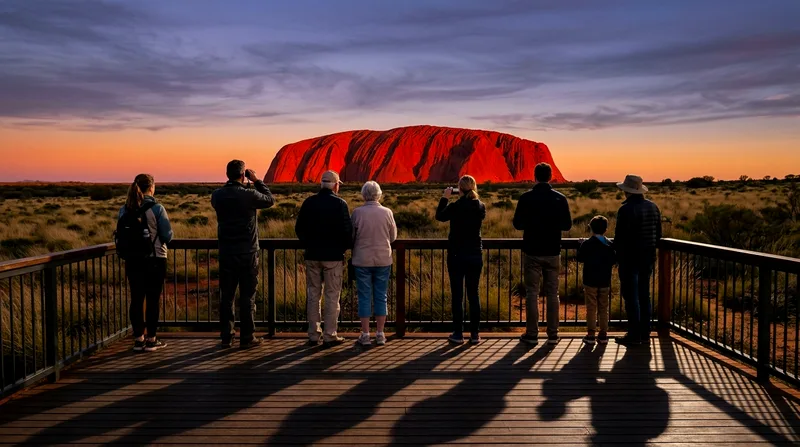
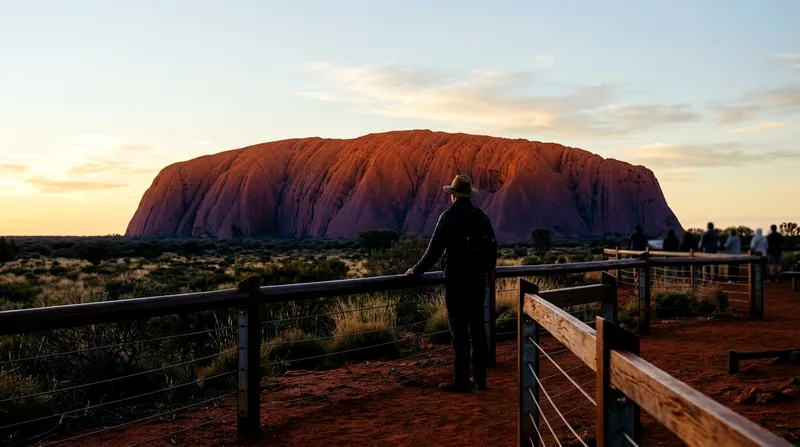
The free Uluru sunrise viewing experience is the single most popular activity in the park, and for good reason — it costs nothing beyond your park pass and delivers the color-changing effect everyone comes to see. The rock shifts from grey-brown pre-dawn to deep ochre and almost burgundy as the sun climbs, a process that takes roughly 20-30 minutes.
There are two dedicated viewing areas: the Car Sunrise Viewing Area, about 7km from Yulara, and the Talinguru Nyakunytjaku viewing area, which is larger and offers views of both Uluru and Kata Tjuta simultaneously from raised boardwalks. Talinguru Nyakunytjaku is the better pick if you only have one morning — it has more vantage points, so you're less likely to be stuck behind a tour bus crowd.
Sunset viewing works the same way in reverse, with the main sunset-specific platform located near the Uluru sunset car park, a short drive from the base of the rock itself.
Best viewing locations and timing
Arrive 30-45 minutes before official sunrise — check the posted times at your accommodation or the park entry station, since they shift by up to two hours across the year. In the Southern Hemisphere winter (June-August), sunrise can be as late as 7am; in summer (December-January) it's closer to 6am. Talinguru Nyakunytjaku has multiple platforms at different heights, so even if the main lookout is crowded, walking an extra 5 minutes along the path usually finds you clear sightlines. Bring a torch or use your phone light — it's genuinely dark on the walk in.
What to expect at peak times
During the April-September dry season, expect 100+ people and a dozen tour coaches at the main platforms. It's not a quiet, solitary moment — manage your expectations. Parking fills up fast at Talinguru Nyakunytjaku on peak mornings, so arrive early rather than cutting it close. If crowds bother you, the car sunrise viewing area near the Lasseter Highway turnoff is smaller and less used by big coach groups, though the view is slightly less expansive.
Uluru Cultural Centre Free Entry
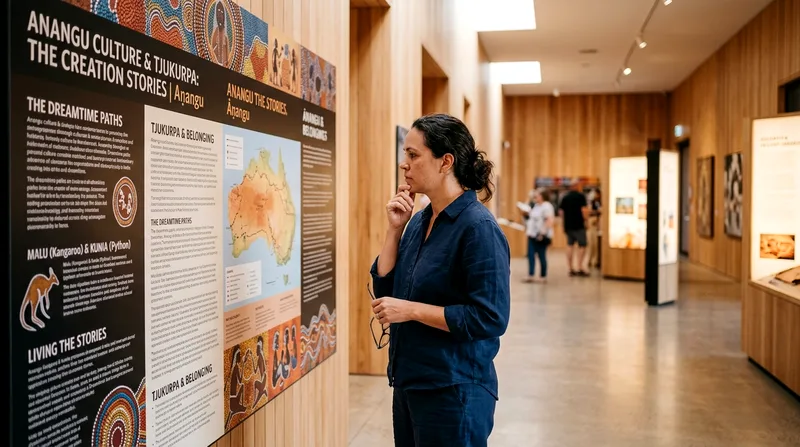
The Uluru Cultural Centre sits about 1km from the base of the rock and costs nothing to enter — no ticket, no booking, just walk in during opening hours (typically 7am-5pm, extending to 6pm in summer). It's easy to treat this as a bathroom-stop-and-gift-shop detour, which would be a mistake. This building does more to explain what you're looking at than anything else in the park, free or paid.
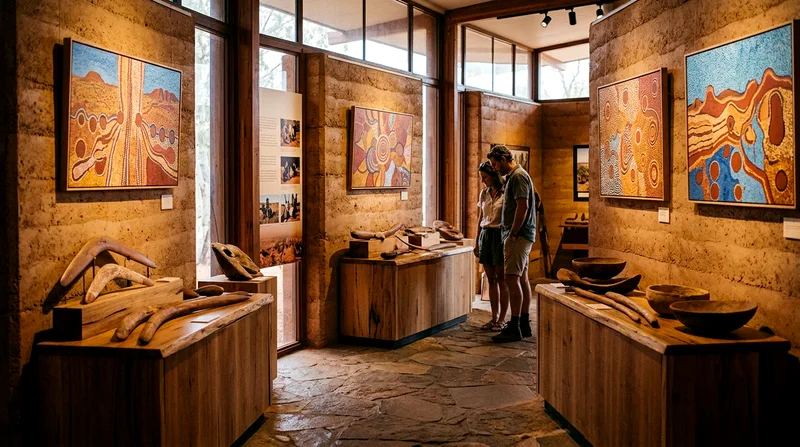
I'd put this ahead of the Cultural Centre at Kings Canyon or the visitor displays in Alice Springs for one reason: it's run in direct partnership with the traditional Anangu owners, and the storytelling is first-person rather than filtered through a generic national park framework.
Self-Guided Walking Trails
Uluru's walking trails are entirely free with your park pass and, frankly, better value than most of the paid tours for understanding the rock's scale and texture. Unlike Kings Canyon's rim walk, which demands a steep early climb, most of Uluru's trails are flat and manageable for a wide range of fitness levels — a real advantage for families with young kids or senior travellers who don't want a strenuous hike.
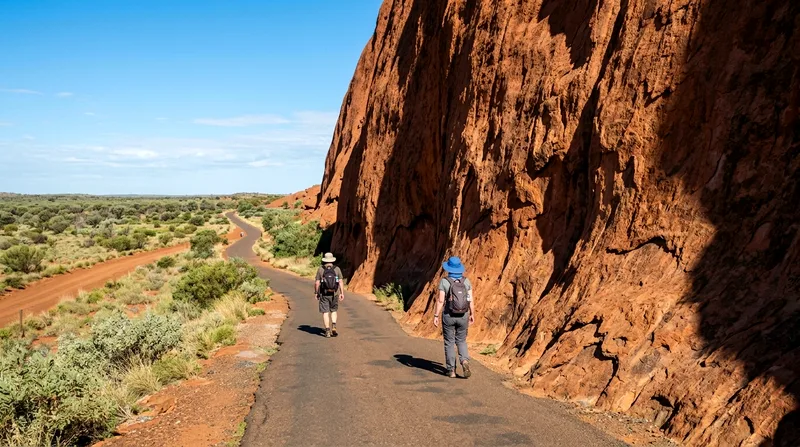
The Uluru Base Walk and its shorter offshoots are all free, flat, and require no booking — the main difference is distance and time of day you can comfortably walk them.
Free Uluru walking trails compared by distance, time and difficulty
| Trail | Distance | Time Needed | Difficulty | Best For |
|---|---|---|---|---|
| Uluru Base Walk | 10.6 km loop | 3-4 hours | Easy, flat | Fit walkers wanting full circuit |
| Mala Walk | 2 km return | Approx. 1 hour | Easy | Families, cultural signage |
| Kuniya Walk | 1 km return | Approx. 45 min | Easy | Short visit, wildlife at waterhole |
| Liru Walk | 4 km return | Approx. 1.5 hours | Easy | Connects Cultural Centre to base |
| Valley of the Winds (Kata Tjuta) | 7.4 km loop | 3 hours | Moderate, uneven terrain | Visitors with extra park-pass day |
Trail closures apply when forecast temperatures exceed roughly 36°C, typically closing access by mid-morning; always check conditions at the Cultural Centre before setting out.
Base walk and loop options
The full Uluru Base Walk is a 10.6km loop, taking most walkers 3-4 hours at an easy pace. If that's too long, shorter sections work as standalone walks: the Mala Walk (2km return, about 1 hour) leads to Kantju Gorge and includes interpretive signage on Anangu stories, while the Kuniya Walk (1km return, roughly 45 minutes) heads to Mutitjulu Waterhole, a reliable spot for rock wallabies early morning. Both are signposted from the main car parks and need no booking.
Difficulty levels and distances
Nearly the entire base walk network is flat, graded gravel or sealed path — no scrambling, no significant elevation change. The main variable is heat, not terrain. Trails typically close by mid-morning (often 11am) when forecast temperatures exceed 36°C, which happens often in summer. Start by 7am if you're doing the full loop between November and March. Bring at least 1 litre of water per hour of walking; there's minimal shade and no refill stations beyond the trailheads.
Ranger-Led Talks and Programs
Parks Australia rangers run free talks inside Uluru-Kata Tjuta National Park, and these are consistently underrated by visitors who assume "free" means low quality. They're not. Rangers here work closely with Anangu community members, and the content leans heavily on bush food, tracking, and land management rather than generic nature-walk chat.
Schedule and meeting points
Talks typically run a few mornings a week, often starting around 8am or 8:30am near the Cultural Centre or a signed meeting point along the base walk — check the noticeboard at the Cultural Centre or your resort's activity desk on arrival, since the schedule shifts seasonally and isn't fixed months in advance. Sessions usually run 45-60 minutes and require no booking or payment, just turning up on time. Group sizes vary from a handful of people to 30+ in peak season.
Topics covered by rangers
Expect sessions on bush tucker identification, traditional tool-making, animal tracking signs in the sand, and fire management practices used by Anangu for thousands of years. Some talks focus specifically on the Mala Walk area and its significance in Tjukurpa law. Unlike a paid cultural tour, there's no guarantee of an Anangu guide present — rangers are mostly non-Indigenous staff trained in partnership with traditional owners, which is worth knowing if authentic first-person storytelling matters to you.
Combining Free Activities With One Paid Tour
Here's my honest take: you can see Uluru thoroughly without spending a cent beyond the park pass, but one paid experience is worth the money if your budget allows it. Everything else — sunrise, sunset, the Cultural Centre, the base walk, ranger talks — is free and arguably essential. A single paid add-on turns a good trip into a genuinely well-rounded one.
Which paid experience adds most value
Skip the helicopter flights unless budget genuinely isn't a concern — they're expensive (often AUD 150-300+ for short flights) and don't add much understanding, just a different angle. Instead, a guided Anangu-led walking tour (run through operators like SEIT or similar licensed companies, typically AUD 100-130 for a few hours) gets you first-person Tjukurpa storytelling you can't get from signage or ranger talks alone. If you're choosing just one paid thing at Uluru, make it that, not a sunset camel ride or quad bike tour, which are more novelty than substance.
Creating a balanced itinerary
A sensible two-day plan: Day one, free sunrise viewing at Talinguru Nyakunytjaku, the Cultural Centre mid-morning, the Mala and Kuniya walks before midday heat sets in, free sunset viewing in the evening. Day two, book the one paid cultural walking tour in the morning, then use the afternoon to drive out to Kata Tjuta (included in your park pass) for the Valley of the Winds walk — a worthwhile contrast to Uluru's rounded form. If you've got extra days, Kings Canyon and the wider Watarrka National Park are a 3-hour drive away and worth the detour; Alice Springs and the MacDonnell Ranges are further out (about 5 hours) but bookable as a separate leg of a Northern Territory trip, alongside Darwin and Kakadu National Park if you're continuing north.
Frequently asked questions
Is entry to Uluru Cultural Centre really free?
Yes. The Uluru Cultural Centre has no separate admission fee — entry is included once you've got your Uluru-Kata Tjuta National Park pass (around AUD 38 for three days), and in practice no one checks your pass at the Cultural Centre door itself. It's open roughly 7am-5pm, later in summer.
What is the best free activity at Uluru?
Sunrise viewing from Talinguru Nyakunytjaku is the single best free experience — it shows the rock's color change and gives you views of both Uluru and Kata Tjuta from one spot. If you only have time for one thing, make it this over the Cultural Centre or a walking trail.
How long are the free walking trails?
They range from 1km to 10.6km. The full Base Walk is 10.6km and takes 3-4 hours; shorter options like the Kuniya Walk (1km, 45 minutes) and Mala Walk (2km, 1 hour) suit visitors with less time or lower fitness levels.
When do ranger talks happen?
Free ranger talks typically run several mornings a week, often starting around 8-8:30am near the Cultural Centre or a signed point along the base walk. There's no fixed year-round schedule — check the noticeboard at the Cultural Centre or your resort's activity desk on arrival for that week's times.
Can you see Uluru without paying for a tour?
Yes, completely. Your park pass covers sunrise and sunset viewing, the Cultural Centre, all walking trails including the full base circuit, and ranger talks. The only extra cost most visitors need is the pass itself — paid tours like helicopter flights or Anangu-guided walks are optional add-ons, not requirements.