Plan a Uluru stargazing tour: compare telescope and Aboriginal astronomy experiences, best seasons, prices and booking tips for couples and families.
What Is a Uluru Stargazing Tour?
A Uluru stargazing tour is an evening or pre-dawn outing, usually run from Yulara (the resort town near the rock) or from a dedicated viewing platform inside Uluru-Kata Tjuta National Park, built around observing the night sky rather than the monolith itself. Most run for 1.5 to 3 hours, start after sunset, and combine a guided talk with either telescope viewing or storytelling drawn from Aboriginal Anangu astronomy. Uluru sits roughly 450 km from Alice Springs, the nearest sizeable town, which means the nearest significant source of artificial light is a long way off — a rare thing in most of the developed world.
That isolation is the whole point. The Northern Territory's Red Centre has some of the lowest light pollution levels of any inhabited region on the continent, and on a clear, moonless night you can expect to see the Milky Way as a distinct band, not a faint smudge. Expect this to be genuinely dark — no ambient glow, no streetlights, nothing competing with the sky except maybe a campfire lantern at the viewing area.
Why Uluru's Night Sky Stands Out
Compare this to stargazing near Coober Pedy or even Alice Springs itself, and Uluru still has an edge — fewer buildings, fewer vehicles, and a flat, open horizon with no surrounding mountains to block the view. The desert air is also notably dry, which reduces atmospheric haze and gives sharper star definition than you'd get on the coast. Winter nights (June to August) often deliver the clearest skies of the year, though they're also the coldest, dropping to near freezing after dark — pack a proper jacket, not just a jumper.
What You'll See and Experience
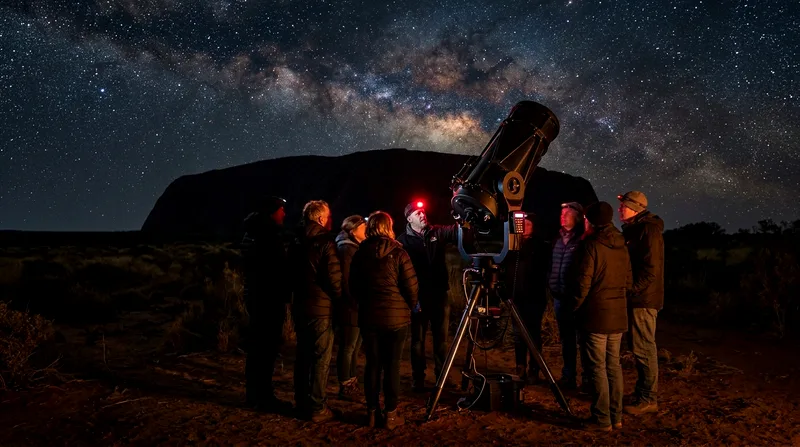
On a clear night you'll typically pick out the Southern Cross, the Magellanic Clouds, Scorpius, and — depending on the season — planets like Saturn or Jupiter through a telescope. Guides usually point a laser at constellations before moving to equipment, and most tours include at least 20-30 minutes of unstructured viewing time where you just lie back on a swag or reclining chair. Don't expect a wildlife-documentary level of detail with the naked eye; a telescope session genuinely changes what you can resolve, particularly on Saturn's rings or the texture of the Milky Way's star clusters.
Tour Types: Telescope vs Aboriginal Astronomy
There are really two distinct products being sold under the "stargazing" banner at Uluru, and conflating them is the most common mistake visitors make when booking. One is a Western-style astronomy session built around telescope equipment; the other is a cultural storytelling experience led by or developed with Anangu knowledge holders. Some operators blend elements of both into a single evening, but the emphasis still leans one way or the other — check the tour description before you pay.
Telescope-Based Astronomy Tours
These tours center on one or more research-grade telescopes set up at a dark-sky viewing site, often with a qualified astronomy guide narrating constellations, planets, and deep-sky objects. A typical uluru astro tour price sits in the AUD $120-$160 per adult range for a standalone evening session, though some resort packages bundle it with dinner for AUD $180-$220. Group sizes are usually capped around 20-30 people, with multiple telescopes rotated so everyone gets a turn. This format suits couples and solo travelers who want technical detail — magnitudes, orbital facts, naming of nebulae — over narrative.
Aboriginal-Guided Night Sky Experiences
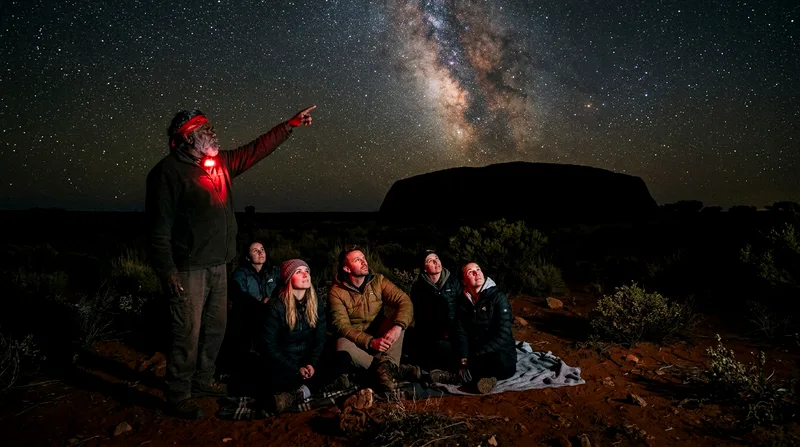
These sessions foreground Tjukurpa — Anangu traditional law and stories — explaining how specific star groupings relate to creation narratives, seasonal markers, and navigation. Expect less equipment and more sitting around a fire pit or on mats, listening to a guide (sometimes an Anangu storyteller, sometimes a trained interpreter working from community-endorsed material) connect the sky to the landscape you walked past that afternoon. These tours tend to run slightly shorter, around 1.5-2 hours, and often cost somewhat less than telescope sessions, roughly AUD $100-$140. If you only have one evening at Uluru and want the experience that's genuinely distinct to this place rather than replicable elsewhere, this is arguably the stronger pick — you can get a telescope session in plenty of other dark-sky locations worldwide, but not this specific cultural framing.
How to Book & Visit Options
Booking logistics for a Uluru stargazing tour are straightforward, but there are a few decisions worth making deliberately rather than defaulting to whatever your resort front desk hands you.
Telescope tours suit detail-focused stargazers, while Aboriginal astronomy sessions suit travelers wanting Uluru's cultural context.
Uluru stargazing tour options compared by format, duration and price
| Tour Type | Typical Duration | Price Range (AUD, per adult) | Best For | Equipment Used |
|---|---|---|---|---|
| Telescope astronomy tour | 2-3 hours | $120-$160 | Couples, solo astronomy fans | Telescope, laser pointer |
| Aboriginal astronomy experience | 1.5-2 hours | $100-$140 | Families, cultural interest | Fire pit, storytelling, mats |
| Resort dinner + stargazing package | 3-4 hours | $180-$220 | Couples, special occasions | Telescope, dining setup |
| Independent self-guided viewing | Open-ended | Free | Budget travelers, solo flexibility | None |
Prices are typical ranges and vary by operator and season; confirm current pricing when booking.
Independent Stargazing vs Guided Tours
You can absolutely stargaze for free — walk a short distance from the Yulara town square after dark, away from the resort lighting, and the sky is still remarkably dark. The problem is accuracy and context: without a guide, you're unlikely to correctly identify more than the Southern Cross and the Milky Way's band, and you won't have telescope access at all. A guided tour also solves the transport and safety issue, since the best dark-sky spots are a short drive from Yulara and walking alone at night near the national park isn't advisable because of uneven ground and wildlife on the road. For most travelers, particularly families and older visitors, the guided option is worth the cost difference.
Booking Platforms and Tour Operators
Most stargazing tours can be booked through the same channels you'd use for Uluru sunrise or sunset tours — resort activity desks in Yulara, online travel agencies, or directly through tour operators based in the Ayers Rock Resort precinct. Book at least 2-3 days ahead in peak season (June to August) since telescope-equipped sessions have limited capacity; shoulder months are more forgiving. Always confirm cancellation policy for weather — cloud cover genuinely cancels or postpones these tours, and a reputable operator will offer a rebooking rather than just a refund. Compare current prices and tour times before you book, since schedules shift seasonally with sunset times.
Best Time to Stargaze at Uluru
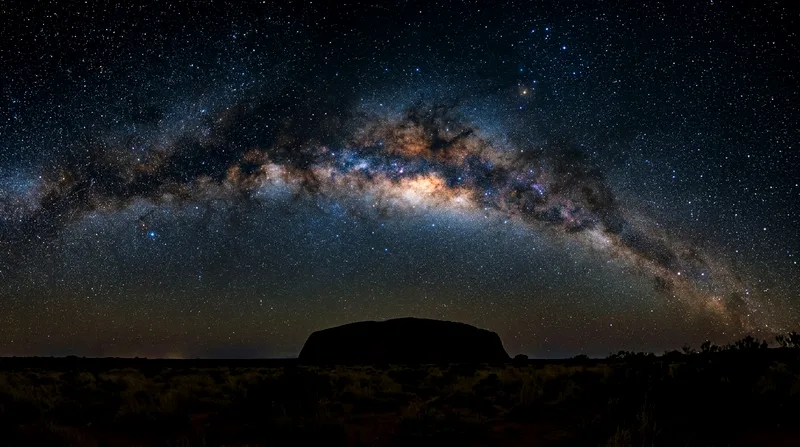
Timing matters more for this activity than almost any other Uluru experience, because cloud cover and moon phase can make or break the night sky Uluru experience regardless of how good the tour operator is.
Seasonal Visibility and Weather
Winter (June-August) offers the clearest, driest skies but the coldest temperatures — often 3-5°C after dark, so dress in layers. Summer (December-February) brings warmer nights but a higher chance of cloud and occasional dust haze from dry storms. Shoulder seasons, April-May and September-October, are a reasonable compromise: mild evenings, generally clear skies, and fewer visitors than peak winter months. Check the lunar calendar before booking — a few nights either side of the full moon wash out fainter stars and the Milky Way's detail considerably, so aim for a new moon window if the Milky Way is your priority.
Avoiding Crowds and Light Interference
Peak season (June-August and around school holidays) means larger groups and more competition for telescope time. Smaller operators capping groups at 15-20 people give a noticeably better experience than larger coach-based tours where you might get only a few minutes per telescope. If light interference bothers you, avoid sites too close to the resort's glow — reputable tours already drive out to genuinely dark viewing points, but it's worth asking how far the site is from Yulara's lights when you book.
Nearby Experiences & Add-Ons
A stargazing tour works best as one piece of a longer Red Centre itinerary rather than a standalone reason to visit, and most travelers combine it with daytime activities around Uluru-Kata Tjuta National Park.
Combine with Uluru Base Walk
The 10.6 km Uluru base walk, typically taking 3-4 hours, is the natural daytime pairing — do it in the cooler early morning, rest through the heat of the afternoon, then head out for stargazing once the sun drops. This sequencing avoids the mistake of scheduling a demanding walk and a late-night tour on the same evening with no recovery time, which leaves families with cranky, overtired kids by 9pm.
Kata Tjuta and Kings Canyon Options
Kata Tjuta (The Olgas), about 40 km from Uluru, offers its own sunset viewing area and the Valley of the Winds walk — a good half-day addition if you're staying three nights or more. Travelers with a bit more time often extend to Kings Canyon in Watarrka National Park, roughly a 3.5-hour drive from Yulara, for the Rim Walk; some multi-day Red Centre itineraries loop through Alice Springs and the MacDonnell Ranges as well. If you're coming from Darwin or planning to see Kakadu National Park too, treat Uluru stargazing as part of a broader Northern Territory trip rather than a quick add-on — the distances between these sites are substantial, often 4-6 hours by road.
Frequently asked questions
What can you see on a Uluru stargazing tour?
On a clear night, expect the Milky Way as a distinct band, the Southern Cross, the Magellanic Clouds, and visible planets such as Saturn or Jupiter through a telescope, depending on the season. Guides also point out Anangu star stories tied to specific constellations if you're on an Aboriginal astronomy session rather than a pure telescope tour.
Are stargazing tours suitable for families with children?
Yes, generally for children aged 6 and up who can manage a late, cool evening without melting down. Aboriginal astronomy sessions tend to work better for younger kids since they're shorter (1.5-2 hours) and more narrative-driven than technical telescope tours, which involve more standing around waiting for a turn.
How long do Uluru stargazing tours typically last?
Most run 1.5 to 3 hours, starting shortly after sunset. Dinner-inclusive packages extend to 3-4 hours. Factor in return transport time from Yulara, which adds another 20-30 minutes each way depending on the viewing site.
What's the difference between telescope and Aboriginal astronomy tours?
Telescope tours focus on equipment-based viewing of planets and deep-sky objects with a Western astronomy guide, costing roughly AUD $120-$160. Aboriginal astronomy tours center on Anangu cultural stories and Tjukurpa connected to the night sky, usually shorter and slightly cheaper, around AUD $100-$140, with less equipment and more storytelling around a fire.
Can you do stargazing tours year-round at Uluru?
Yes, tours run throughout the year, but conditions vary. Winter (June-August) gives the clearest, driest skies but cold nights near freezing; summer brings warmer evenings but a higher chance of cloud. Check the moon phase too — a few nights around full moon wash out fainter stars noticeably.