Planning a Uluru quad bike tour? Get the facts on age rules, pricing ranges, best seasons, and how guided ATV rides work in the Red Centre.
What Is a Uluru Quad Bike Tour?
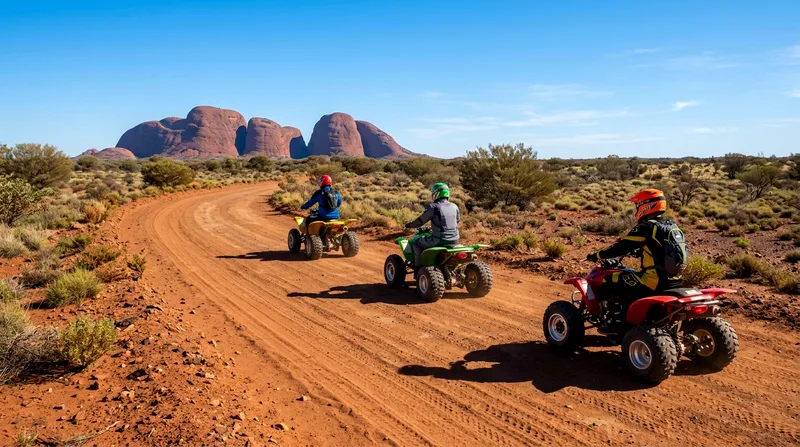
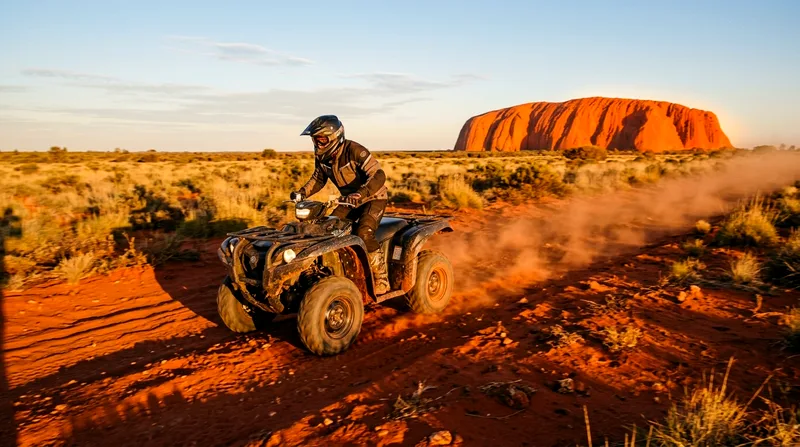
A Uluru quad bike tour is a guided ATV ride across private desert property bordering the Uluru-Kata Tjuta National Park, usually run around sunrise or sunset so riders get long shadows, cooler air, and views of Ayers Rock or Kata Tjuta changing color in the distance. You won't ride inside the national park itself — quad bikes aren't permitted on the formal park trails — but the surrounding Red Centre terrain is close enough that the rock dominates the skyline for most of the ride.
Most operators run 1 to 2.5-hour sessions covering somewhere between 10 and 25 kilometers of marked dirt track, sand flats, and low scrub. You ride single-file behind a lead guide on a two-way radio, with a sweep rider at the back. This isn't a free-roam dune-bashing experience like you might get in the Middle East — it's structured, paced to the slowest rider, and stops periodically for photos and water breaks.
I'd call it a solid half-day activity rather than a full adventure day. If you want something longer and more physically involved, a half-day guided hike around the Kata Tjuta Valley of the Winds or a sunrise camel tour near Uluru will fill more time. Quad biking wins on pure thrill-per-minute — the engine noise, the dust, the bouncing over corrugated track — but it's over faster than most people expect.
Why choose quad biking at Uluru
Quad biking suits travelers who want an active, physical way to experience the Outback landscape rather than passively viewing it from a coach window or lookout platform. It's also one of the few activities around Uluru that works well for couples or solo travelers looking for something with a genuine adrenaline hit — base walks and cultural tours are more contemplative by design. Compared to a scenic helicopter flight over Uluru, which gives you altitude and scale but costs considerably more per minute, quad biking gives you dirt, noise, and a hands-on sense of the terrain for a lower price point.
What to expect on the experience
Expect a safety briefing of 15–20 minutes before you even start the engine, covering throttle control, braking, and hand signals. You'll do a short practice loop on flat ground first. Guides keep speeds moderate — this is not a motocross track — generally capped around 20–40 km/h depending on terrain and operator rules. Dust is constant, so a buff or bandana over your nose and mouth makes a real difference, and most operators supply goggles along with the helmet.
Independent vs. Guided Tour Options
There's effectively no legitimate self-guided, unsupervised quad bike rental at Uluru, and that surprises a lot of first-time visitors who search for "quad bike rental Uluru" expecting to hire a machine and go off on their own. The land around Uluru-Kata Tjuta National Park is a mix of Aboriginal-owned land (under the Anangu traditional owners), national park, and private pastoral leases — none of which permit casual unaccompanied ATV use by tourists. Every operator I'm aware of runs guided sessions only, with a staff-to-guest ratio tight enough to supervise novice riders.
That's not necessarily a downside. Guided off-road tours at Uluru include insurance, safety gear, and route knowledge that matters on unfamiliar desert terrain — hidden ruts, soft sand patches, and spinifex grass that can hide holes are easy to misjudge if you've never ridden outside a city. The guide also handles navigation, which means you can actually look at the landscape instead of worrying about losing the track.
Where you do get a choice is in the format of the guided tour itself — group versus private.
Guided group tours are the cheapest and most common way to ride, while private tours cost more but suit couples or nervous riders wanting a slower pace.
Uluru quad bike tour options compared by format, group size, and rider experience
| Tour Type | Typical Duration | Group Size | Best For |
|---|---|---|---|
| Guided group tour | 1–1.5 hours | 4–12 riders | Budget-conscious solo travelers and couples |
| Private/small-group tour | 1–2 hours | 1–4 riders | Couples, families wanting flexibility |
| Sunset/sunrise specialty tour | 1.5–2 hours | 6–10 riders | Photographers, honeymooners |
| Double-seat passenger option | 1–1.5 hours | Pairs | Nervous riders, younger teens riding pillion |
| Combo quad + camel/sunset package | Half-day | Varies | Families wanting variety in one outing |
Durations and group sizes are typical ranges; confirm specifics and current pricing directly when booking.
Self-guided quad bike rentals
If you've seen listings advertising "quad bike rental Uluru" with no guide included, check carefully — in most cases this refers to short supervised circuits at a fixed base rather than genuine independent rental you take off-site. Treat any offer of truly unsupervised ATV hire near Uluru with suspicion; it's not standard practice here the way it might be at a commercial off-road park elsewhere in Australia, and insurance coverage is questionable at best.
Guided group and private tours
Standard group tours mix you with other travelers, typically 4 to 12 riders, and run at a fixed pace dictated by the least experienced person in the group — fine for most people, mildly frustrating if you're an experienced rider wanting to push speed. Private or small-group bookings cost more but let couples or families ride together without waiting on strangers, and some operators offer a combined single-and-double quad option so a nervous partner can ride pillion instead of solo.
Booking, Tickets & Entry Requirements
Booking a Uluru quad bike tour is straightforward and almost always done online in advance, especially during the cooler months when demand spikes. Expect to pay somewhere in the broad range of AUD 150–220 per adult for a standard 1–2 hour guided session, with pillion passenger rates usually discounted. These are general market ranges, not fixed figures — compare current prices and availability before you book, since seasonal demand and fuel surcharges shift things.
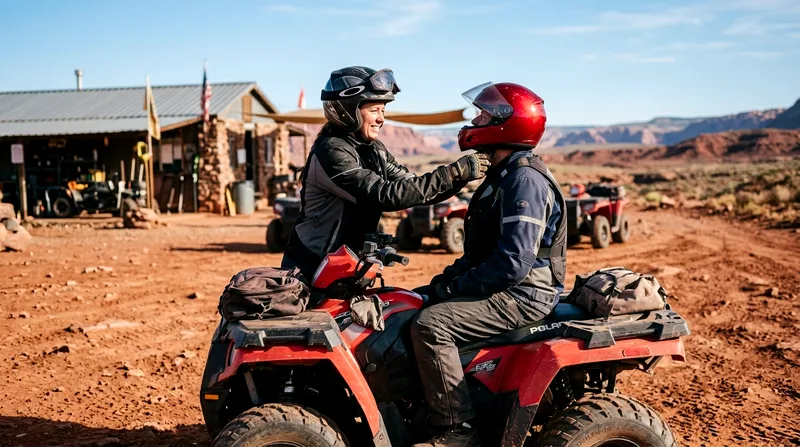
Pickup is commonly offered from accommodation in Yulara (the resort town servicing Uluru), which matters if you don't have a hire car — distances in the Red Centre are long, and Yulara sits around 20 km from Uluru itself.
Age, license, and fitness requirements
Minimum age for solo riding is typically 16, sometimes 18 depending on the operator, and a current car driver's license is usually required to operate the quad bike yourself — not a motorcycle license specifically, just proof you can legally drive. Younger children can usually ride as a passenger on a double-seat quad with an adult, often from around age 8–10, though height and weight limits apply and vary by company. Fitness-wise, you need reasonable core strength and the ability to grip and steer continuously for an hour or more — it's more physically demanding than it looks, and sore wrists and shoulders the next day are common even for fit riders.
How to book and what's included
Standard inclusions are the quad bike, helmet, goggles, a short training session, hotel pickup/drop-off from Yulara, and bottled water. Enclosed shoes are mandatory — thongs or sandals will get you turned away at check-in, so pack proper trainers or boots. Book at least a few days ahead in peak season (June–August); shoulder months are more forgiving for last-minute bookings.
Best Time to Visit for Quad Biking
Timing matters more for quad biking than for most Uluru activities because you're exposed to full sun and exertion simultaneously — a bad combination in the Red Centre's summer heat. The outback climate here is extreme and dry, with daytime temperatures in December and January regularly exceeding 38°C (100°F). Riding a quad bike under that sun, wearing a helmet, is miserable and genuinely risky for heat exhaustion.
Seasonal weather considerations
May through September — the Southern Hemisphere's dry season — gives you daytime highs typically between 20–28°C and cold mornings that can dip near freezing, which is actually ideal for a sunrise tour since you warm up as you ride. Compare this to Kings Canyon or Kata Tjuta, both an hour or more away by road, where exposed walking trails get similarly brutal in summer and are often closed or restricted on extreme-heat days. Quad tours in the shoulder months (April, October) hit a reasonable middle ground — warm but not dangerous, with smaller crowds than peak winter.
Peak vs. quieter periods
June to August is peak season for the entire Uluru region, driven partly by European and other international travelers escaping their own winter, and partly by Australian school holidays. Expect higher prices and tours booking out a week or more ahead. If you want a quieter, cheaper option with still-reasonable weather, aim for late April or September — fewer coach groups at Yulara, and you're more likely to get a smaller cohort on your quad tour.
Family-Friendly Alternatives & Add-Ons
Quad biking isn't the easiest fit for families with young children, and I'd be upfront with anyone traveling with kids under 8: most operators won't let them ride, even as a passenger, due to weight and age minimums. That's a legitimate safety restriction, not operator overcaution — the vibration and bump forces on rough desert track are hard on small bodies.
The good news is Uluru has enough other activities that you can build a half-day or full-day itinerary around quad biking without leaving younger kids out.
Options for younger riders
Kids under the minimum age can usually join a parent on a guided Segway tour around the Uluru base, which has a much lower minimum age (often around 12, though check specifics) and a gentler learning curve, or do the free, ranger-led Mala Walk inside the national park while one parent takes the quad tour. Some families split the group — one adult rides quad bikes while the other does the Uluru base walk with children, then they regroup for lunch back in Yulara.
Combining quad biking with other activities
Several operators package a sunset or sunrise quad ride with a camel tour, a didgeridoo demonstration, or a bush tucker talk on Aboriginal food traditions, turning a 90-minute ride into a half-day cultural and adventure combo. If you're staying multiple days, it's worth spacing quad biking apart from the Uluru base walk (around 10 km, 3–4 hours) and any trip out to Kata Tjuta's Valley of the Winds (7.4 km loop) — doing all three in one day is exhausting even for fit travelers, and you'll enjoy each one less rushed.
Frequently asked questions
Do I need a driver's license to ride a quad bike at Uluru?
Yes, in almost all cases you need a current, valid car driver's license (your regular license from home is fine) to operate a quad bike solo. If you don't hold one, you can usually still ride as a passenger on a double-seat quad with a licensed rider, subject to age and weight limits.
What is the minimum age for quad biking tours?
Most operators set the minimum solo-riding age at 16, though some require 18. Passengers on double-seat quads can often be younger, typically from around 8–10 depending on height and weight restrictions, so check the specific operator's policy before booking for a family with kids.
Can beginners book a quad bike tour at Uluru?
Yes — these tours are designed for first-timers. You'll get a 15–20 minute safety briefing and a practice loop on flat ground before heading out, and guides keep the pace moderate for the whole group. No prior ATV experience is assumed or required.
What should I wear on a quad bike tour?
Enclosed shoes are mandatory — sandals or thongs will get you refused at check-in. Wear long pants if you have them, a long-sleeve top for sun and dust protection, and bring sunglasses or a buff for your face, since desert track throws up a lot of fine red dust.
Are there quad bike tours suitable for families with children?
Older children (generally from around 16 for solo riding, younger as passengers) can join standard tours. Families with younger kids usually need to split activities — one parent rides while the other takes children on the Uluru base walk or a Segway tour — since most operators won't carry very young children even as passengers.