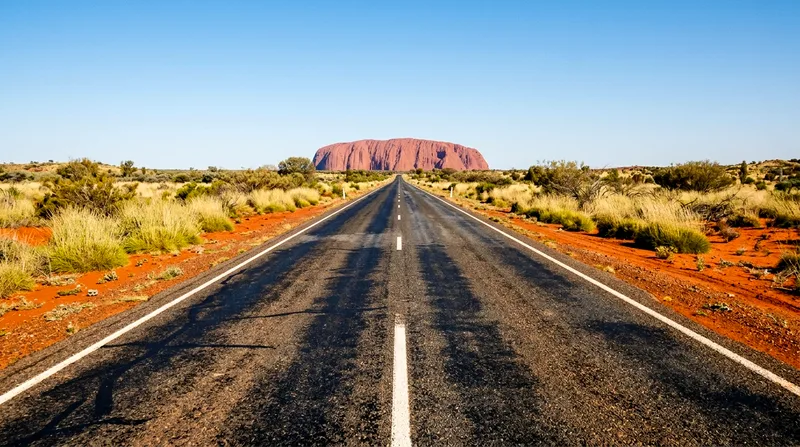
Find the best time to visit Uluru with our month-by-month guide to weather, crowds, and tour availability in Australia's Red Centre.
Best Time to Visit Uluru
Uluru sits in the middle of the Australian desert, roughly a five-hour drive or a 90-minute flight from Alice Springs, and that remoteness is exactly why timing your trip matters so much. The best time to visit Uluru depends on what you're willing to trade: comfortable temperatures and guaranteed tour availability during the cooler months, versus searing heat and near-empty viewing platforms in summer. There's no single correct answer here, despite what some guides claim.
The short version: April through September delivers the most reliable conditions for walking, cycling, and watching sunrise over the rock, but it's also when every tour operator in the Northern Territory is fully booked and the sunset viewing car park fills up fast. Shoulder months — March and October — are a genuine compromise. December through February is brutal, cheap, and strangely underrated if you respect the heat. This guide breaks down the trade-offs month by month so you can match the season to what actually matters to you.
Peak Season: April to September
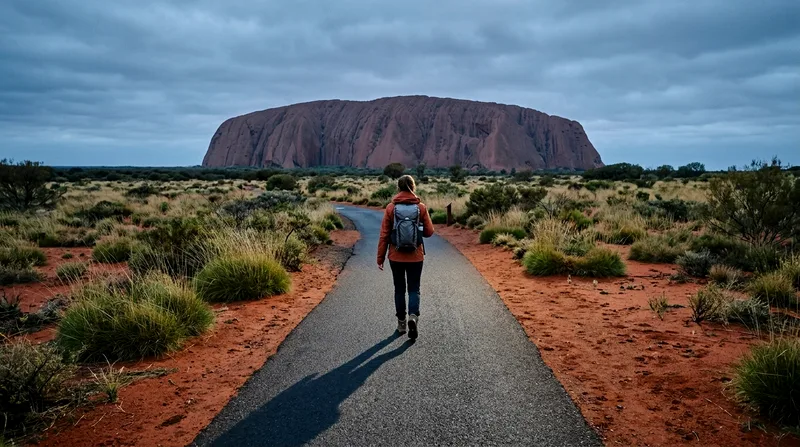
This is Uluru's dry season, and it's when the Red Centre looks the way it does in photographs — deep red rock against a cloudless blue sky, with none of the dust haze that summer storms sometimes kick up. Daytime temperatures sit comfortably between 20°C and 28°C, which makes the 10.6km base walk around Uluru genuinely enjoyable rather than an endurance test. Nights, though, drop sharply — down to 3-8°C in June and July — so pack layers if you're doing an early sunrise tour.
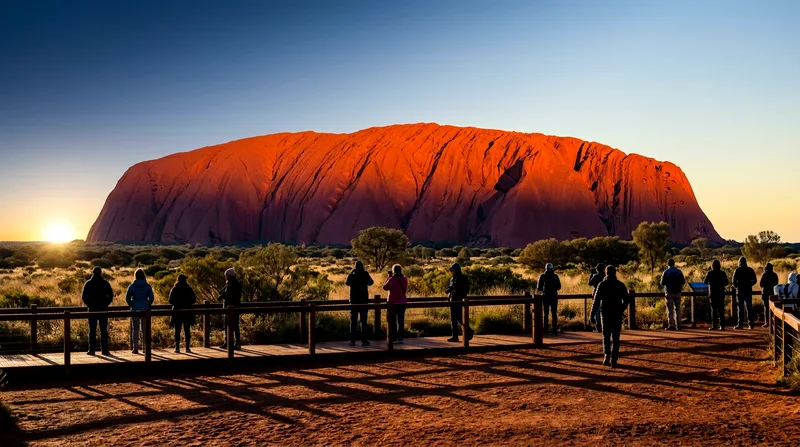
I'd rank this as the best overall window for first-time visitors, families with children, and senior travellers who want predictable weather without extremes. The trade-off is obvious the moment you arrive at the sunset viewing area in July: you'll be sharing the car park with a dozen tour buses and several hundred other people, tripods jostling for space along the railing. If uninterrupted quiet matters more to you than mild weather, this isn't your season.
May through September offers the most comfortable weather but the heaviest crowds, while December through February is hot but quiet and cheap.
Best time to visit Uluru: seasons compared by weather, crowds and cost
| Season | Months | Daytime Temp | Crowd Level | Best For |
|---|---|---|---|---|
| Peak (dry season) | April-September | 19-28°C | High | Comfortable walking, photography |
| Shoulder | March, October | 28-34°C | Moderate | Balance of comfort and quiet |
| Low (summer) | November-February | 33-40°C | Low | Budget travel, solitude |
Averages only; check short-range forecasts before walks, as track closures apply above 36°C.
Why visitors flock during these months
Winter in central Australia (June–August) coincides with the dry season across the whole top half of the country, which is also why Kakadu National Park and Darwin see their tourist peak at the same time. European visitors in particular cluster into July and August, since that's when school holidays back home align with Australia's most comfortable desert weather. Add in Aboriginal cultural tours and the Field of Light installation running at full capacity, and you get a genuine bottleneck — accommodation in Yulara, the only town near the park, books out weeks in advance for July departures.
Temperature and rainfall patterns
Rainfall is minimal throughout this stretch — Uluru averages under 20mm a month from May to September, and some months see barely a trace. That's good news for hikers, since the Kata Tjuta Valley of the Winds walk and the Kings Canyon rim walk both close or get restricted during heavy rain for safety reasons. The dry conditions mean you can plan a multi-day Red Centre itinerary — Uluru, Kata Tjuta, Kings Canyon, Alice Springs — with minimal risk of washed-out trails.
Shoulder Season: March and October
March and October are the months I'd actually recommend to most people, including couples looking for a quieter version of the peak-season experience. Daytime temperatures run 28-34°C — warmer than winter, but still manageable if you start walks early. Crowds thin out noticeably compared to June-August; you'll still see other visitors at sunrise, but you won't be fighting for a spot at the railing.
The catch is variability. October can occasionally deliver an early heatwave pushing into the high 30s, and March sits at the tail end of the warmer half of the year, so some days feel more like summer than shoulder season. Check the Bureau of Meteorology's Yulara forecast a week out rather than relying on seasonal averages alone.
Balancing comfort and fewer crowds
If you're travelling with children or older relatives who struggle in extreme heat but also dislike crowds, this is your window. The Mala Walk and Kuniya Walk — both shaded, interpretive routes near the base of the rock — are comfortable to do mid-morning rather than only at dawn, giving you more flexibility in your daily schedule than peak season allows.
Tour availability and pricing
Tour operators run full schedules in shoulder season, but you're not competing with the same volume of bookings as July. Sunrise camel tours, segway tours, and scenic flights over Uluru and Kata Tjuta are easier to book with a few days' notice rather than a few months'. Accommodation in Yulara — from the budget-friendly campground to the higher-end Sails in the Desert hotel — also tends to have more availability and occasionally slightly better rates than peak winter months.
Low Season: November to February
This is Uluru's summer, and it does not mess around. Daytime temperatures regularly hit 37-40°C, occasionally higher, and the ground radiates heat back up at you — standing on the red sand at midday in January feels like standing near an oven door. It's also the wet season for much of the Top End, including Kakadu, though Uluru itself stays comparatively dry; rain here is more about scattered thunderstorms than monsoon downpours.
I won't pretend this is comfortable, but I also won't tell you to avoid it entirely — it depends entirely on your heat tolerance and budget.
Extreme heat and summer conditions
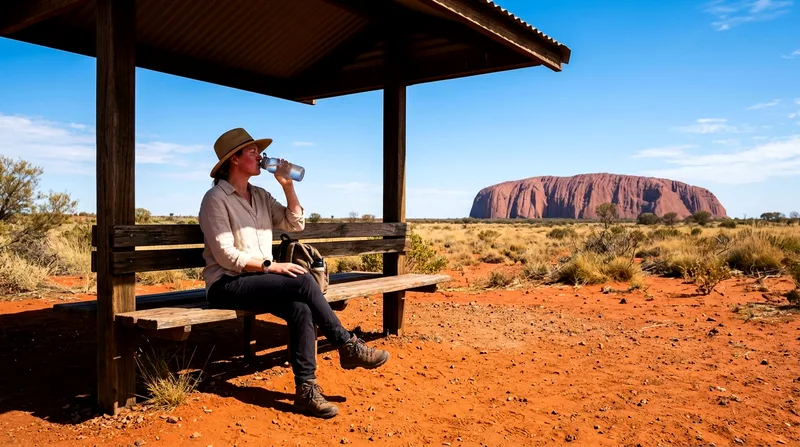
Park authorities close some walking tracks, including sections of the base walk, when temperatures are forecast above 36°C and the closure typically takes effect from mid-morning onward — so if you're visiting in December or January, plan to be out and finished by 9am, or skip the walk and stick to lookout points instead. Hydration matters more than usual: carry at least one litre of water per hour of activity, and don't rely on finding shade, because there's very little of it around the rock itself.
Advantages for budget travellers
The upside is real. Flights into Ayers Rock Airport and accommodation in Yulara both drop in price, sometimes significantly, since demand craters. Sunrise and sunset viewing areas that hold hundreds of people in July might have a few dozen in late December. If you're a solo traveler or a budget-conscious couple who can structure your day around the early morning and late afternoon, and skip the midday walk entirely, low season delivers a strikingly different — and cheaper — version of Uluru.
Uluru Weather by Month
Averages smooth out a lot of detail, but they're still the most useful planning tool you have before checking a short-range forecast closer to your trip. Spring (September-November) and autumn (March-May) act as transition periods where a single week can swing from mild to hot.
Temperature ranges and rainfall
December and January are the hottest, averaging highs near 37-38°C with lows around 21-22°C. June and July are the coldest, with highs around 19-20°C and lows that can dip to 3-5°C overnight — cold enough that sunrise visitors regularly wear beanies and gloves. Rainfall peaks modestly in January and February, averaging 30-40mm a month from scattered storms, while the June-August stretch sees some of the driest conditions of the year.
Sunrise and sunset viewing conditions
Clear winter skies (June-August) give the most dramatic color shift on the rock face at sunrise, since there's no haze or cloud to soften the effect — this is the best stretch for photography. Summer sunsets can be spectacular too, particularly when distant storm clouds catch the light, but the heat makes lingering at the viewing platform genuinely uncomfortable. Shoulder months offer a middle ground: good light, warm but bearable temperatures, and enough cloud variation some evenings to produce better color than a totally clear sky.
Choosing Your Ideal Visit Window
There's no universal "best" month — there's only the best month for your specific priorities, and being honest about that will save you from a disappointing trip.
Matching season to your priorities
If mild weather and full tour access matter most, book May, June, or August — avoid July if you can, since it's the single busiest month. If budget and solitude matter more than comfort, go for late November or February, at the edges of true summer, when it's hot but not at its worst and prices are still low. Families with young children generally do best in the shoulder months, since kids struggle more than adults with both extreme heat and long waits in peak-season crowds. Compare this to Kings Canyon or the MacDonnell Ranges, where elevation and gorge shade make summer slightly more tolerable — Uluru itself offers no such relief.
Planning around European school holidays
European visitors make up a significant share of Uluru's international traffic, and their travel patterns cluster tightly around July-August summer holidays and the shorter Easter and Christmas breaks. If you're coming from Europe and have flexible leave, shifting your trip to late May, early June, or September instead of July gets you nearly identical weather with noticeably thinner crowds at sunrise points and on the Kata Tjuta Valley of the Winds walk. Travelling outside European school holiday windows is, frankly, the single easiest way to improve your Uluru experience without changing anything else about your itinerary.
Frequently asked questions
What is the hottest month at Uluru?
January is typically the hottest, with average highs around 37-38°C and occasional days exceeding 40°C. The base walk around Uluru often closes by mid-morning on these days under park safety rules, so early starts before 7am are essential if you're visiting in January.
When is Uluru least crowded?
Late November through February sees the fewest visitors, since the extreme heat puts off most travelers. Among the cooler months, March and October (shoulder season) offer a reasonable middle ground — noticeably quieter than July and August without the summer heat extremes.
Can you visit Uluru during the wet season?
Uluru doesn't have a true monsoonal wet season like Darwin or Kakadu further north; it gets scattered summer thunderstorms instead, mostly December through February. Roads and tours generally run as normal, though occasional flash flooding can temporarily affect access to Kata Tjuta's Valley of the Winds walk.
What is the best month for photography at Uluru?
June and July give the clearest skies and sharpest color contrast at sunrise, with minimal dust haze. The trade-off is crowded viewing platforms — arrive at least 45 minutes before sunrise to secure a clear line of sight without other photographers in frame.
How do European school holidays affect Uluru tourism?
July and August bring a visible spike in European visitors, coinciding with summer school breaks, which pushes accommodation in Yulara close to capacity and crowds the main viewing areas. Traveling in late May, early June, or September gets similar dry-season weather with considerably smaller crowds.