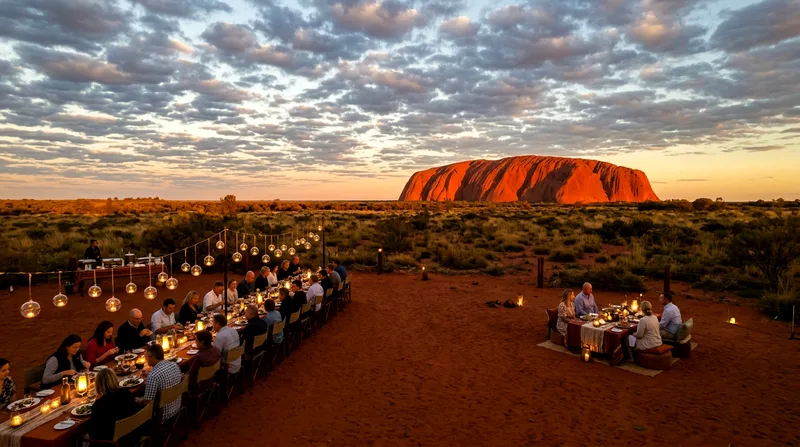
Sounds of Silence vs Tali Wiru compared: price, exclusivity, menu and views at Uluru. See which dinner experience suits your trip before booking.
The Options at a Glance
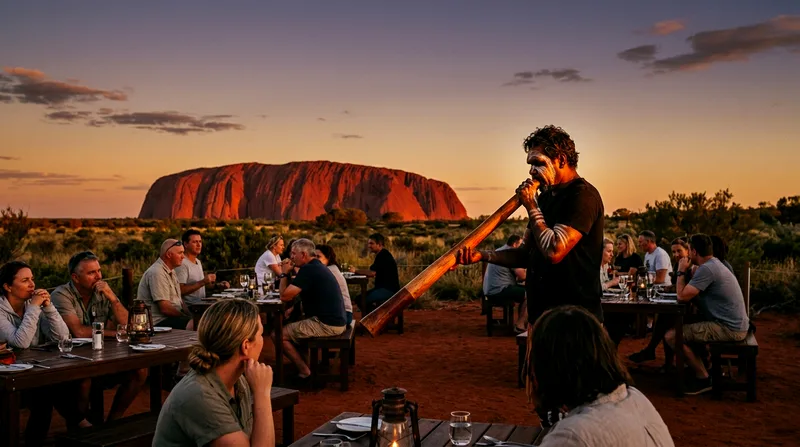
Uluru has exactly two headline dinner experiences, and the sounds of silence vs tali wiru question comes up for nearly every traveler planning a stay at Ayers Rock Resort. Both put you in the open desert of the Red Centre, both serve a multi-course meal timed around sunset, and both lean on Aboriginal culture — storytelling, bush food ingredients, a didgeridoo performance — to frame the evening. Past that, they diverge sharply in price, scale, and polish.

Sounds of Silence is the long-running, higher-volume option: a buffet-style dinner for groups that can run into the hundreds on a busy night, set on a dune with sweeping views of both Uluru and Kata Tjuta. Tali Wiru is the boutique alternative — a plated, multi-course degustation for a strictly limited number of guests, served on a different dune each night specifically chosen for an elevated, unobstructed view of Uluru alone.
Neither is a casual add-on. Both require advance booking, both involve a coach transfer from the resort, and both are weather-dependent — if conditions are poor, the dinner can be relocated indoors to a resort venue, which changes the experience considerably. If an open-air sunset dinner under a clear sky is the whole point for you, check the seasonal forecast for your travel dates before locking in either one.
Sounds of Silence overview
Sounds of Silence has been running for decades and is the default "special dinner" sold through Ayers Rock Resort. Guests are collected by coach, walked to a dune-top site, and greeted with sparkling wine and canapés while watching the sunset change the rock's color. Dinner follows at long communal tables — a buffet featuring native ingredients like kangaroo, barramundi, and bush spices — and after dark, the lanterns are extinguished for a star talk, where a presenter points out constellations visible in the Southern Hemisphere sky. It's the better choice if you want the full ritual without a premium price tag, and it's the one more likely to have availability on short notice.
Tali Wiru overview
Tali Wiru means "beautiful dune" in the local Pitjantjatjara language, and the name is accurate — it's set up fresh on a different dune each evening, chosen for the best current view of Uluru. The format is a seated, plated four-course menu designed by a chef with a stronger focus on native Australian ingredients done with technique rather than volume, paired with Australian wines. It typically runs only a few nights a week during the cooler months and pauses entirely over the hottest part of summer. If exclusivity and food quality matter more to you than price, this is the one worth planning your dates around.
Head-to-Head: Price, Time, and Effort
Money and time are where these two experiences separate fastest, and it's worth being honest about what you're actually paying for before you commit a night of your Red Centre itinerary to either one.
Tali Wiru costs roughly double Sounds of Silence but trades buffet-for-crowds scale for a smaller, plated, more exclusive setting.
Sounds of Silence vs Tali Wiru: Uluru dinner experiences compared
| Experience | Typical Price (AUD/adult) | Group Size | Format | Best View Focus |
|---|---|---|---|---|
| Sounds of Silence | approx. 220–260 | Large, up to several hundred | Buffet, communal tables | Uluru and Kata Tjuta |
| Tali Wiru | approx. 400–450 | Small, limited guests | Plated 4-course menu | Uluru only, dune chosen nightly |
Typical figures; prices and group sizes vary by season and demand, so check current rates before booking.
Cost comparison
Sounds of Silence typically runs in the vicinity of AUD 220–260 per adult, while Tali Wiru uluru price sits closer to AUD 400–450 per adult — roughly double. That gap buys you a smaller group, a plated menu instead of a buffet, and a more private dune setting. Neither price point is "cheap" by any measure, and both are deliberately positioned as the premium evening activity at the resort, above a standard Uluru sunset viewing tour at a free lookout. For budget-conscious travelers, it's fair to ask whether the sounds of silence uluru cost is justified versus simply driving yourself to Talinguru Nyakunytjaku lookout for sunset and eating at one of the resort's regular restaurants — you'll save several hundred dollars per person and still see the rock turn red. Always check current prices when booking, since both experiences adjust rates seasonally and the gap between tali wiru vs sounds of silence price can shift depending on time of year.
Duration and logistics
Both experiences run around three and a half hours door to door, including coach transfer, sunset viewing, dinner, and (for Sounds of Silence) the star talk. Tali Wiru tends to move at a more leisurely pace given the smaller group and plated service, while Sounds of Silence's buffet format moves faster simply because more people are being fed at once. Pickup is from accommodation within Ayers Rock Resort for both, so if you're staying in Alice Springs and day-tripping — a long haul at roughly 450 km each way — you'd need to be overnighting near Uluru regardless of which dinner you choose.
Exclusivity, Menu Quality, and Views Compared
This is where the sounds of silence vs tali wiru decision really hinges — not on logistics, but on what kind of evening you actually want to sit through.
Group size and atmosphere
Sounds of Silence seats guests at long shared tables, which creates a social, slightly louder atmosphere — good if you're a solo traveler hoping to chat with other guests, less good if you booked the night specifically for a romantic or quiet occasion. Tali Wiru's capped numbers mean a genuinely intimate setting: couples and smaller groups get more space, a quieter soundscape, and more one-on-one time with the didgeridoo performer and storyteller who moves between tables. If you're celebrating an anniversary or proposing, Tali Wiru's scale makes that moment feel earned rather than incidental.
Food and beverage offerings
Sounds of Silence's buffet is generous and varied but, like most buffets, uneven — some stations are excellent, others are clearly holding food for volume rather than finishing it à la minute. Tali Wiru's plated courses are built dish-by-dish by a chef, with a tighter focus on native Australian ingredients like quandong, saltbush, and Kakadu plum, and the wine pairing is curated rather than an open bar of house pours. If food is genuinely a priority for your trip — more than the view, more than the setting — Tali Wiru is the clear winner; Sounds of Silence prioritizes reliable quantity over culinary ambition.
Crowds, Comfort, and What You'll Actually Experience
Expectations matter more here than almost anywhere else on this comparison, because both experiences are marketed with similar language but deliver very different crowd dynamics.
Visitor numbers and intimacy
On a peak night, Sounds of Silence can feel more like a well-run outdoor banquet hall than a private desert moment — dozens of coaches, multiple seating areas, and a a noticeable queue at the buffet stations. That's not a criticism so much as a fact to plan around: if you want solitude, this isn't it. Tali Wiru's guest cap keeps numbers low enough that it genuinely feels like a private event, which is the main reason it commands double the price. World travelers who've done similar premium desert dinners elsewhere — in Wadi Rum or the Sahara, for instance — will recognize the Tali Wiru format as closer to that tier.
Seating and weather considerations
Desert nights get cold fast once the sun drops, even in the warmer months — temperatures can swing 15–20°C between afternoon heat and night chill, so both experiences provide blankets, but dress in layers regardless. Seating at Sounds of Silence is on benches at communal tables; Tali Wiru offers more comfortable individual chair seating, which matters if you're a senior traveler or have mobility concerns about sitting on uneven ground for over three hours. Wind is the real wildcard for both — a gusty evening can mean a shortened star talk or an early move indoors, and there's no discount for a weather-shortened night.
Who Should Book Which Experience
Families with children under about ten will generally do better — and spend less stress — at Sounds of Silence, where the buffet format means kids aren't stuck through a slow four-course service, and the louder, busier setting is more forgiving of restlessness. Tali Wiru's pace and price point make it a poor fit for young kids regardless of how well-behaved they are.
Couples and honeymooners chasing a quieter, more romantic version of the Uluru dinner should lean Tali Wiru, accepting the trade-off of a smaller date window — it often only operates a few nights a week outside the summer off-season, so you'll need to build your Red Centre itinerary around its schedule rather than the other way around.
Solo travelers tend to get more social value from Sounds of Silence's communal tables, where striking up conversation with fellow travelers is built into the format; Tali Wiru's intimate tables can feel a little exposed if you're dining alone.
Senior travelers who want comfortable seating and a slower pace, without the exertion of a long walk, will appreciate Tali Wiru's chair seating and calmer tempo, though Sounds of Silence is perfectly manageable too if mobility isn't a major concern.
European and other long-haul world travelers visiting Uluru as part of a broader Australian itinerary — pairing it with Kings Canyon, the MacDonnell Ranges, or a longer loop through Alice Springs, Coober Pedy, and up to Darwin and Kakadu National Park — should treat whichever dinner they choose as one highlight among several, rather than the single splurge of the trip. If you're already spending on a Kata Tjuta tour and a Kings Canyon rim walk, Sounds of Silence keeps the budget saner.
The Verdict
If you only have one evening at Uluru and want the sunset-plus-dinner-plus-stars ritual without overthinking it, book Sounds of Silence — it's reliable, runs most nights, and the AUD 220–260 price is easier to justify against the rest of a Red Centre itinerary that likely also includes Kings Canyon or Watarrka National Park. If you have flexibility in your dates, care more about food quality and quiet than socializing, and don't mind paying roughly double, Tali Wiru is the better dinner by most measures — better seating, better plates, better view, fewer strangers.
Where I'd push back on the marketing for both: neither is a substitute for simply watching sunrise or sunset at Uluru from a free lookout like Talinguru Nyakunytjaku, which costs nothing beyond park entry and gives you a longer, quieter window with the rock. Book one of these dinners for the ritual and the cultural storytelling, not because it's the only way to see Uluru glow at dusk — it isn't.
Frequently asked questions
Which dinner is more expensive, Sounds of Silence or Tali Wiru?
Tali Wiru is more expensive, typically running around AUD 400–450 per adult compared to roughly AUD 220–260 for Sounds of Silence. The higher tali wiru uluru price reflects its smaller guest numbers, plated four-course menu, and a dune location chosen fresh each night for the best view of Uluru alone.
Can you see Uluru from both dinner venues?
Yes, but differently. Sounds of Silence is set on a dune with views of both Uluru and Kata Tjuta simultaneously, while Tali Wiru's site changes nightly and is selected specifically for an unobstructed, elevated view of Uluru alone, without Kata Tjuta sharing the frame.
How many people attend each dinner experience?
Sounds of Silence can host large groups, sometimes into the hundreds on peak nights, seated at long communal tables. Tali Wiru caps numbers far lower by design, creating a noticeably more private, quieter atmosphere — this is the single biggest driver of the price difference between the two.
What's included in the menu at each restaurant?
Sounds of Silence serves a buffet featuring native Australian ingredients such as kangaroo, barramundi, and bush spices, plus sparkling wine and canapés at sunset. Tali Wiru offers a seated, plated four-course degustation with curated wine pairings, built around ingredients like quandong, saltbush, and Kakadu plum, with more hands-on preparation per dish.
Which experience is better for first-time visitors?
Sounds of Silence is the safer first-timer pick — it runs most nights, costs less, and delivers the full sunset-dinner-stargazing arc without requiring you to plan your whole trip around limited dates. Save Tali Wiru for a return visit or if a quieter, pricier evening is specifically what you're after.