Save on Uluru dining with self-catering, combo packages, and smart timing. Practical budget tips for food costs at Yulara and Ayers Rock Resort.
Where Your Dining Money Goes
Uluru sits roughly 450 km from Alice Springs by road, and every restaurant, café, and food truck at Ayers Rock Resort in Yulara operates inside that isolation. That distance is the single biggest reason food costs more here than in Sydney or even Alice Springs itself. Understanding this upfront changes how you plan — it's not price-gouging so much as the real cost of trucking produce, staff, and supplies into the Red Centre.
Yulara is the only town servicing Uluru-Kata Tjuta National Park, which means there's no competing shopping strip a few kilometers down the road to undercut prices. Every restaurant within Ayers Rock Resort — from the casual bistro to the fine-dining options — sets menu prices knowing visitors have few alternatives nearby. That's a trade-off worth accepting for some meals and avoiding for others.
Restaurant markups in remote locations
Expect sit-down restaurant mains at Ayers Rock Resort to run noticeably higher than equivalent dishes in a capital city — often 30-50% more for comparable quality. This isn't unique to Uluru; Coober Pedy and Kings Canyon Resort show similar patterns, since both rely on long supply chains across the Northern Territory and South Australia. If you've traveled through remote Australia before, this pricing won't surprise you. If it's your first outback trip, budget for it rather than being caught off guard on night one.
Premium pricing for convenience
Food trucks and kiosks near the resort's town square charge a premium for quick meals, and the markup on bottled drinks and snacks at these outlets is steep compared to the supermarket. A cold drink that costs a few dollars at Yulara IGA can cost two or three times that from a kiosk near the pool or shuttle stop. Convenience always has a price tag here — the question is how often you're willing to pay it.
Self-Catering from Yulara Supermarket
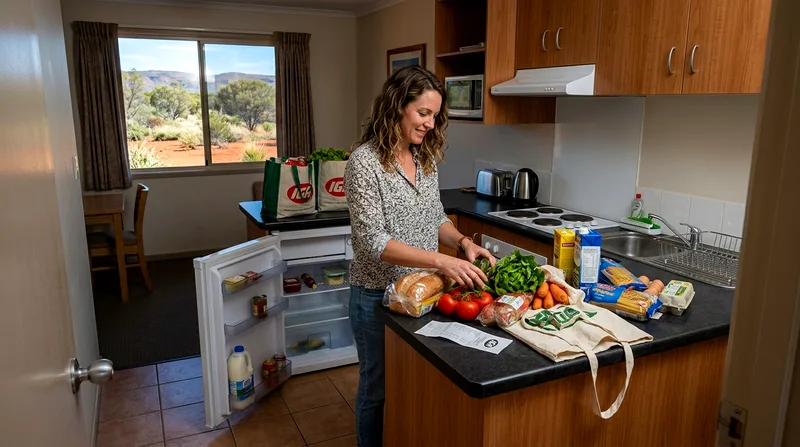
The Yulara IGA supermarket, located in the town square at Ayers Rock Resort, is the backbone of any budget dining strategy here. It's a full-service grocery store — not a convenience shop — stocking fresh produce, meat, dairy, bread, and a reasonable range of pantry items, plus camping and barbecue supplies. Prices run higher than metro Australia, roughly in line with what you'd expect in a remote mining town, but still far below restaurant equivalents for the same ingredients.
If you're staying in accommodation with a kitchenette — some rooms at Desert Gardens Hotel, Emu Walk Apartments, and the Outback Pioneer cabins offer this — self-catering most meals can cut your total food spend substantially over a three or four night stay. Even without a kitchen, the supermarket sells pre-made sandwiches, salads, and rotisserie-style items that work for lunches and picnics.
Self-catering from the Yulara supermarket is consistently the cheapest way to eat at Uluru, while sunset dinner packages cost the most but deliver an experience you can't replicate on your own.
Uluru dining options compared: cost, convenience, and experience
| Dining Option | Relative Cost | Convenience | Best For |
|---|---|---|---|
| Yulara IGA supermarket | Low | Requires kitchenette or picnic setup | Budget travelers, families, self-caterers |
| Resort café/kiosk | Medium-High | Very convenient | Quick lunches, solo travelers short on time |
| Resort restaurant (à la carte) | High | Table service, no prep needed | Couples, one special meal |
| Tour-inclusive meal packages | Medium | Bundled with transport/activity | Multi-day Red Centre itineraries |
| Sunset dinner experience | High | Premium viewing plus meal | Couples, special occasions, cultural context |
Relative cost bands reflect typical remote-Australia pricing patterns, not fixed prices; check current rates when booking.
Picnic supplies and prepared meals
Buy bread, cheese, cured meats, and fruit for a build-your-own picnic lunch, and you'll spend a fraction of what a café platter costs at the resort. The supermarket also stocks chilled prepared meals and salads that need no cooking — useful if your room lacks a kitchenette. Pack an esky or cooler bag (sold in-store) if you're heading out to Kata Tjuta or Kings Canyon for the day, since there's no food service at either site beyond a small kiosk at the Kata Tjuta dune viewing area car park.
Breakfast and lunch alternatives
Skipping resort breakfast buffets in favor of cereal, yogurt, and fruit bought at the supermarket is one of the easiest savings to make — buffet breakfasts at the resort's hotels typically cost far more per person than a self-served equivalent. Reserve restaurant breakfasts for your last morning, if at all. For lunch, a sandwich and piece of fruit eaten at a shaded table near the Cultural Centre beats paying café prices, and you'll likely have more time to actually look around.
Tour and Dinner Combo Packages
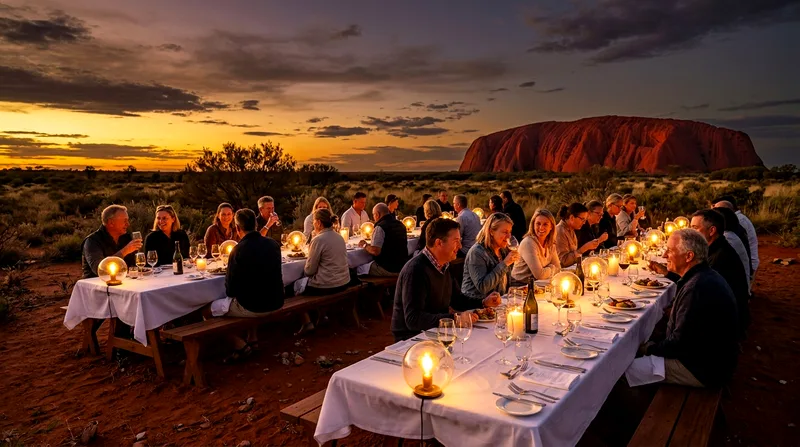
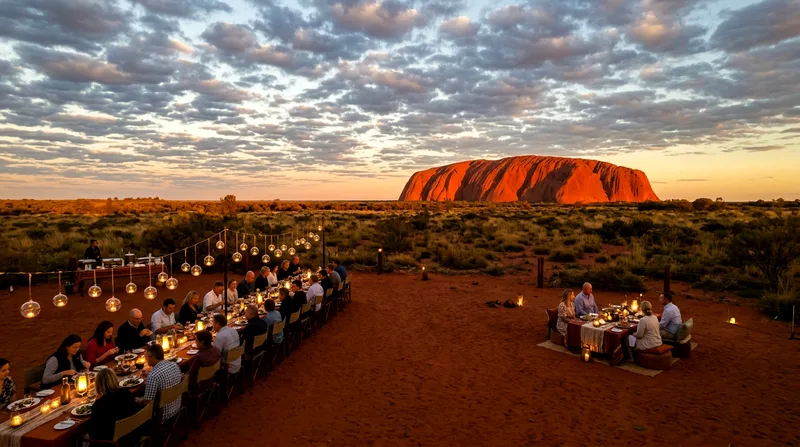
Several Uluru experiences bundle a meal with a tour or cultural activity, and these combos can work out cheaper than booking transport and dinner separately — though not always. The well-known sunset dinner experiences at the resort combine a guided viewing of Uluru at dusk with a plated or buffet meal, and pricing is set as a single package rather than itemized extras. Compare the bundled price against booking a basic sunset-viewing shuttle plus a supermarket picnic; for solo travelers and couples on a tight budget, the DIY version usually wins on cost, but you lose the cultural commentary and atmosphere that come with the organized version.
Bundled tour-dining discounts
Tour operators running multi-day Red Centre itineraries — covering Uluru, Kata Tjuta, and sometimes Kings Canyon — often include meals in the overall package price. This can be genuinely good value since the per-meal cost works out lower than booking each dinner individually at resort restaurants. Check exactly what's included before assuming it's cheaper: some packages only cover breakfast and a packed lunch, leaving dinner as an add-on.
Group meal rates
Families and larger groups should ask about group dining rates when booking sunset or cultural dinner experiences, since some venues offer per-person pricing that drops slightly at higher headcounts. This matters more for families with children, where four or five meals at full individual price add up fast. It's worth asking directly when booking rather than assuming it's automatically applied.
Booking Early and Off-Season Discounts
Timing your visit affects dining costs more than most people realize. The Red Centre's peak season runs through the cooler months, roughly May to September, when accommodation and dining venues run at near-full capacity and popular sunset dinner experiences sell out weeks ahead. Shoulder season — April or October — brings lower demand, slightly more flexible availability, and occasionally better value on bundled dining packages, even if the headline food prices themselves don't change.
Advance booking savings
Book sunset dinner experiences and any tour-inclusive meals as far ahead as you can — ideally when you book accommodation, not after you arrive. Popular dining experiences at Ayers Rock Resort are capacity-limited, and walk-up availability is unreliable, especially during school holiday periods across Australia. Booking early doesn't always lower the price, but it protects you from paying more for a last-resort alternative when your first choice is full.
Shoulder season pricing
Visiting in shoulder months also means smaller crowds at the free sunset viewing areas, so you're less pressured to pay for a premium dinner spot just to get a decent view of Uluru changing color. Compare this to peak season, when the free car park viewing areas fill up fast and a paid experience starts looking more attractive simply for guaranteed space and seating.
What Not to Skimp On
Budget dining at Uluru has limits, and pushing too hard on cost-cutting can backfire in a desert environment. There are two things I wouldn't recommend compromising on, regardless of how tight your budget runs.
Quality water and hydration
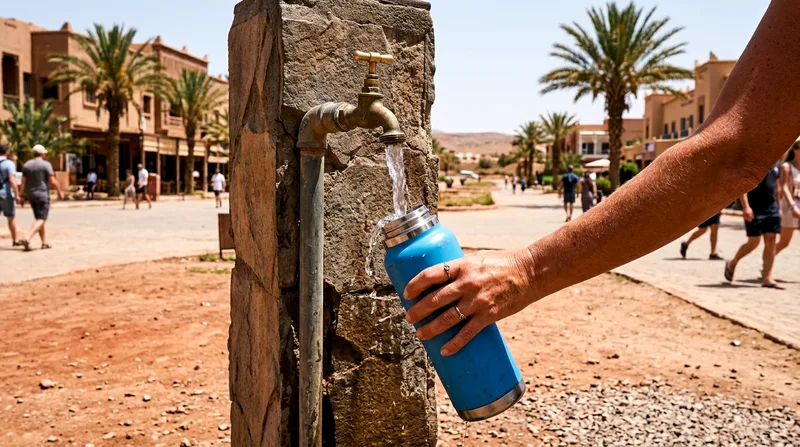
Don't skimp on water. Daytime temperatures in the Red Centre regularly exceed 35°C (95°F) from November through March, and dehydration risk is real on walks around the base of Uluru or at Kata Tjuta's Valley of the Winds. Buy a reusable bottle and refill at the free water stations around the resort and at the national park's visitor areas rather than relying on single bottles bought from kiosks — it's cheaper over a multi-day stay and cuts down on plastic waste. Carrying less than a liter per person on any walk longer than 30 minutes is a mistake I'd flag regardless of budget.
Sunset dining experiences
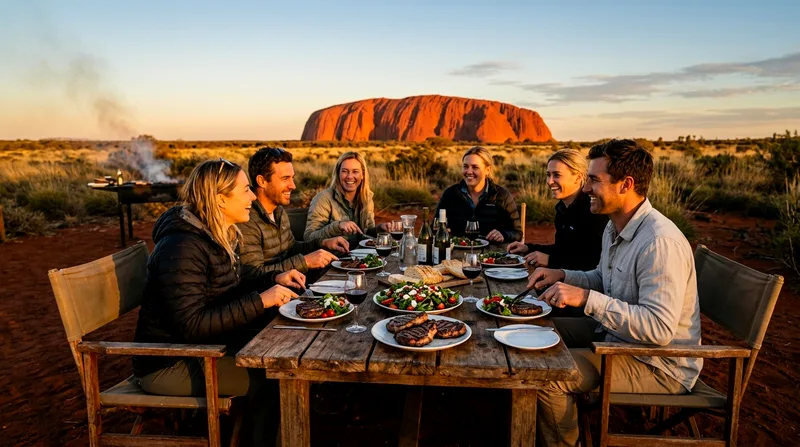
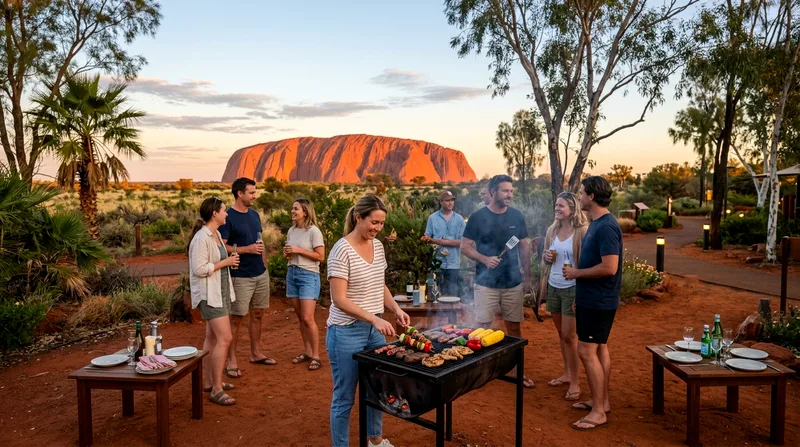
If you're going to spend on one dining experience during your stay, make it a sunset dinner facing Uluru. These evenings combine the color change across the rock with a guided or informal cultural element, and they're genuinely hard to replicate with a supermarket picnic alone — partly because premium viewing spots and any Aboriginal cultural commentary included aren't something you can DIY. Cut corners on lunch and breakfast all you like, but one evening spent watching Uluru shift through red and orange tones, with a proper meal rather than a sandwich in the car, is worth the spend for most visitors.
Dining Booking Checklist
A short pre-trip checklist avoids the two most common dining mistakes at Uluru: arriving with no reservations and discovering dietary needs weren't communicated.
Pre-arrival reservations
Book your sunset dinner or any tour-inclusive meal before you fly into Ayers Rock Airport (Connellan), ideally four to six weeks out during peak season and two to three weeks out in shoulder months. Confirm whether the supermarket's opening hours fit your arrival time — it generally closes earlier than you'd expect for a resort town, so don't plan to land late and stock up that same night.
Dietary requirements and confirmations
Flag dietary requirements — vegetarian, gluten-free, allergies — when you book any dinner package, not on arrival. Remote kitchens have smaller inventories than city restaurants, and substitutions are harder to arrange on short notice. Email or call ahead to confirm your booking and dietary note were actually received; a quick confirmation two or three days before saves an awkward conversation at the table.
Frequently asked questions
Is it cheaper to bring your own food to Uluru?
Bringing non-perishable snacks and a reusable water bottle from home helps, but you can't fly with fresh produce or much liquid, so the bigger saving comes from shopping at the Yulara IGA supermarket once you arrive. A few days of self-catered breakfasts and lunches from the supermarket, combined with one or two restaurant meals, costs noticeably less than eating out for every meal.
What meal deals are available with Uluru tours?
Multi-day Red Centre tours covering Uluru, Kata Tjuta, and sometimes Kings Canyon often bundle breakfast and a packed lunch into the tour price, which works out cheaper than buying meals separately at resort venues. Sunset dinner experiences at Ayers Rock Resort are sold as fixed packages combining the meal with a guided viewing spot — check exactly what's included before comparing it to self-catering.
When is the cheapest time to dine at Uluru?
Shoulder season — April or October — brings lower demand on dining venues and tour-inclusive meals, with better availability for bundled packages. Peak season (May to September) sees sunset dinners sell out weeks ahead, sometimes pushing visitors toward pricier last-minute alternatives.
Can you buy groceries at Yulara?
Yes. The Yulara IGA supermarket in the town square at Ayers Rock Resort stocks fresh produce, meat, dairy, bread, and pantry basics, plus some camping and barbecue supplies. It's the only full grocery store servicing the resort and national park, so prices run higher than in a capital city but still well below restaurant costs for equivalent food.
What dining costs should you never cut?
Don't economize on water — desert heat makes dehydration a real risk, and refilling a reusable bottle at free stations is cheap anyway. Also keep budget for at least one proper sunset dinner facing Uluru; the combination of the rock's color change and a real meal is worth the spend compared to eating a sandwich in a car park.